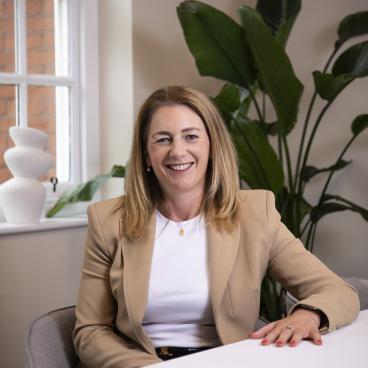




































Martyn Evans, creative director, Landsec, on authentic places, understanding people & why storytelling is everything.
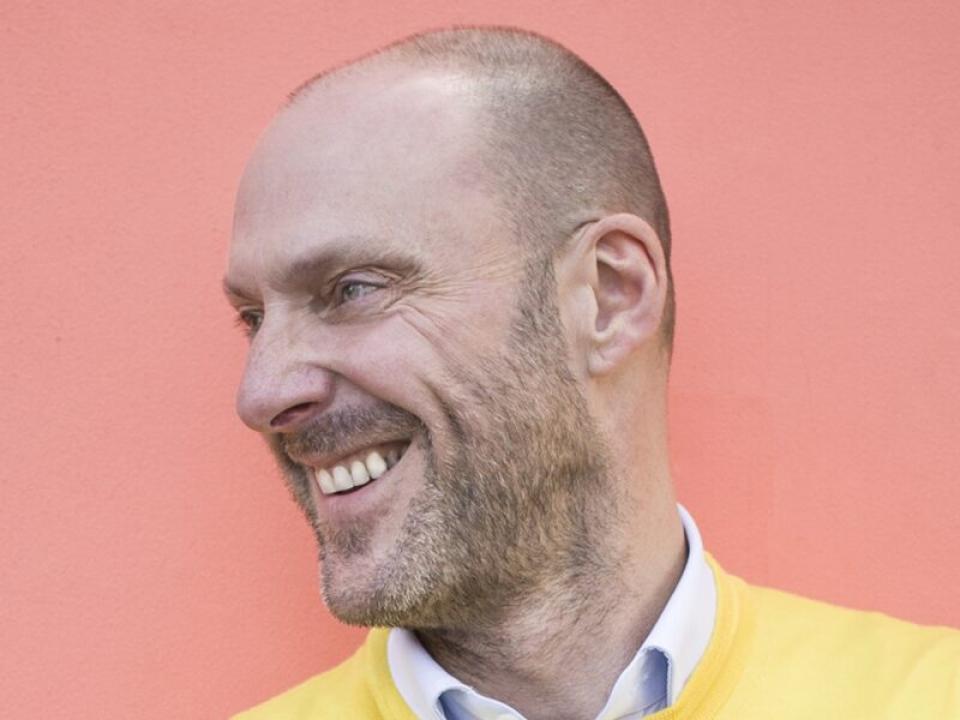
As we were chatting before formally starting our interview, Martyn Evans, creative director, Landsec made a comment that I feel nicely sums up the people-centric approach he applies to his work.
On the topic of AI, Martyn said, “People lost jobs when manual typewriters turned into PCs - I think it's inevitable. But if we try and restrict the way that technology can help us by worrying about the jobs that are going to go anyway, and not worrying about how we replace them with better jobs for people, then I think we're wrong-headed.” In essence, the AI discussion should have people – and our betterment - at its heart. A good point, well made.
This real focus on supporting people, and being inspired by them to make the environments we inhabit better, was the trajectory for the conversation that followed. We began at the start of Martyn’s career where he was head of communications at The Body Shop – first in London, and then in New York. During this time, Martyn worked closely with the late, great Anita Roddick, founder of The Body Shop. A time he says was formative in shaping his working life to follow. Someone who taught him the sentiment: “you shouldn't go to bed at night until you've made the world a little bit better than when you got up.”
“This seems truly relevant in what can often seem a conflicted world today?”, I suggested.
“Well, it means something different to everybody”, Martyn replied. “Anita was very keen to have you understand that even though she was a very powerful woman in business when she was successful, what she meant was anybody can take that piece of advice to heart because even if you just do something nice for a friend you've made the world a little bit better. So it's about understanding that in the context of your life, your job, what the influence is you have as an individual. It's all about personal satisfaction and a personal sense that what you're doing is - to you – meaningful.”
This statement doesn’t just mean “being nice”, added Martyn. It applies directly to your working life in that “if you do well – you listen, you communicate, and you do good business, I promise you, your business will be more successful.
“It's about understanding that if you behave in a way that is meaningful with some integrity, with kindness, with thought for the world and for other people around you, then people will like you more. And if they like you more, they'll give you their money. People like people. It's not just a stupid business strategy.”
In the 1990s, Anita published a book called Body and Soul – her first memoir – “I heartily recommend it. It's a good read”, said Martyn. “The first line of that book says, ‘I hate the beauty business’”, Martyn shared. “And she didn't really hate the beauty business because she made money in that business, she just hated the way that it was done by others traditionally and could see a better way of doing it to treat the people who might be her customers with some greater amount of respect than she thought the large beauty companies did.
“In the end, I think that you have to wake up in the morning and give a shit. And I believe that if you wake up in the morning and you give a shit, you might even make more money.”
“Does this apply in the property sector?”, I asked.
“Yes”, and Landsec, Martyn says, is a great example of it. “When our chief executive stands up in front of our shareholders and colleagues - we have hundreds and hundreds of people working in my company - for the last four years that I've been here, he's had a constant mantra, which is to say that he came to our business in 2020 to bring a new vision to it.
“He tells a story about how we are changing our business from being a landlord that knows how to build and manage brick boxes, that generate rents that we collect, and we keep those properties beautifully maintained, and the lights on, and the roof from leaking and they're warm, and dry, and safe. But we’re moving away from this to being a business that fundamentally understands the motivations of the end user.
"We have not traditionally done a lot of business with the end user. We have always been one step removed from the people that use our spaces. Across our business, it's 200 million people a year. We sell those people car parking spaces. We provide them with toilets. We provide them with security to keep their children safe and they have a nice experience when they're walking from Boots to Primark. But that's about the extent of our direct contact with those people.
“If we thought like that it would be an unbelievable waste of an opportunity, to not imagine that if we understand much better what those people want, particularly in a relatively economically challenged world that's more competitive and uncertain by the day, this is essential to long-term success.”
More valuable than anything else, Martyn comments is “time”. And that’s exactly what Landsec’s shopping centres, for example - are competing for. “What we're competing with is a day out at the beach, the cinema, KFC on the high street. A Primark or a Boots can’t do that on their own. Shopping centres are a collection of retailers with a load of other attractions and benefits as well, so it’s considering how we curate those places to offer the most incredible experience to somebody coming there for the day with their family.
“In this way, our business is changing rapidly. We’re doing our own research to understand what people want. A whole team of people we call Customer Insights. And they are data and insight analysts who spend their lives helping us all to understand people and their behaviours and motivations, from which we then work out programmes of activity.”
Shopping centre clients only make up half of Landsec’s portfolio, Martyn shares. The other half is commercial office estates – something he describes as a “different challenge, particularly post-Covid.”
“An awful lot of people don't want to come to the office when they work at home - they've got kids and dogs - so how are we creating the kinds of environments that are making it more likely that our tenants’ staff will want to come to work for reasons other than the quality of the coffee that their employer provides for them inside their office?”
Speaking of a particular development, Cardinal Place in London’s Victoria, Martyn touches on the importance of curation. “For us, it’s how we’re curating the ground floor of that place, what's nearby and around it, how are we programming activity so there's more to do after work. To do this we need to understand what people want to leave their home and come into Central London for the day.”
The part of the business where Martyn spends most of his time, he says, is the mixed-use, regeneration places that Landsec is building from scratch.
“That's when it gets most exciting”, Martyn commented, “because we have often carte blanche of empty, dead places that are post-industrial or brownfield sites, like in Manchester at Mayfield, where we're building from scratch.”
“Is there a magic formula for mixed-use?” I asked. “No”, Martyn replied. “It's experience, research - lots of research - and bringing together a group of talented people with a particular skillset. When we sit with our architects for the first time after we've done lots of walking around and meeting people, I don't really want to talk about buildings, I just want to talk about people and their lives – what they're doing every day, and how they're doing it.”
Some of the process is “driven by spreadsheet”, Martyn shared, assessing the proportion of residential to commercial to retail to green space in a city centre, for example, he said. But it’s also down to “intuition, research, experience and talking a lot.”
“You can't build the future of a place until you've clearly understood its past and its present, drawing a thread through”, he suggested.
“Was this the case with Mayfield in Manchester?”, I asked, “It’s brought something new to the city that didn’t exist before…”
“That came from a very straightforward perspective”, said Martyn.
“It was very important that from the outset it felt like it was a part of the city - not part of a property development. The opportunity to build a park first was really a luxury and the best thing to do because a park is public and by its nature open to anybody that wants to come there. Around Mayfield it’s a very family-orientated neighbourhood. So it made total sense that was going to be the thing that was most popular, most immediately.
“Just by doing that”, Martyn said, “we've got a place that now feels owned by an important part of the community.”
Though it’s a job that’s “nowhere near done”, he added, “for a first phase of work with no buildings yet, I don’t think we could have been more successful in setting the foundations in place for a community to flourish.”
The worst thing would have been to construct the buildings first and then put in some beautiful landscaping, Martyn said, because then “people from the surrounding communities might have felt a bit nervous to walk through it because it doesn't belong to them.”
With our current focus on Equity, Diversity, Inclusion, and Belonging, this sentiment entirely captures why the ‘B’ in EDIB is so crucial.
In terms of Martyn’s role in Mayfield, and the other projects he works on, his job is to “write a story of what that place could be.” Authenticity and quality come part and parcel with that, Martyn says. He helps to keep “the ship on the straight and narrow when commercial forces can buffet it…” During this time, holding onto authenticity, he suggests, is most important.
While no two projects are the same, when it comes to making a great place, Martyn likens it to baking a cake. “Some places are very big, complicated cakes with many ingredients. And some places are relatively straightforward cakes. I mix a cake every day.
“There are probably a dozen key things that property developers do. If you identify what those things are and you constantly improve your ability to deliver on them by knowledge and experience then your places will be better and better.”
When asked how Landsec selects the architects it works with, Martyn said he doesn’t believe in competitions – "they are a waste of time, money and effort" for practices. He is committed to highlighting the value that architects and interior designers bring to our world through his work as Chair at the London Festival of Architecture, and an organisation he runs called the Young Architects and Developers Alliance – which offers young people career support.
“Like in any industry, architects need to learn how to sell themselves as much as they need to learn how to do their work.” It's storytelling, again.
Over the coming months, Martyn will spend half his week in the North West – Manchester & Salford – and half in London. In Mayfield, the first building is being constructed. And after buying Media City a year ago, Landsec is writing the future of how that neighbourhood in Salford will play out.
“The move for the media businesses there was 15 years’ ago, and so of course now if you imagine you were writing a story about a media cluster in 2026 that would be a very different beast than it was in 2011. Therefore, we’re considering what do we need to build in order to make that grow and continue to be the success that it is?”
In London, Martyn mentions two large regeneration schemes - one in the Finchley Road called the O2 Centre, and a shopping centre in Lewisham.
Looking ahead, Martyn says that as a REIT (Real Estate Investment Trust), Landsec’s board “constantly has a searchlight on the market to understand where is best to invest”.
“If you look at our Half Year Report 2025, you’ll see substantial amounts of investment is being moved away from commercial office building development into primary retail and residential development.” In response to post-Covid market activity, he said.
As we said our goodbyes, a thought crossed my mind. If everyone responsible for shaping our built environment is as considerate of people as Martyn, then we’re all in very good hands.