


Workplace: What is it 6-years after Covid?
Image credit: Robin Boot
In association with:

Visa has signed a 15-year lease at One Canada Square, Canary Wharf - 300,000 sq ft, said to be a 50% expansion from its current Paddington HQ.
HSBC is facing what is potentially a costly crisis, having significantly downsized its property footprint in the wake of Covid, and now struggling to provide enough desk space for the staff being brought back into the office.
The current average office occupancy in London, according to Savills, is 72%, or 3.6 days out of 5 - compared to 55% pre-Covid.
Is it us, or does it appear that the workspace market in the UK’s capital isn’t only surviving almost 6-years on from Covid…but, that it is, in fact, thriving?
Does this signify that we finally have clarity on what the new version of the workplace is? And what it offers that homeworking can’t? For our final seminar of 2025 in London, we asked our expert panel, Workplace: What is it 6-years after Covid?
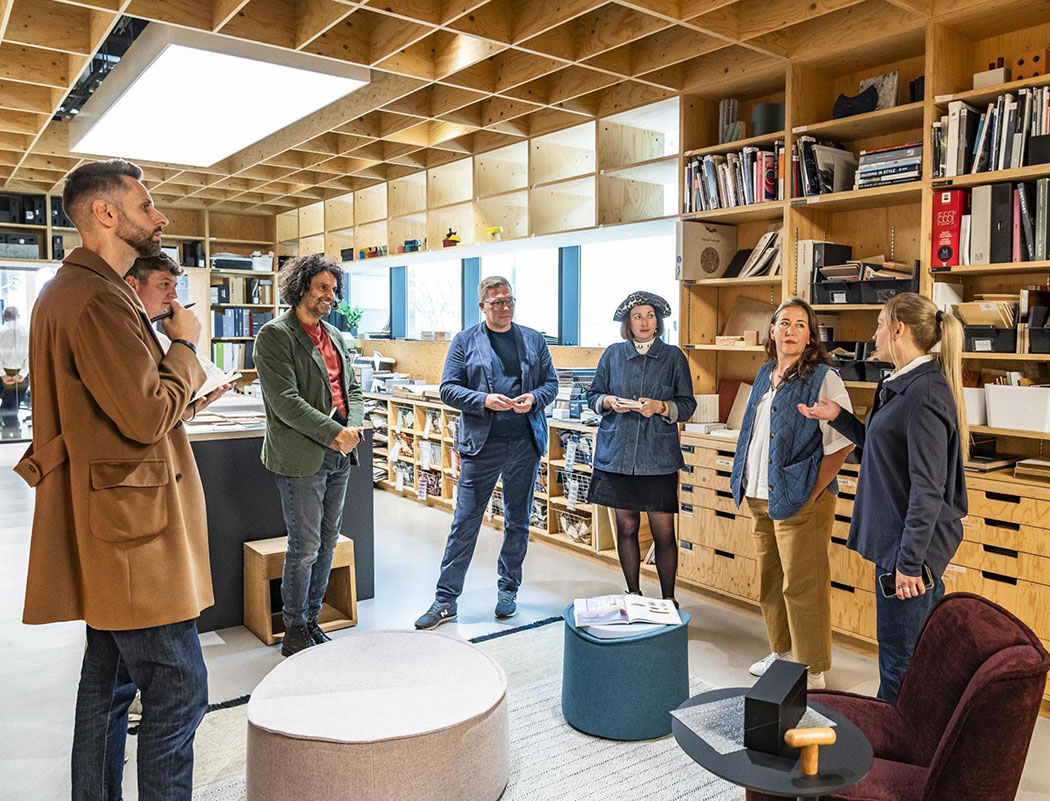
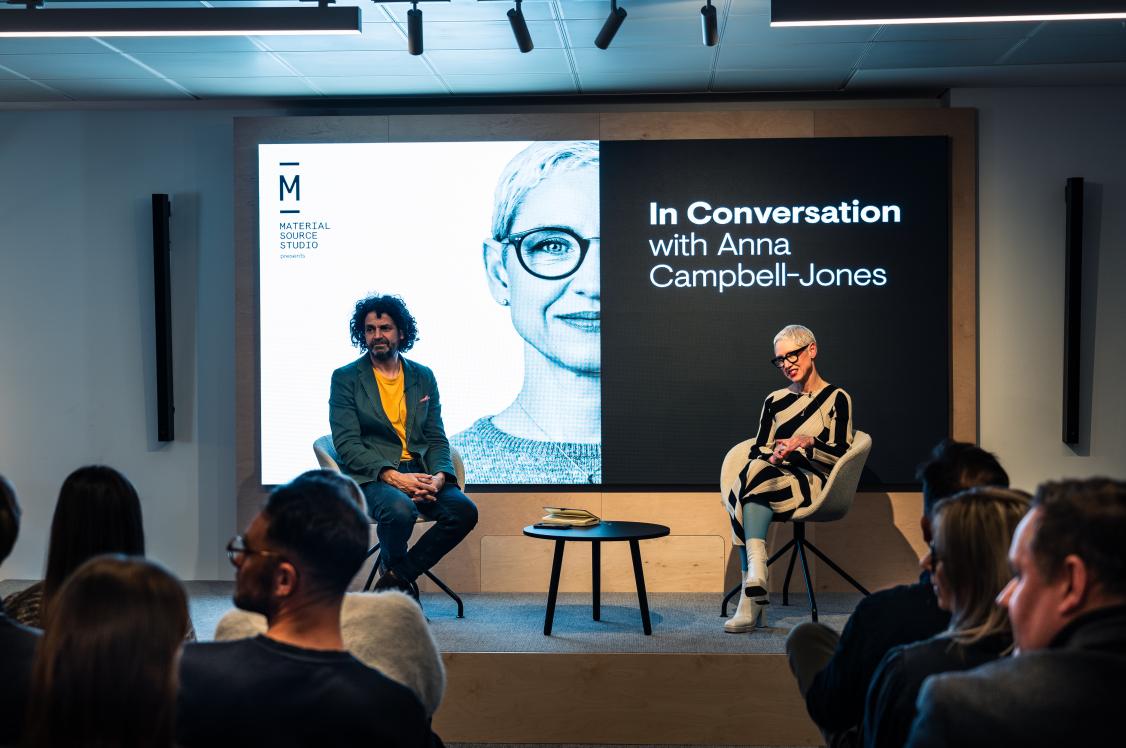
Splitting the conversation into 3-parts: past, present and future, Host David Smalley, Director, Material Source Studio, set the scene...
Almost 6-years after the pandemic, the office is no longer a default - it’s a choice. And that means the workplace must earn its relevance every single day. Today’s design challenge is not filling seats - it’s creating environments that spark collaboration, culture, and belonging in ways the home office simply can’t. With this in mind, he asked, what's the core function of the workplace now?
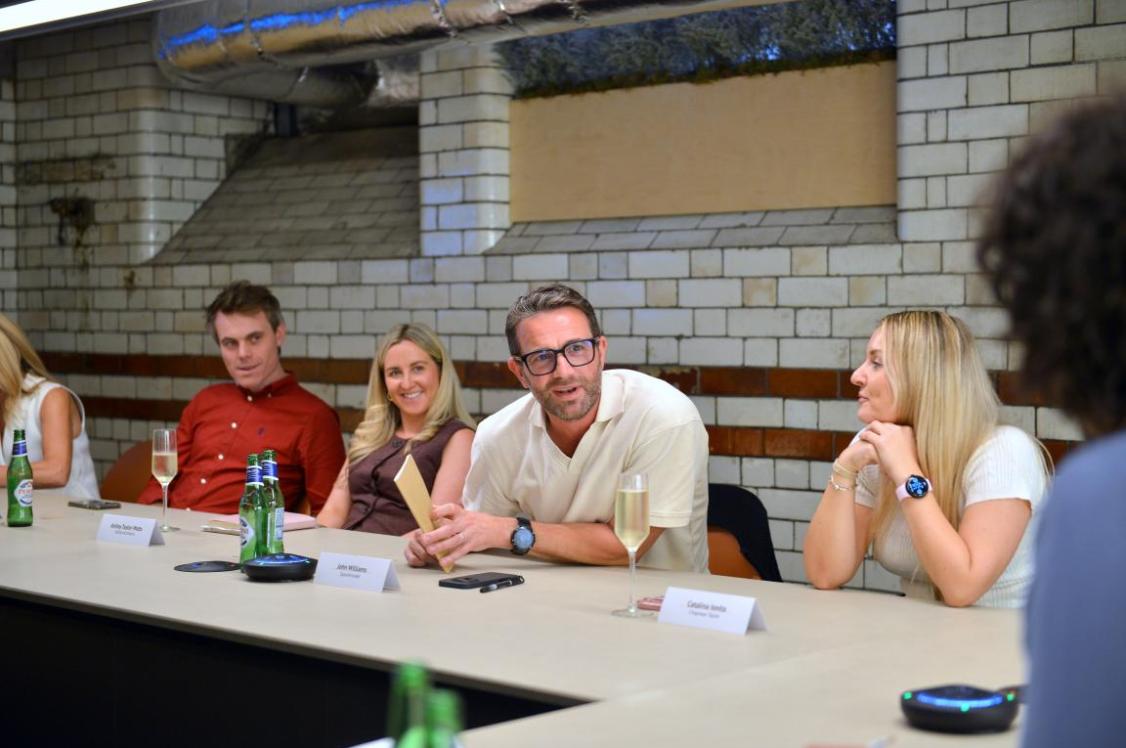
While "human connection” was cited as “the whole point of the office" by Samantha McClary, CEO, British Council for Offices - commercially, an office acts as “a physical manifestation of an organisation's values”, said Caroline Pontifex, Director, Head of Workplace & Design, Savills, facilitating “connection, coaching, and culture.” In this way, "Workplace is a place of enablement”, suggested Dereck Dziva, Senior VP, Neuberger Berman.
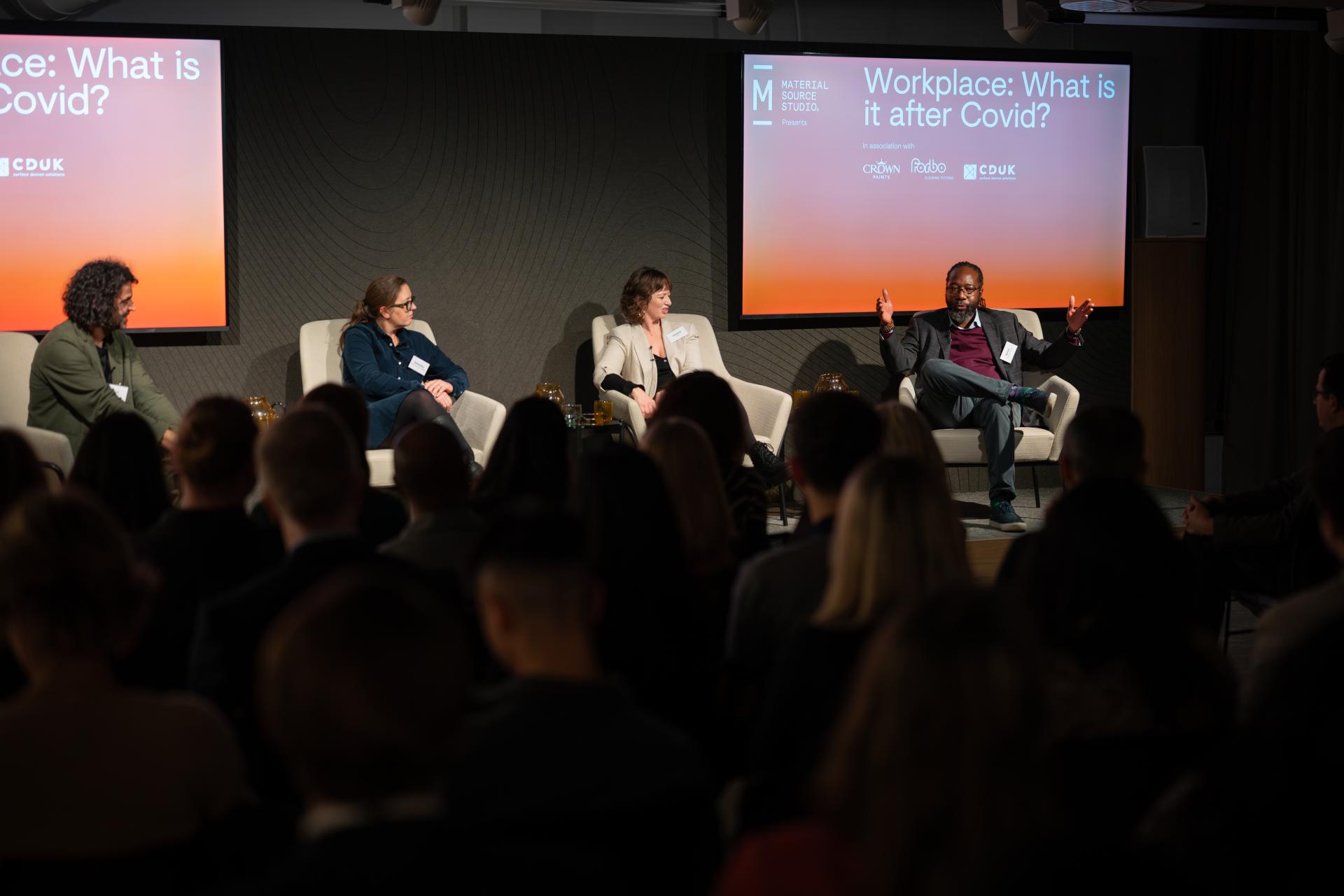
Image credit: Robin Boot
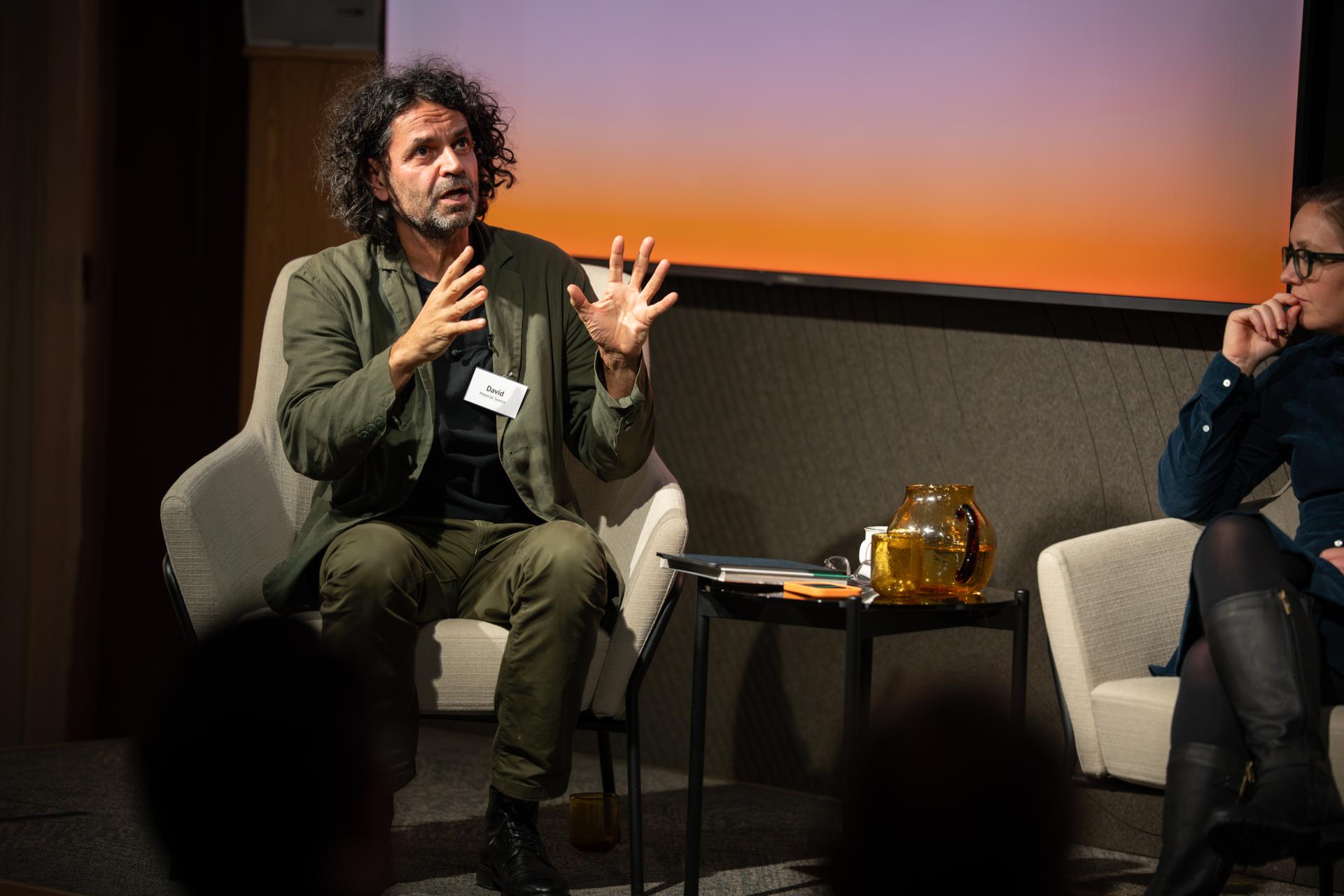
Image credit: Robin Boot
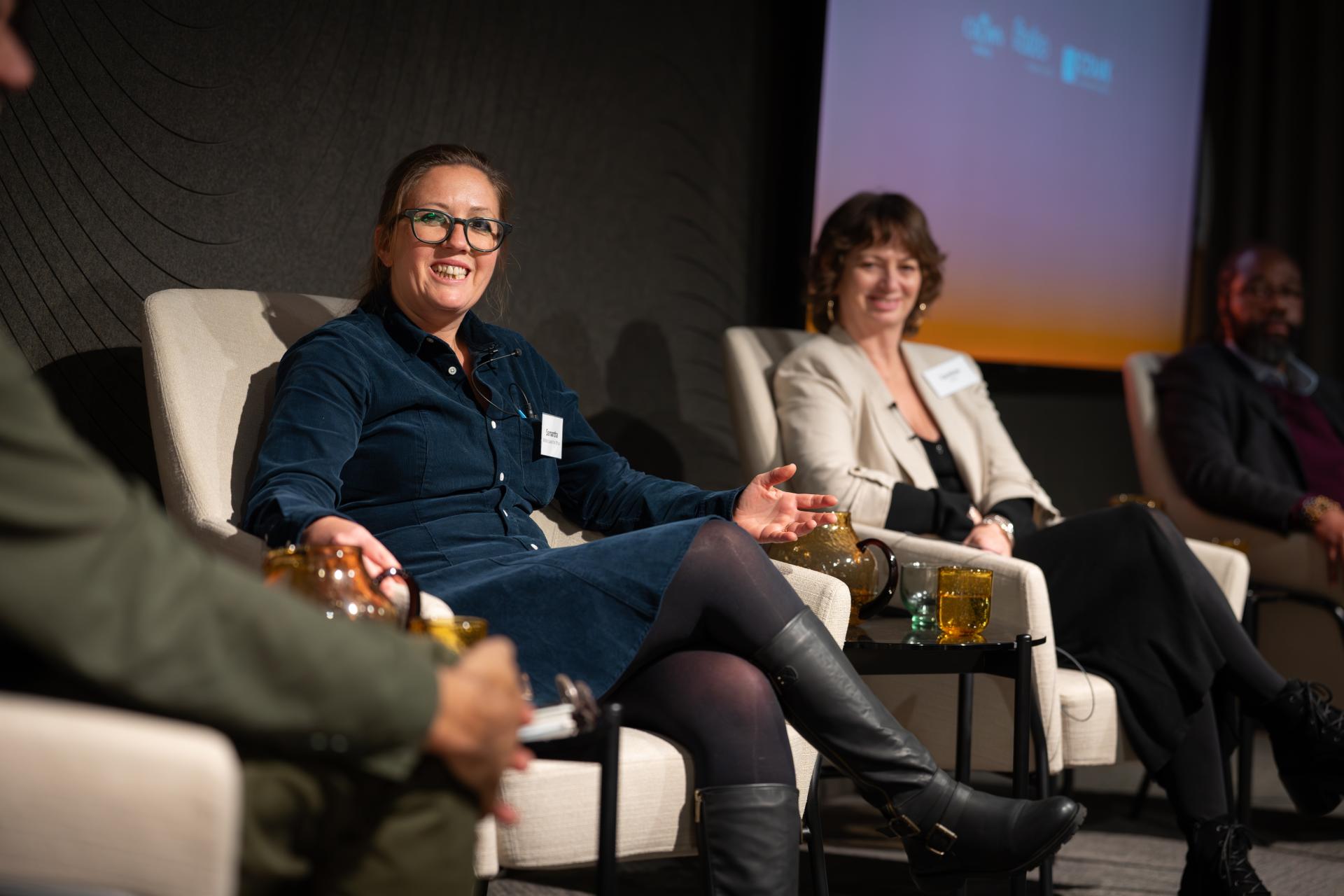
Image credit: Robin Boot
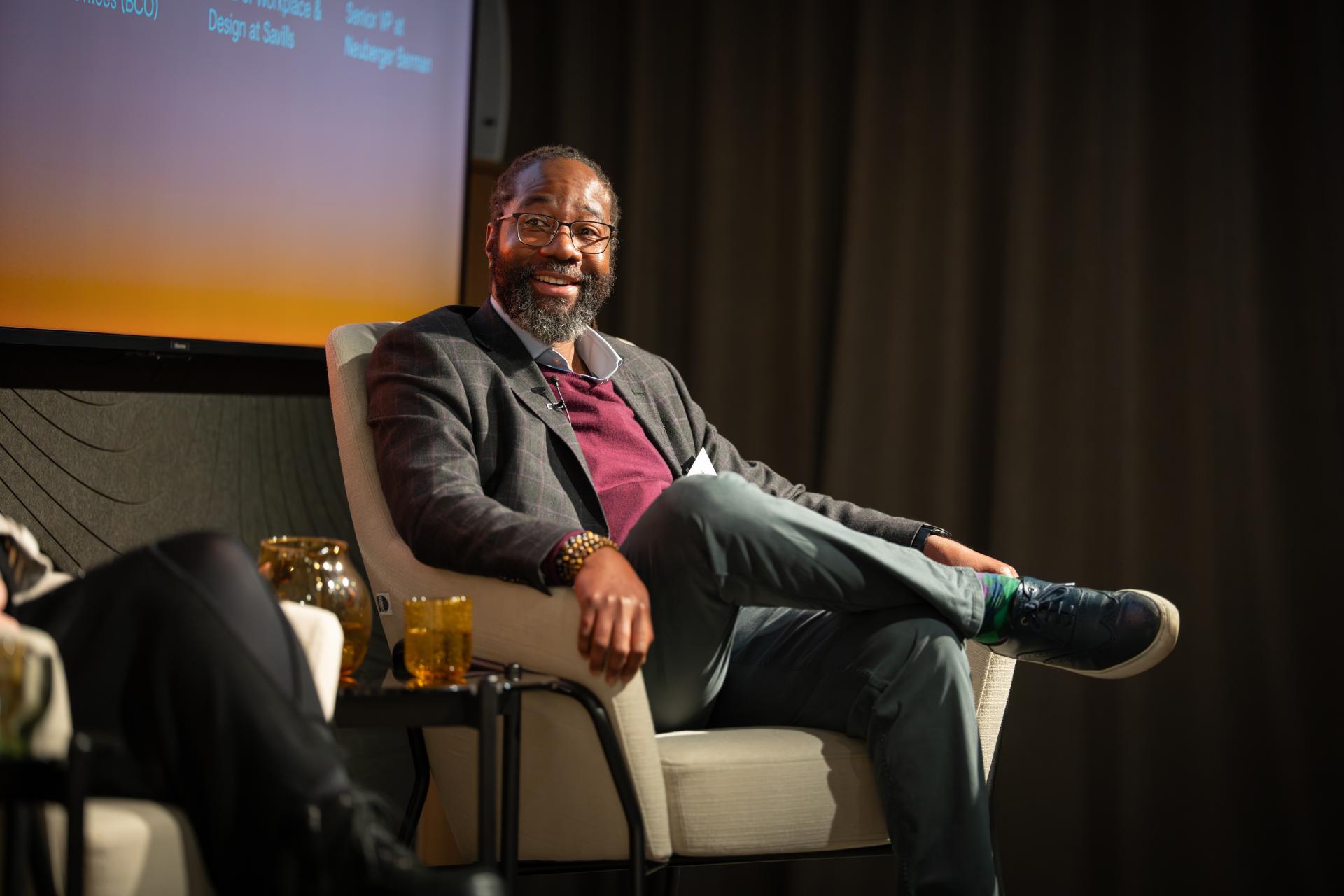
Image credit: Robin Boot
Workplace: The Covid conundrum
To kick start the discussion, Host David Smalley asked the panel: “What was your experience of working during Covid?”
Samantha McClary, CEO, BCO, responded, “I don’t think Covid was a great experience for anyone, really, was it?” Working as Editor of Estates Gazette at the time, “a small company within a big corporate”, Samantha shared the physical side of working wasn’t necessarily a problem as there were measures in place should the printing press go down, but with journalism based on communication, “that wasn’t so easy”, she said. Especially for the younger people in the office.
“I feel very lucky in that I had lots of contacts already in the industry and built up this social currency so I could still do my job remotely. But we had quite a young team who were only just getting to know people – they needed to be out there.”
For Caroline Pontifex, Director, Head of Workplace & Design, working in a small office in Victoria as part of independent firm, KKS Strategy (later acquired by Savills), the physical side of working was a problem. “We were still using all our own old PCs and overnight we had to send our staff home carrying their desktops – one person didn’t have broadband, so there was a lot to sort out.”
As a design-focused company uploading and downloading large files, homeworking was a struggle, admitted Caroline. “We're all architects and designers, trying to work on Revit files is a nightmare for a home broadband.”
A point that really did hit home was Caroline’s mention of a “calendar that looked like a Rubik’s Cube” with titters of knowing laughter rippling around the room.
“All of that interaction that I would have on a normal basis with my team suddenly gets carved up into half hour slots on my Team's calendar.”
Working within a global organisation, Dereck Dziva, Senior VP, Neuberger Berman, “suddenly became a very important person” in his role at the Chartered Institute of Management Accountants where he was during Covid. Responsible for workplace and facilities management across the US and Asia, Dereck shared that just like everyone else, he took each day as it came. “Like most people, I relied on my peer network, some of whom were experienced after SARS, for example.”
One fortuitously pre-emptive move the company had made shortly before Covid was adopting “agile working.” Meaning greater technological enablement had already been secured ahead of 2020.
“When Covid hit, our CEO locked down the week before the official lockdown. He just said, ‘I'm concerned about people's safety. So from this point on, we're working from home’. And because we were prepared to work from home, it was a seamless transition.”
Though on a global scale we all experienced Covid, we did so in many different ways, suggested David, “It was horrible for some people, it was exciting for other people”, to bring us up to the present day, he asked the panel whether there’s anything we learnt from it that we hold with us now?
“I learned the value of being human”, said Dereck, in reference to the very human experience that was felt depending on a person’s totally unique situation. Whereas some senior people in an organisation may have already had a home office, others were working from their bedrooms. Some had dependents, others didn’t. But there was an emphasis on kindness – “we started our emails with, ‘I hope you’re well’.”
“I learned the value of being human” - Dereck
Paired with this aspect of human nature was a cacophony of “noise” Caroline suggested, not all of it helpful.
“Everybody had a research paper; everybody had an opinion of what they thought was coming down the line and how things would shape the future. There was a huge amount of noise but little substance behind it.”
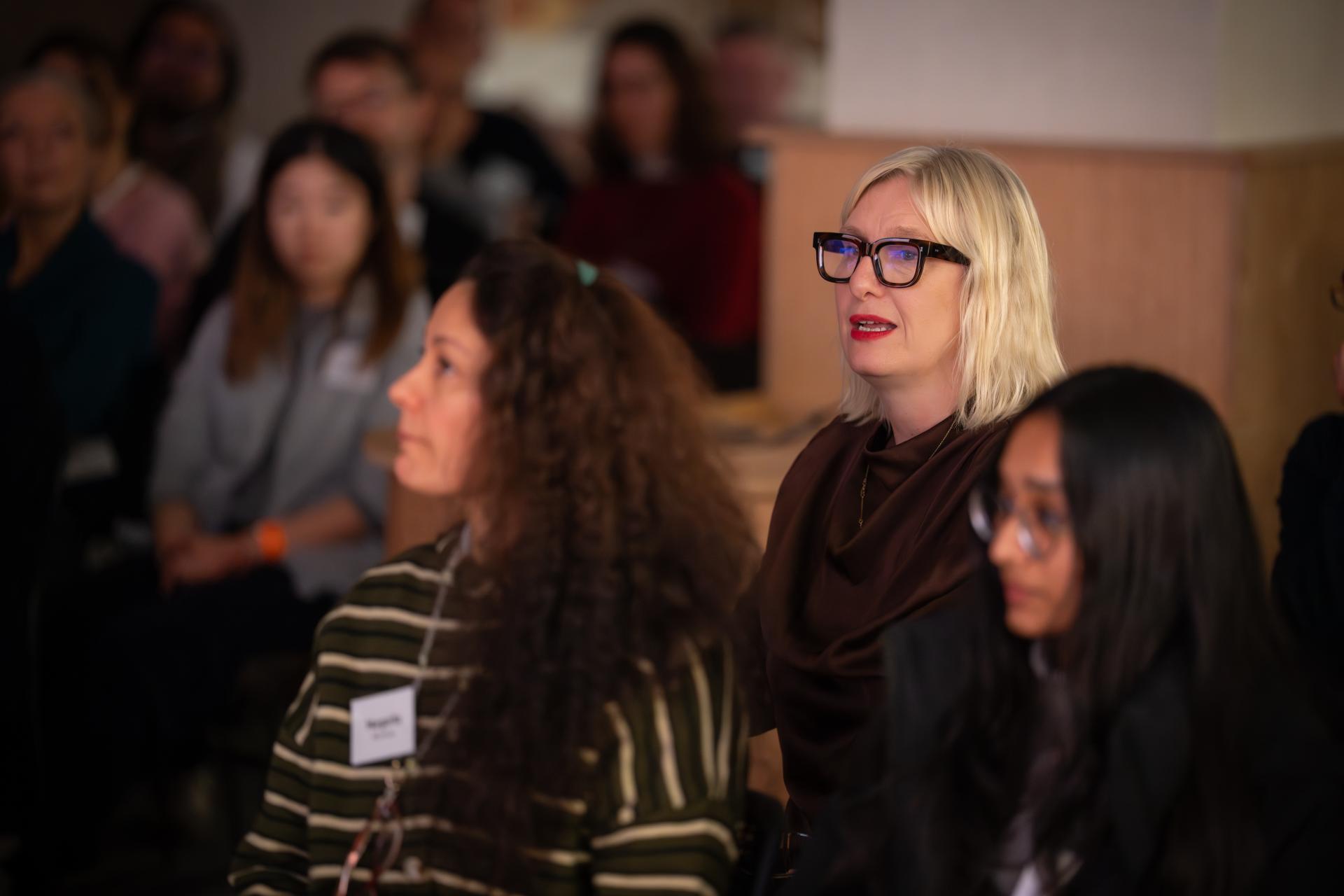
Image credit: Robin Boot
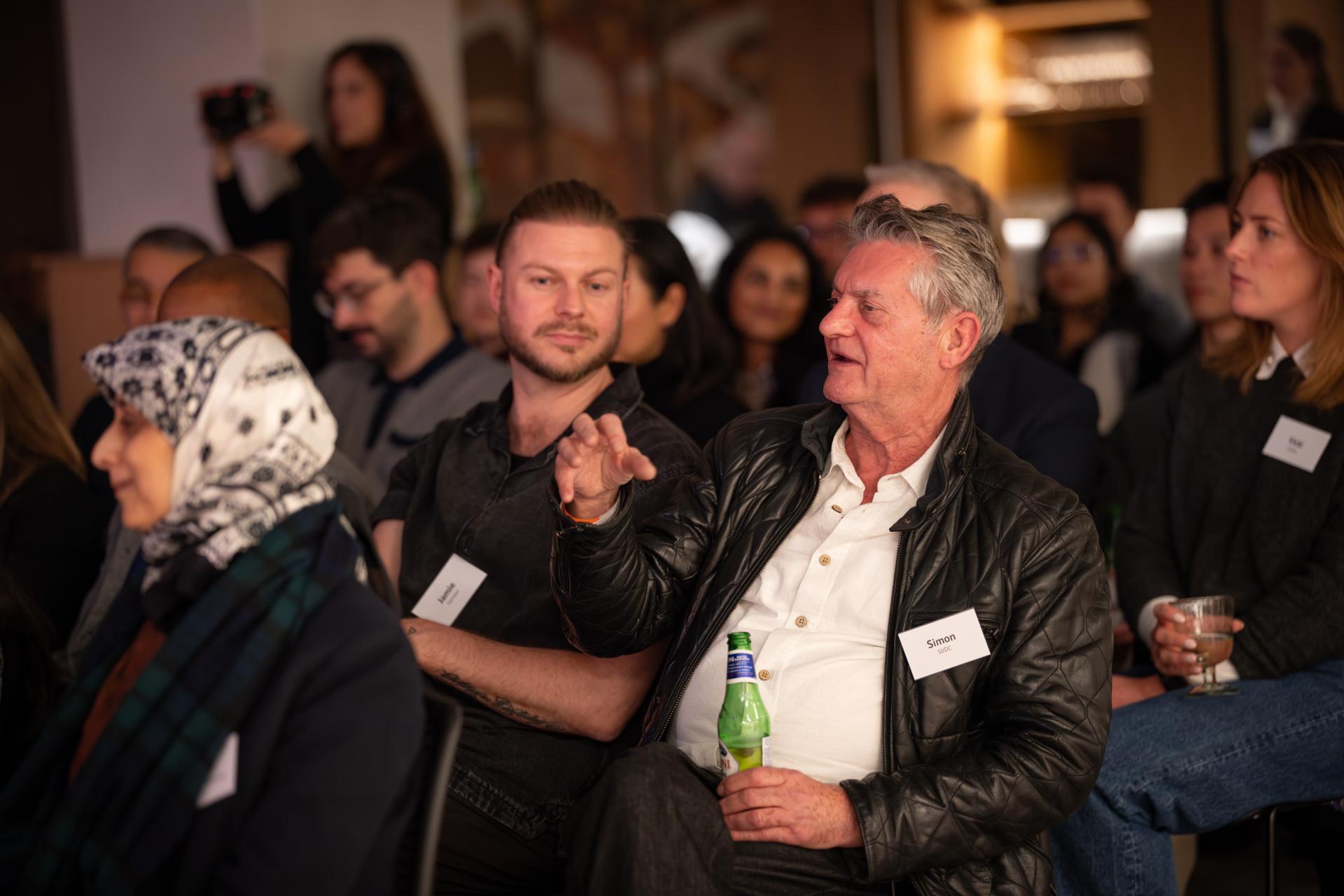
Image credit: Robin Boot
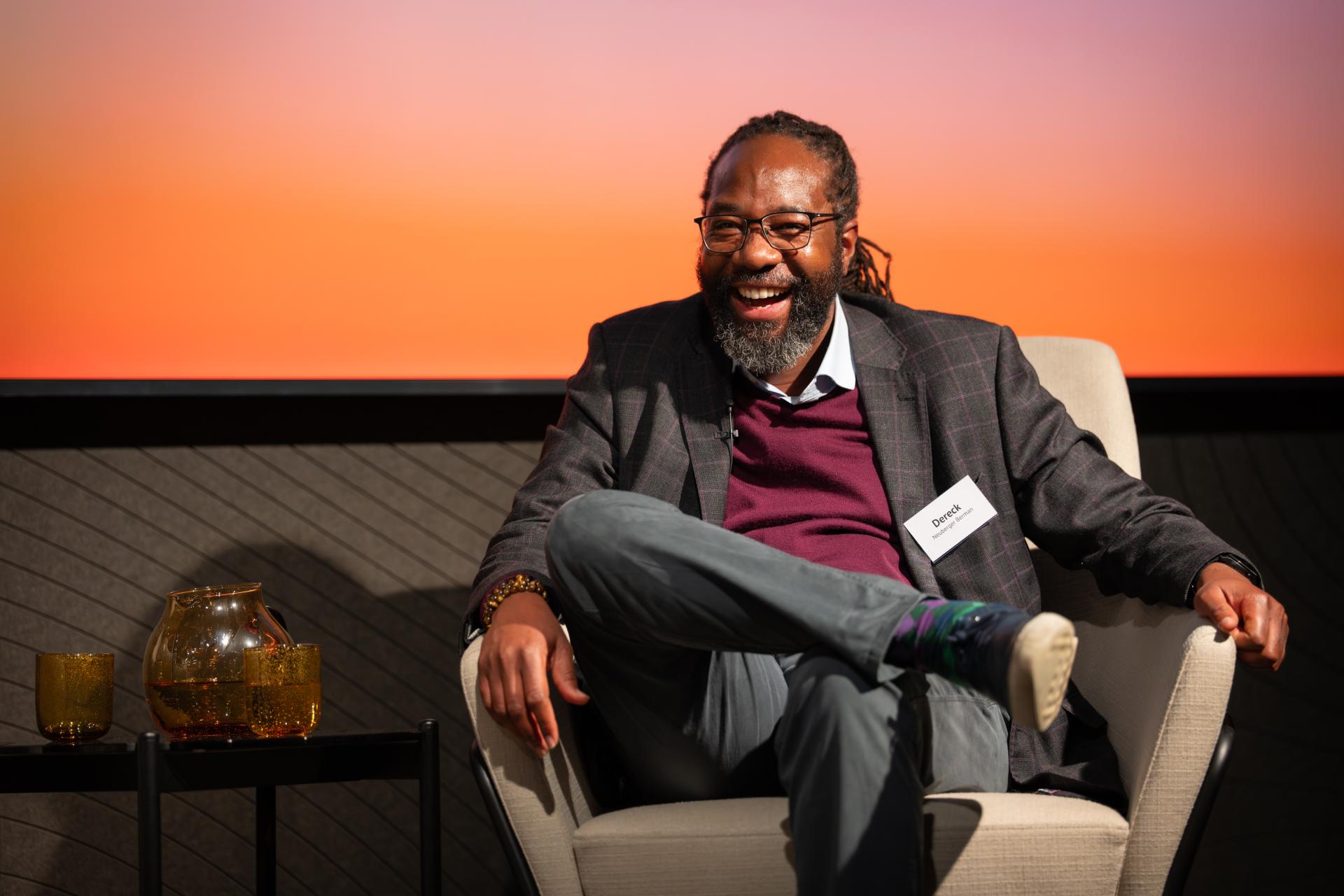
Image credit: Robin Boot
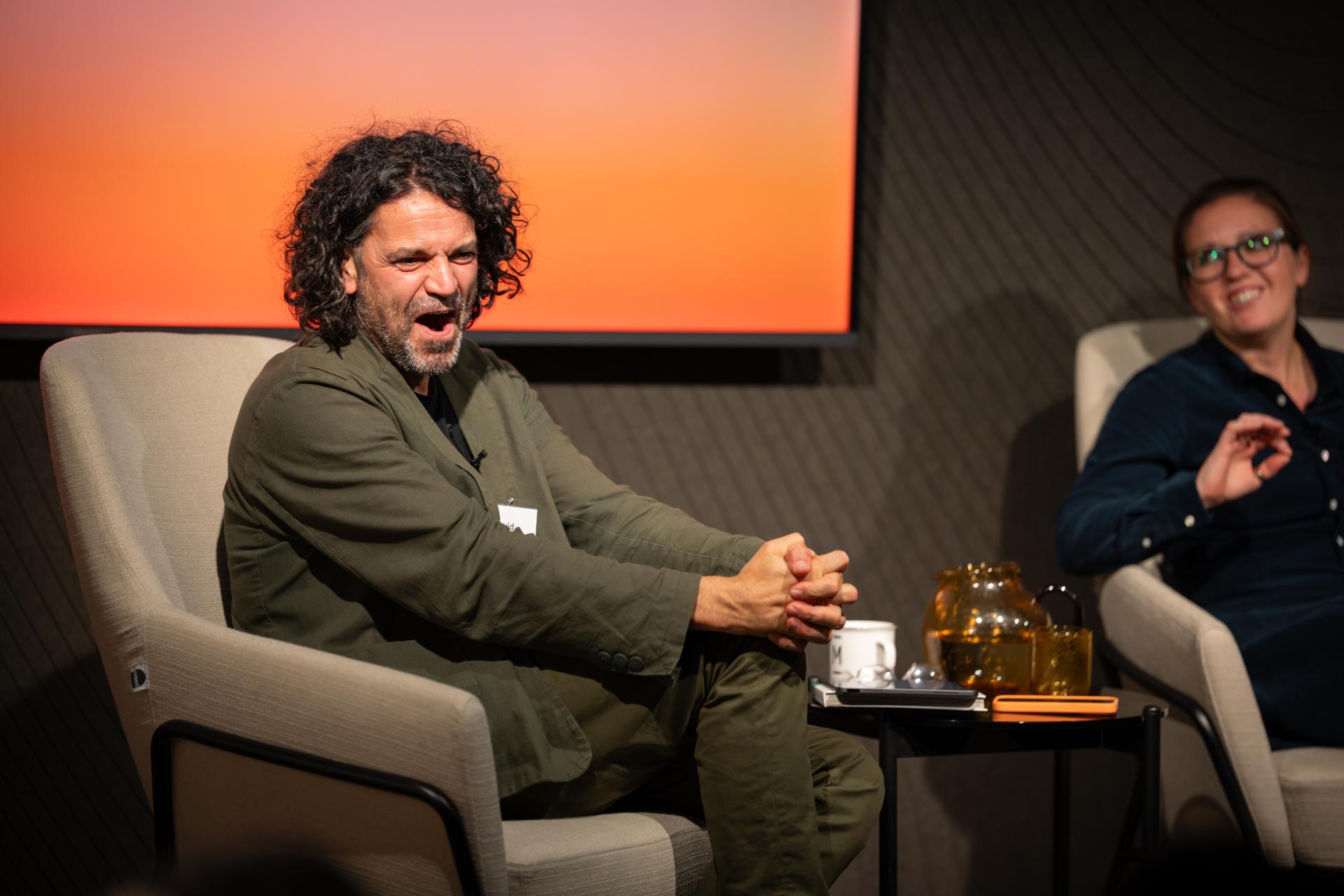
Image credit: Robin Boot
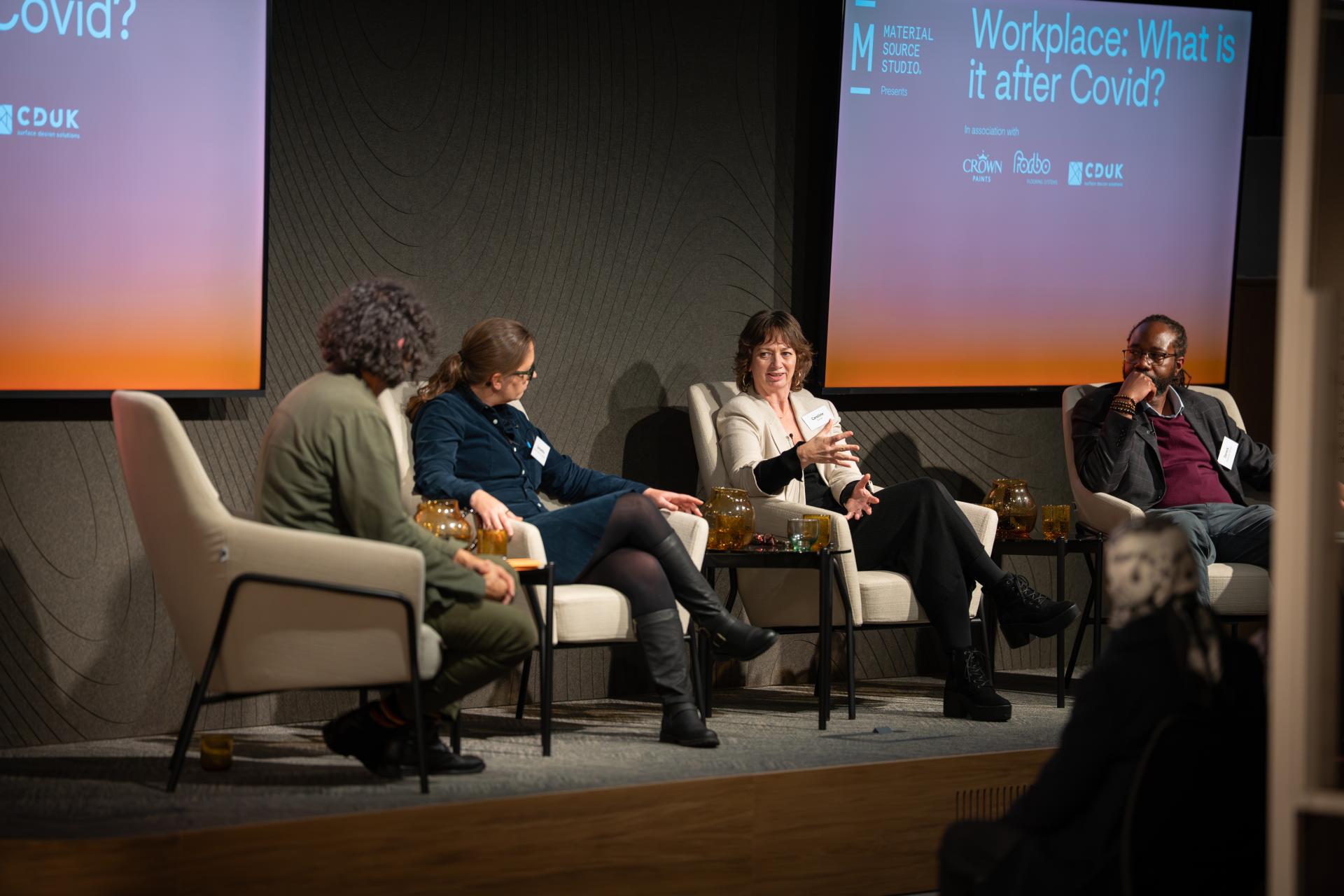
Image credit: Robin Boot
The current workplace: Built on purpose?
“Focusing on the now, what’s the core function of the workplace?”, asked David.
For Samantha, the answer is simple: “It's human connection”, she said. And this isn’t necessarily just within an office’s four walls. “It can happen on the way into the office. On the lunch break that you take, going to the sandwich shop by the office, or going to the pub. I think that's the whole point of the office. It's not really to work, it's to connect.”
Dereck agreed, adding that it also offers a helpful separation between home and work life. While homeworking can clearly offer benefits to some, in a recent study it was described as a “double edged sword” in terms of whether it bolsters or hinders a person’s overall wellbeing. One such potential negative being an increase in social isolation.
For this reason, the workplace’s ability to foster “connection” is crucial, said Caroline. “It’s all about the 3 Cs – connection, coaching, and culture”, she explained. This should be used to drive amenity, and feed into an overall vision for how a business is run.
If there was one thing to be taken from the Covid pandemic, it was space, suggested Caroline – “space to think about what the workplace experience should be.”
Referencing the HSBC downsizing, Samantha commented on how difficult it still is for a business to ascertain what workplace is. With “hybrid” – a term loathed by some members of the panel – still very prevalent, allocating the right number of desks has proved challenging for many. “It’s a guesstimate because we still haven’t settled yet”, Samantha added.
Audience member Simon Jackson, Managing Director, SJJDC, suggested that the majority of large corporations [such as HSBC] were using their concerns with [data that suggests] a drop in productivity [with most staff working numerous days from home, post-Covid] to enforce back to work policies - creating conflict between c-suite and their staff.
Clare Bailey, Director in Commercial Research, Savills, shared that the financial conglomerate is not alone in the situation in which it finds itself. “We're now seeing a lot of those companies that had knee-jerk reactions in terms of taking less space or thinking they didn’t need much space, realising, ‘hang on a minute, we're getting everyone back to the office, and there's no space’. The upshot of this is they're all starting to take more space, and we're seeing a lot of these upsizers coming through.
“In this sense, it’s really positive for the office market and shows that human connection and culture are essential”, Clare added.
For Nick Walker, Director – Heritage & Townscape, Iceni Projects, one thing Covid did highlight was “just how lazy some office space was and some of the terrible conditions that people had to put up with.” Now, he said, “employers have to work harder to make it more palatable than staying at home.”
In his role as Tutor at the Glasgow School of Art, Nick also shared that there’s been “five years of people coming through the system who just aren't used to understanding how you learn from being around other people”. This has meant getting people back into the office is “tricky”, Nick suggested. Yet hugely important.
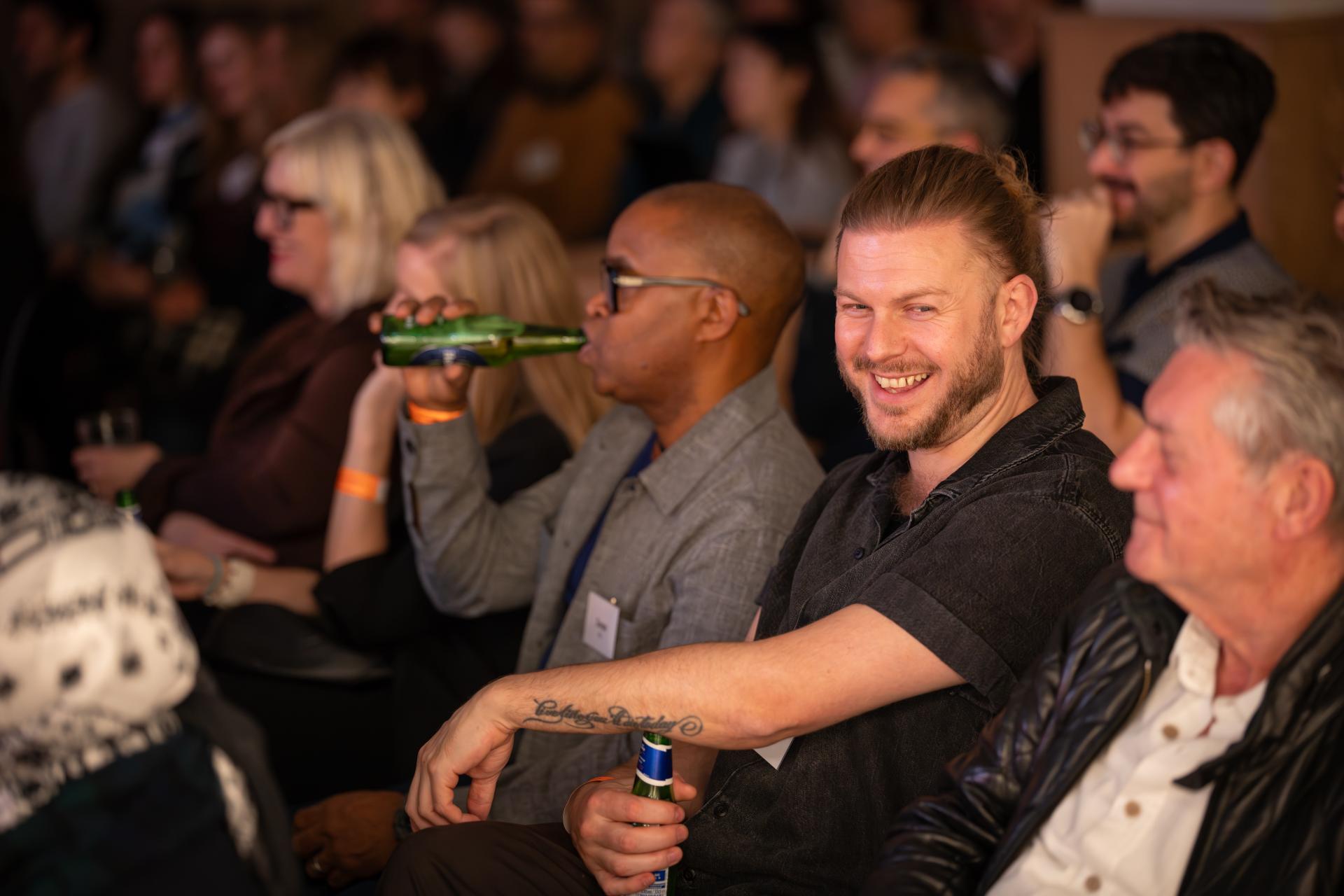
Image credit: Robin Boot
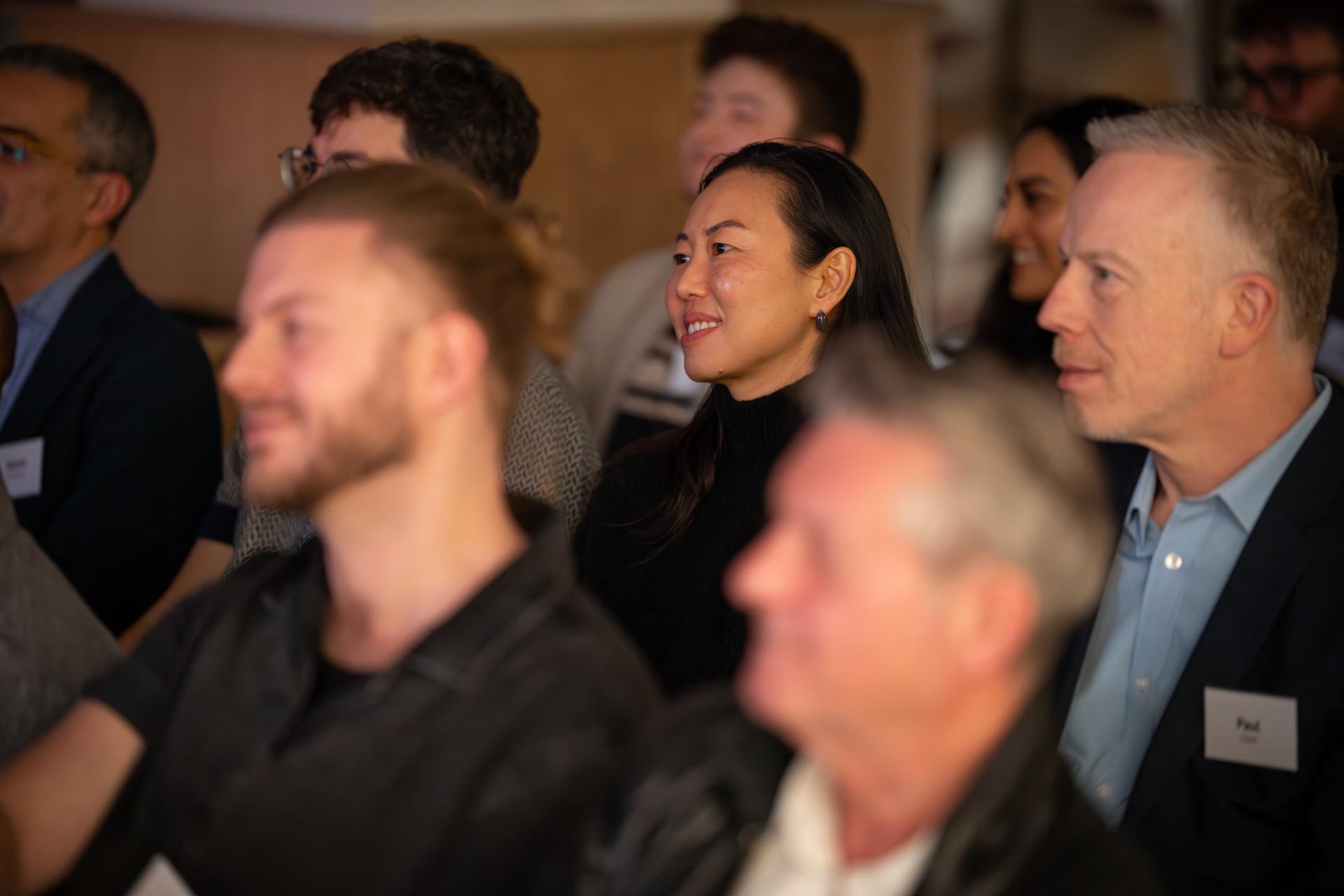
Image credit: Robin Boot
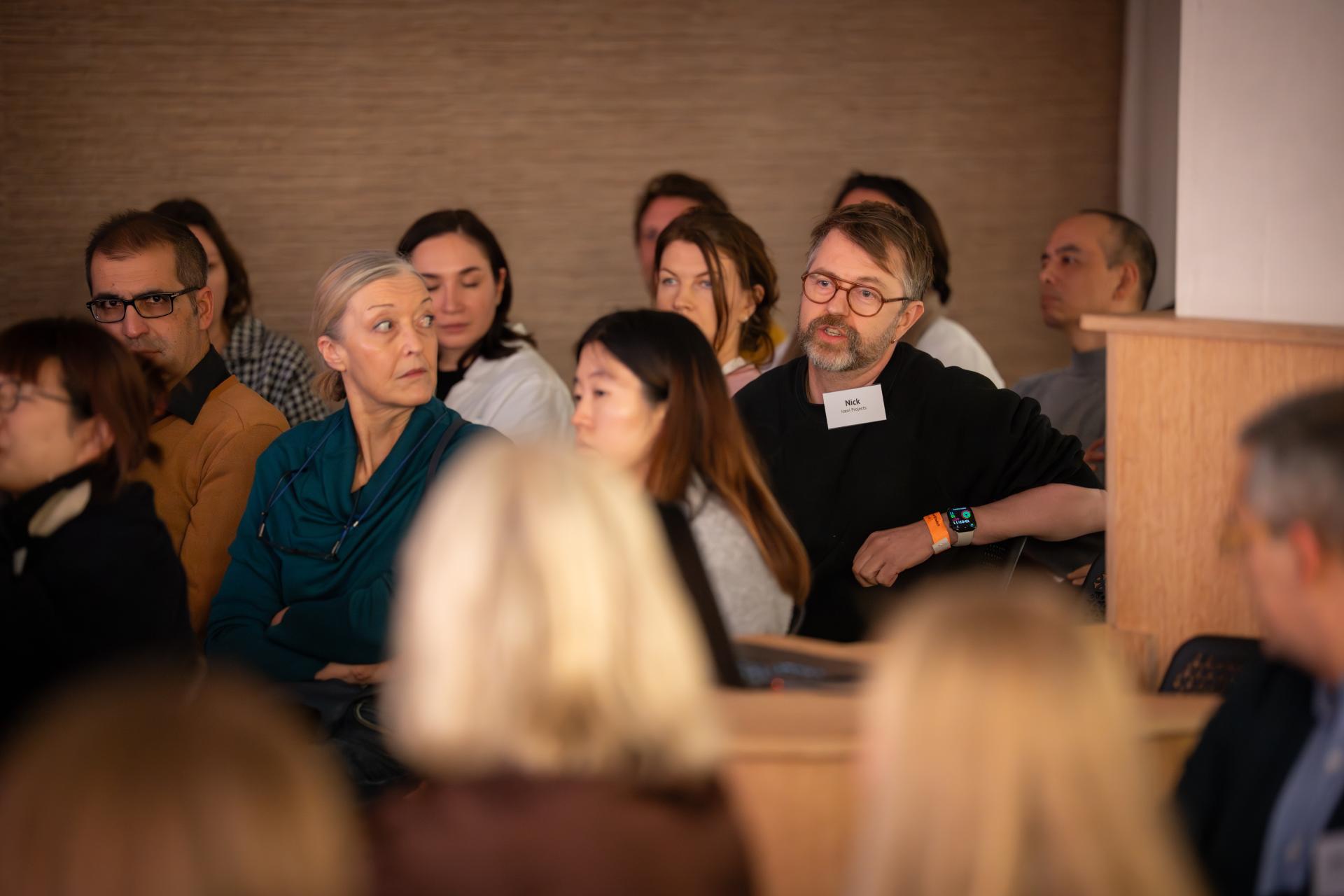
Image credit: Robin Boot
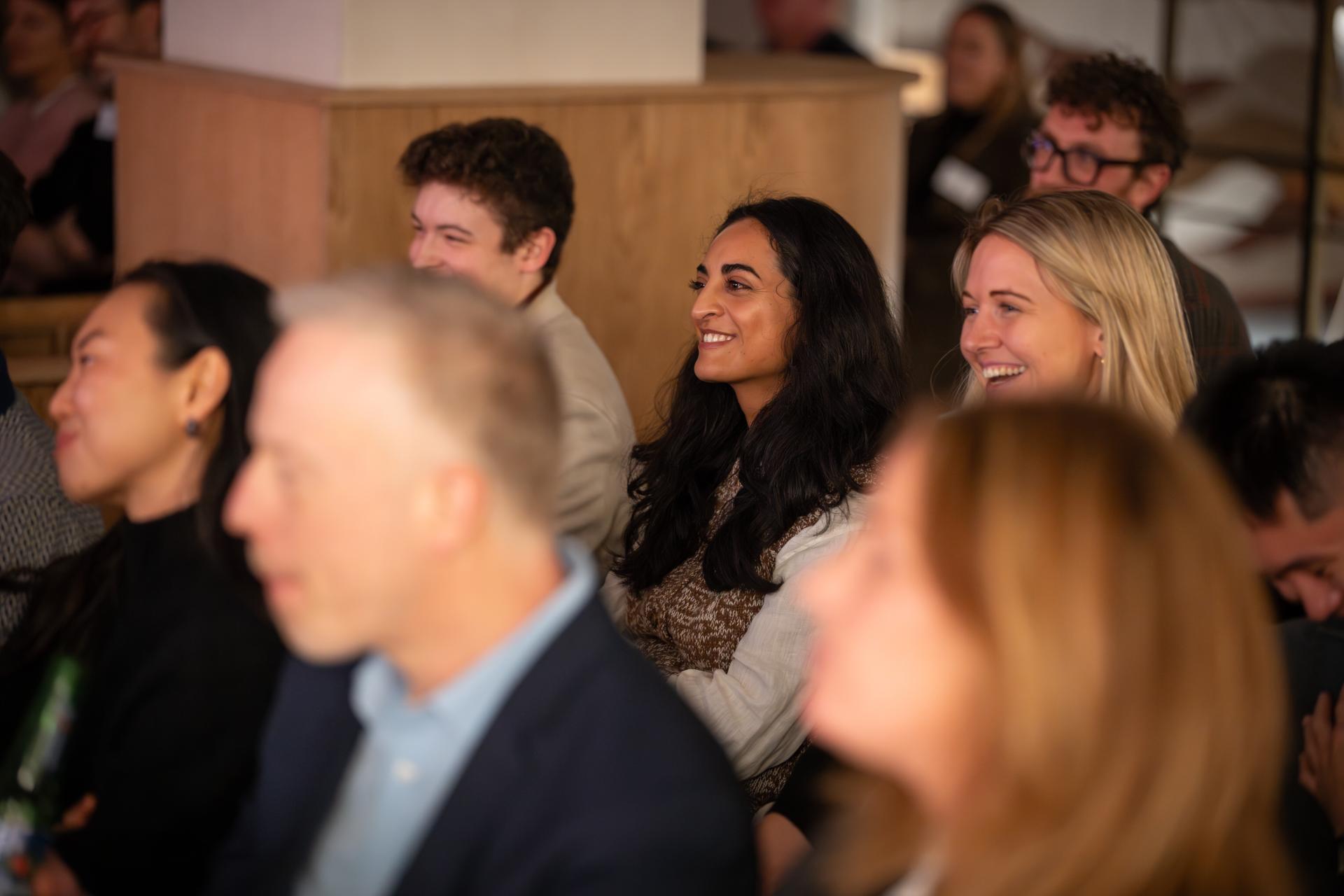
Image credit: Robin Boot
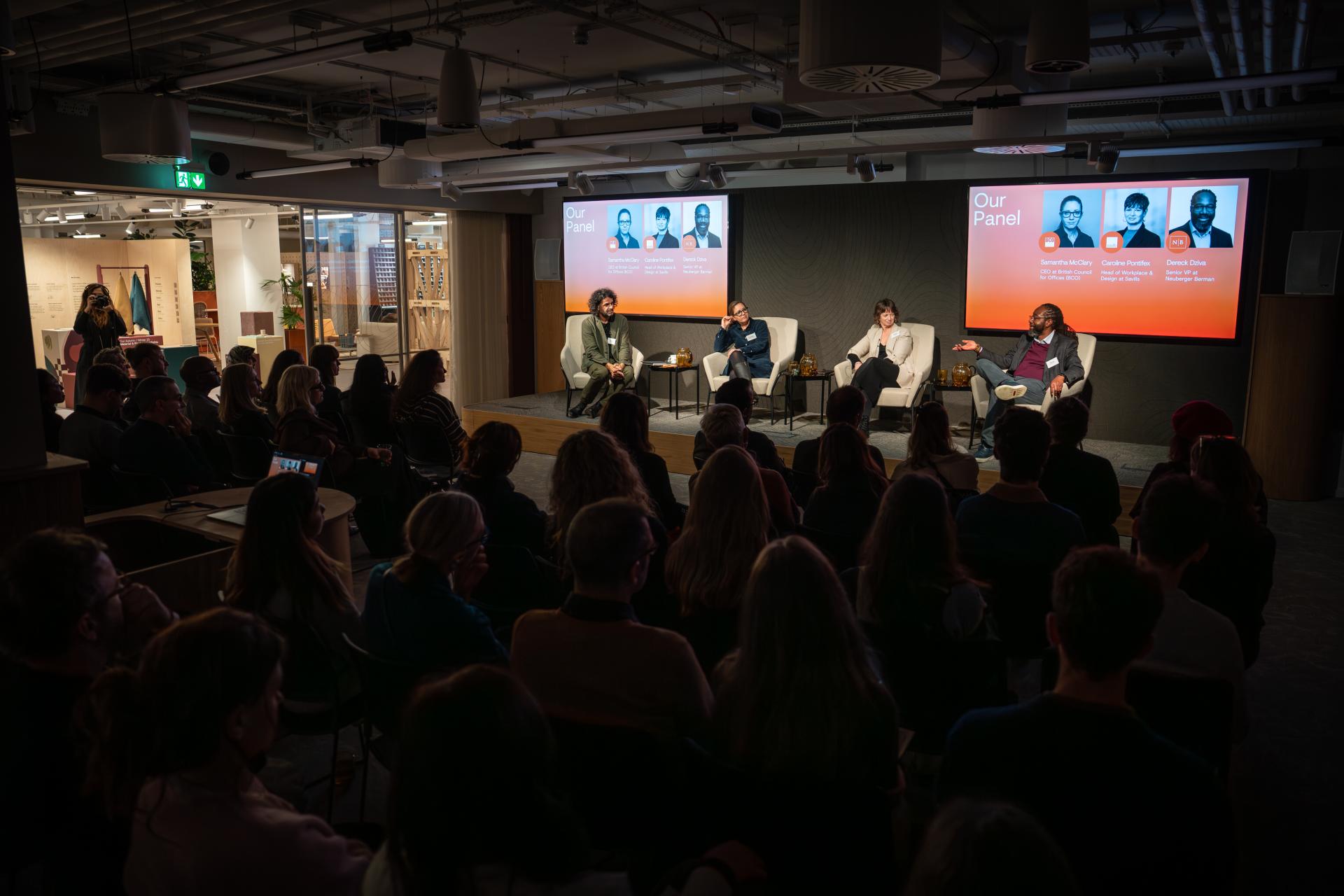
Image credit: Robin Boot
Defining productivity
“Productivity is a manufacturing term”, said David, “why are we using this in relation to people?”
Businesses use the word “productivity” to justify their actions, replied Dereck. “If they want people back into the office, they’ll say productivity is suffering at home. If they want to save some cash, they’ll say people are just as productive at home. But they haven’t defined what productivity actually is.”
Samuel Lee, Part II Architectural Assistant, Cornish Architects, asked, “Which workplace design choices have the strongest measurable impact on behaviour and performance now that hybrid working has stabilised?”
“The workplace has actually re-expanded over the last 15-years…”, said Caroline, “…it’s expanded into the cloud. And that’s meant in the physical workplace that we've been able to dump loads of equipment that we used to have. Paperwork, storage, fax machines, phones. And we’ve claimed back all that space.
“However, the space that’s most in demand is the meeting room. We want somewhere that we can go into and shut the door. We are having to retrofit meeting spaces all through our clients because meetings have gone up threefold in the last 10 years. And that's because with technology, you can't effectively communicate in the same way.”
Here lies the common issue with “hybrid”…the elephant in the room… technology. While it’s getting better, “we're still churning through different AV solutions”, commented Caroline.
“We’ll never get there”, said Samantha, “humans aren’t programmed that way.”
Meetings in general aren’t always necessary, added Dereck – “if you want to chat to someone you don’t need to schedule a 30-minute Zoom every time.” There’s an element of change management needed, he suggested.
Image credit: Robin Boot
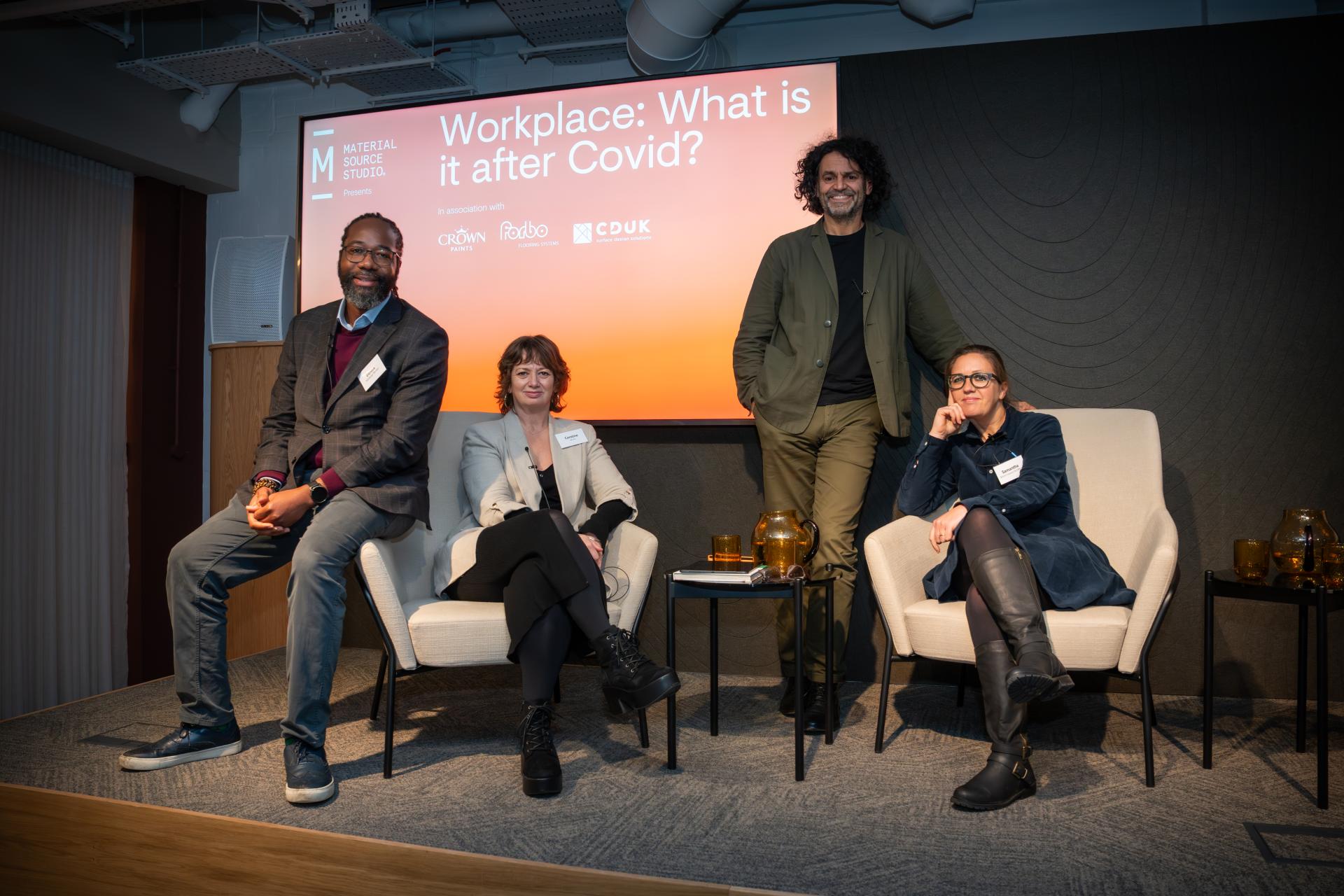
Image credit: Robin Boot
Image credit: Robin Boot
Image credit: Robin Boot
A question from Lauren Burnett, Architectural & Design Consultant, Crown Paints, asked, "Considering all the amenities in office spaces now, how can we still create this sense of culture and environment for companies that don't have the budgets for it?"
“I don’t think you necessarily need amenity to make a great workspace”, responded Samantha. “Having amenity within a building can often keep people in, I think it’s just as important to have amenities around the building to allow people to get out and be part of the community.”
“I don’t think you necessarily need amenity to make a great workspace” - Samantha
“You can create an amazing work experience without necessarily having all that jazz”, agreed Dereck. Though people all through an organisation have different expectations, he flagged. In the finance sector, some people will be in the office more than others, so they might have certain needs. But it’s about balance, he said.
As designers, Caroline highlighted “creativity” and the power in being able to craft schemes using inexpensive elements – perhaps second-hand. The most critical thing in an office though, she said, is “space”. “Space is a premium in a very expensive city.”
“Do you think that's why UK designers and architects are the best in the world? Because of the pressure on space?” asked David.
“It’s certainly driven innovation”, answered Caroline.
Image credit: Robin Boot
Image credit: Robin Boot

Image credit: Robin Boot
Image credit: Robin Boot
Image credit: Robin Boot
The psychology of occupancy
“What do you think a healthy occupancy is?” David asked the panel.
“75% - with a 25% buffer, people feel they have choice”, said Caroline, “and when they have choice, they’re happy.”
The typical office occupancy in London currently is 3.6 days out of 5 – 72% - shared Caroline’s colleague at Savills, Clare Bailey, in the audience.
Fellow audience member Craig Mitchell, Workplace Designer, Government Property Agency, asked, “Where are you gathering your data to inform these statistics?”
Caroline said it comes from a plethora of sources. TFL tickets, Pret A Manger sales etc.
Using these sources, Caroline shared that pre-Covid, occupancy sat at 55% across all industries. So it’s actually gone up. Perhaps in contrast to what might generally be assumed.
“People were never in 100% of the time pre-Covid”, commented Clare Bailey, “though that was the perception.”
With the majority of guests in the room being interior designers and architects, David asked whether the panel had any specific advice or comments for them.
“I think we have speeded up design since Covid and there's a number of reasons for that”, replied Caroline. “A lot of it is economic as well as technology. We found that you could end up with a very condensed design programme, going straight to D&B, when some organisations might have preferred a traditional design process prior.”
“The capex into fit out has shortened” – Caroline
Considering design from both a client and user perspective, Dereck shared, “I expect designers to be more than just people who design nice spaces or tell me where to put a desk, or where to put a meeting room. I'm expecting them to be more plugged into what the business is trying to achieve. Our culture.”
“And that's the fundamental change, isn't it?” responded David. “Designers have got to be designing for all. They have a hugely challenging role.”
Bringing the discussion to a close, for now, Mark Jordan, Owner, Mark Jordan Architecture & Design, asked about the impact of hotdesking on humans in a working environment – ultimately, do we need our own things around us?
Samantha believes the workplace should offer familiarity and a sense of homeliness, “There’s a debate to be had around if we want to bring people back to the office shouldn't we say here's your home?”
And going beyond that, this is what’s key to bringing smaller teams together – “the lifeblood of an organisation”, suggested Caroline. “You give the micro teams the space to form and to come together in a frictionless way.”
Image credit: Robin Boot

Image credit: Robin Boot
Image credit: Robin Boot
Image credit: Robin Boot
Image credit: Robin Boot
Do you have something to add to this discussion? Or more questions to ask for next time? Let us know over on LinkedIn.
In the meantime, a huge thank you to everyone that joined us for our second of many seminars in London, to our panel, and to our supporters for this event, Crown Paints, CDUK, Forbo Flooring Systems – all Partners at Material Source Studio.
For details of our 2026 seminar programme, stay tuned to our What’s On page for further info and booking.