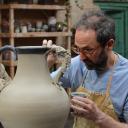
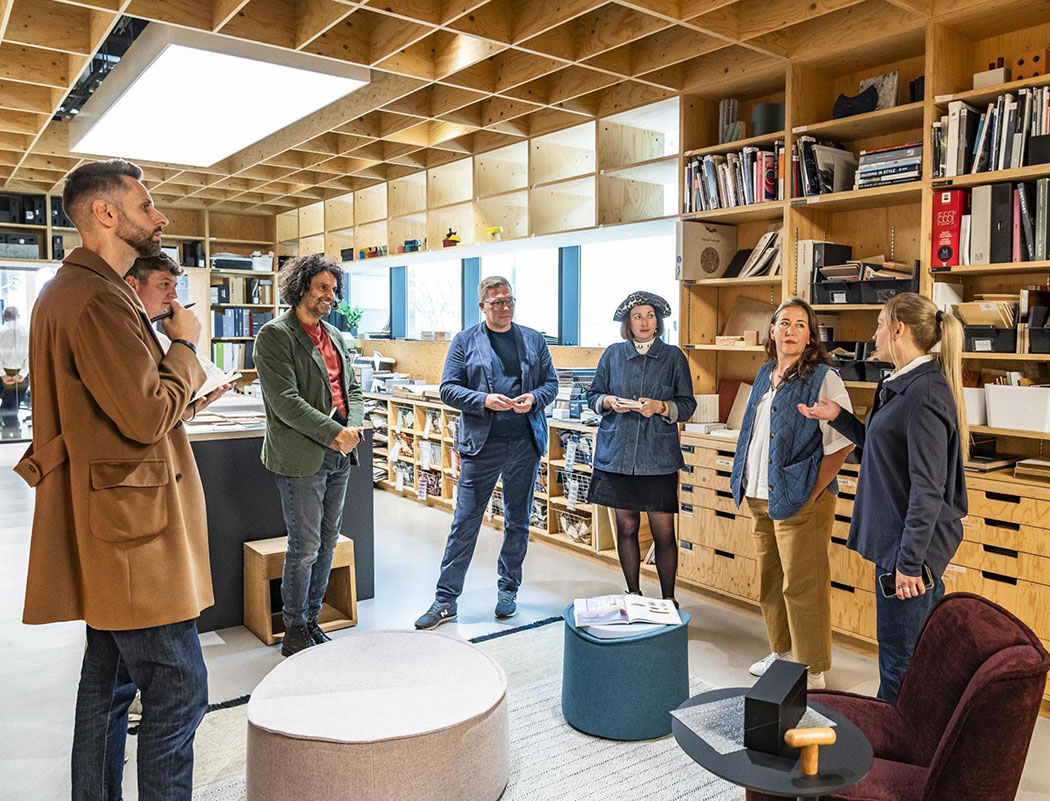
Lola Ben-Alon, assistant professor, Columbia University & director, Natural Materials Lab.
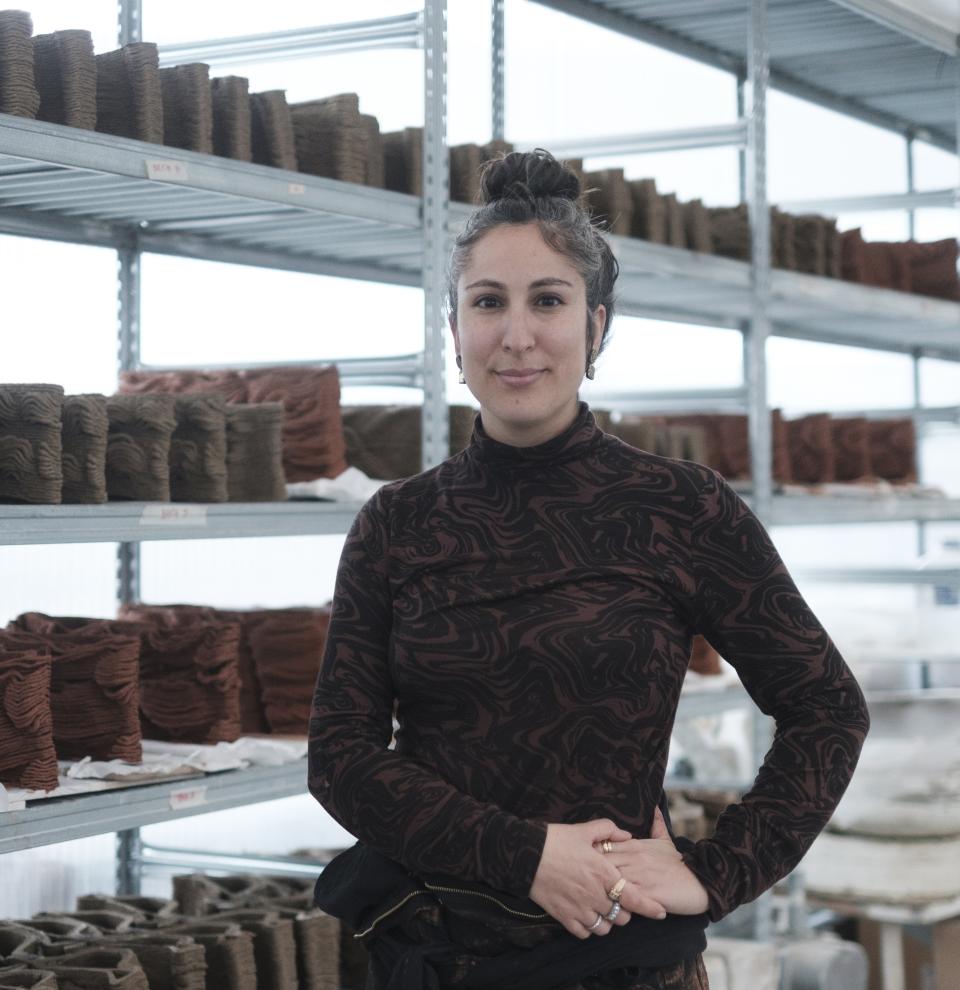
Photographer: Alessandro Terranova
As we shift our editorial and events focus from EDIB and inclusive design to the non-human sphere of artificial intelligence, we're taking some time to consider the collaboration between people and technology. In this case, with a particular emphasis on how machines are supporting humans to meet the very real climate-related challenges we collectively face.
Leading the way in embracing technology, craft and human skill to harness the potential of natural materials is Columbia University's Natural Materials Lab.
Founded by Lola Ben-Alon, Assistant Professor at Columbia GSAPP, the direction of the Natural Materials Lab and the Building Science and Technology curriculum are under her expert charge.
Lola specialises in earth- and bio-based building materials, their life cycle, supply chains, fabrication techniques, and policy. She received her Ph.D. from the School of Architecture at Carnegie Mellon University, and holds a B.S. in Structural Engineering and M.S. in Construction Management from the Technion, Israel Institute of Technology.
After spotting a clear synergy between the work of the Natural Materials Lab and the ethos of Material Source Studio to champion innovation from embryonic stage up, Lola got in touch to share more insight into the work of the University, and to explain how new technological tools, including AI and 3D printing, are helping enhance making processes for greater planetary consideration.
This truly is fascinating stuff...
Firstly, can you please introduce us to the Natural Materials Lab?
"The Natural Materials Lab at Columbia GSAPP is a unique, trans-disciplinary, and dirty lab space. We combine low-tech machinery and digital fabrication with raw, earth, and fibre-based building materials across all scales—from the microscopic behaviour of a soil binder to the macroscopic impact of a full-scale building.
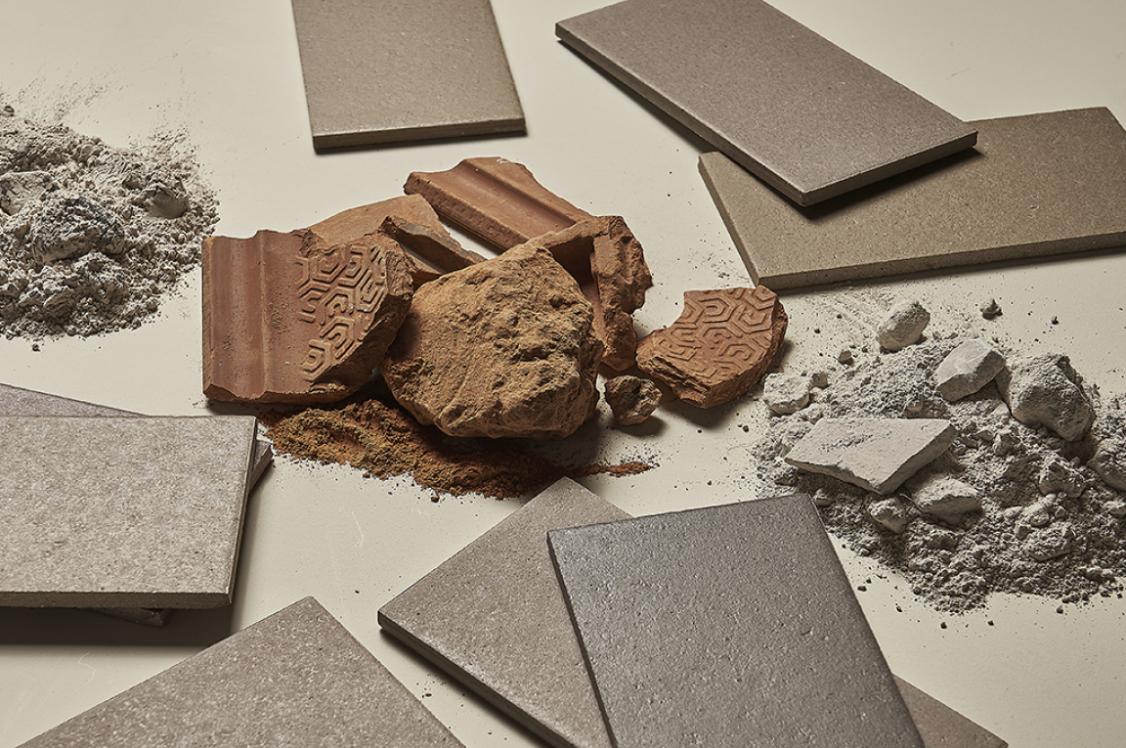
"We often describe the lab as a ‘dirty’ place, and I say that with a lot of pride. Unlike traditional scientific labs that prioritise sanitised, sterile environments, our lab is filled with the smell of earthly materials and it offers multiple tactile engagement possibilities. We are sifting soils, mixing recipes, and experimenting with ‘primal binders.’
"We act a bit like chefs; we develop material recipes, test them, and iterate constantly to see how we can transition the building sector away from ‘frozen,’ static assemblages toward materials that are living, breathing, and circular."
What drove you to founding it?
"My career has been a series of hairpin turns. I grew up in a small town near an arid landscape, where questions of material scarcity and environmental conditions were ever-present. While I was always drawn to design, a scholarship in structural engineering at the Technion provided a technical foundation that would later inform my approach to architecture. Parallel to my engineering studies, I embarked on a three-year program in Curatorial and Exhibition Design, which taught me to understand materials not only as structural components, but as vessels for narrative and public engagement.
"This duality—the technical and the curatorial—culminated in a Master's thesis focused on computation and construction management, and ultimately in a PhD at Carnegie Mellon University, through which architecture emerged as a synthesised trajectory that brought these domains into a shared framework, challenging how we think about the material ground itself. What really drove me was a hunger to understand the disconnect between how we build and how the earth works.
"During my PhD, I traveled to DIY workshops to learn rammed earth, cob, and light-straw clay. I realised that you can’t truly own earth materials—the techniques are so accessible and primal that they belong to everyone’s ancestry. I wanted to create a space that validates these ancient, low-carbon traditions through the lens of modern engineering and digital technology."
Who's involved? And how does it connect with the University on a wider scale?
"I direct the lab and we have a team that ranges between 10-15 people, composed of a diverse group of post-doctoral researchers, graduate students, and lab assistants, from fields including architecture and design, but also engineering, environmental science, curatorial practices, cinematic studies, and more. So backgrounds ranging from environmental politics to textile design.
"The Lab is a highly collaborative ecosystem. Within GSAPP and across Columbia University, we are deeply integrated into the wider community and collaborative efforts. We work closely with the Columbia Climate School and the Lamont-Doherty Earth Observatory, where we’ve actually built physical installations. We also collaborate with the Preservation Technology Lab because, to move forward, we have to understand the history of how we once built without burning materials, before the era of high-heat industrial processing."
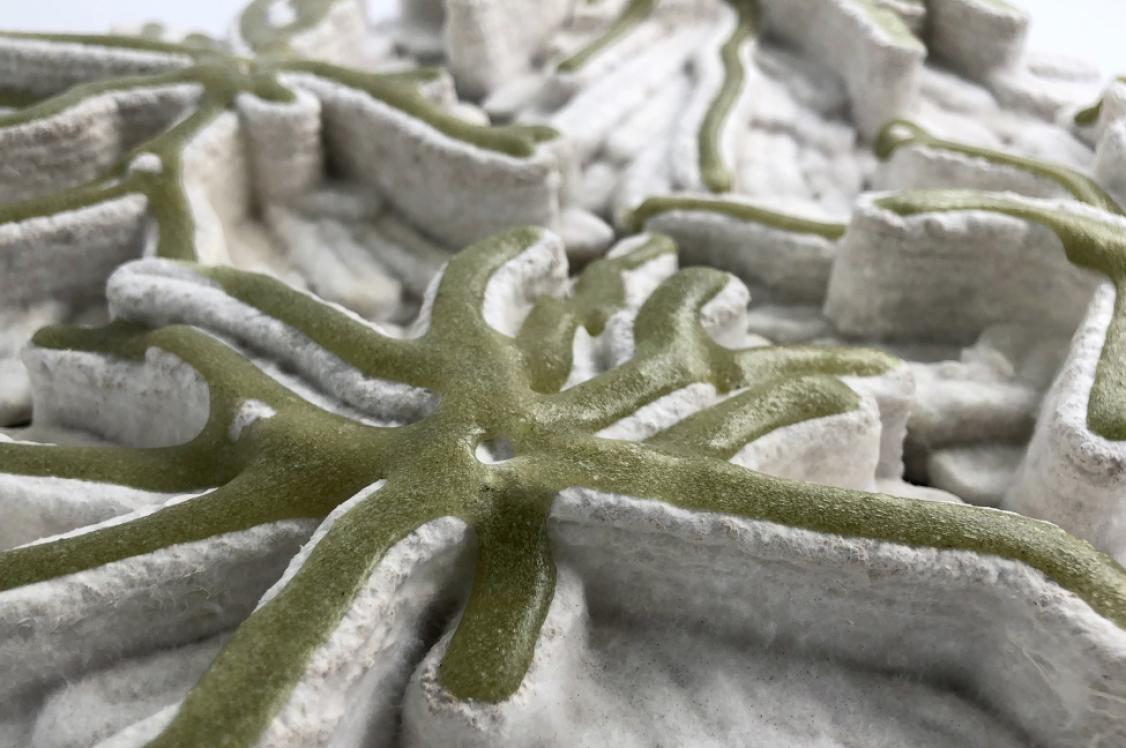
The Biomud Fabrics Research at the Natural Materials Lab. Research Assistant: Penmai Chongtoua
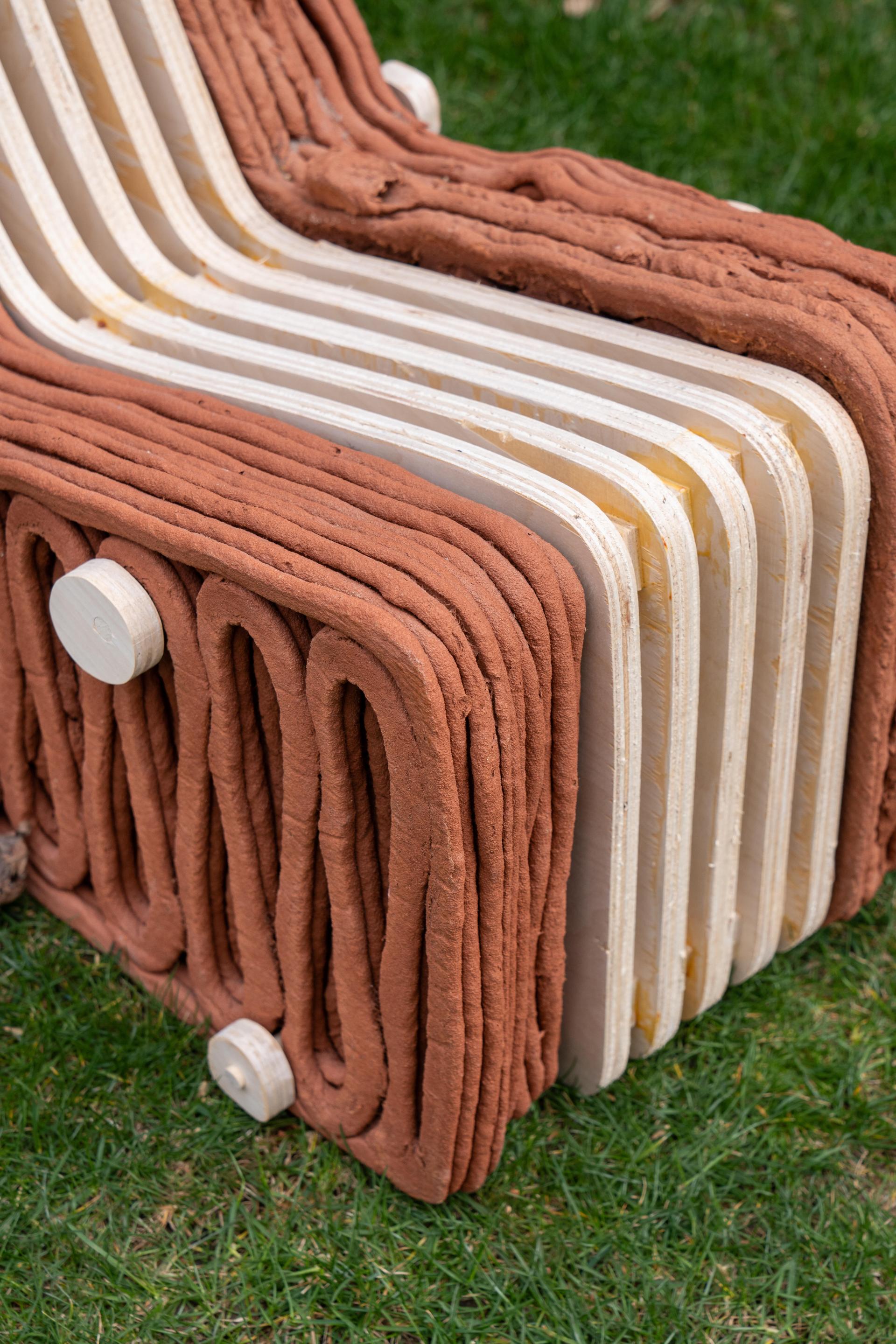
3D Printed Light Hemp Clay, made in a 3D Printed Earth Hackathon. Students: Jennah Jones, Soojin Yim, Eddy Voltaire, Danyel Hueyopan. Instructors: Lola Ben-Alon and Shiho Kawashima. Teaching Assistants: Olga Beatrice Carcassi, EunJin Shin, Erfan Maierdan
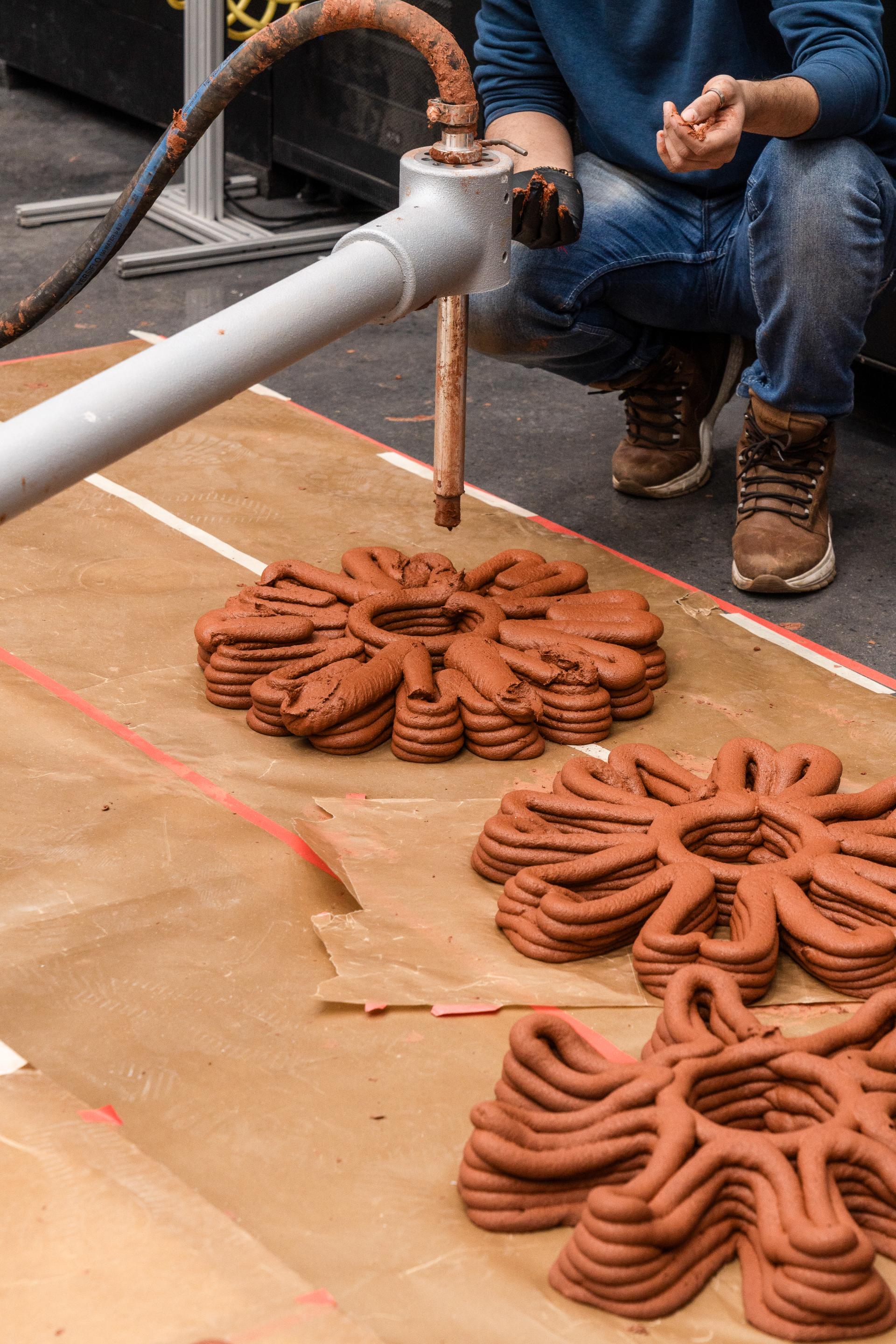
3D Printed Light Hemp Clay, made in a 3D Printed Earth Hackathon. Instructors: Lola Ben-Alon and Shiho Kawashima. Teaching Assistants: Olga Beatrice Carcassi, EunJin Shin, Erfan Maierdan
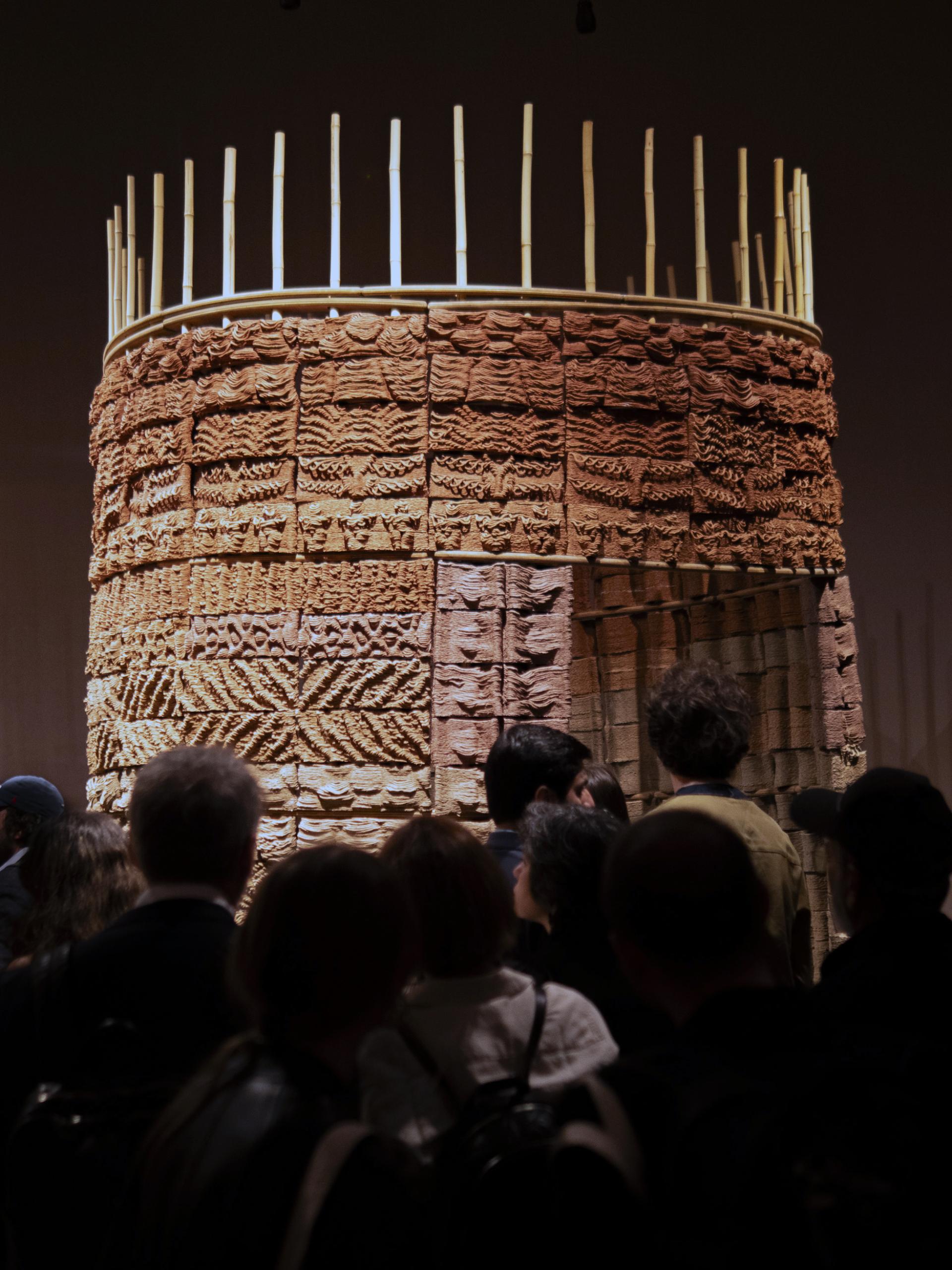
Earthen Rituals at the 19th Venice Architecture Biennale. Photographer: Alessandro Terranova
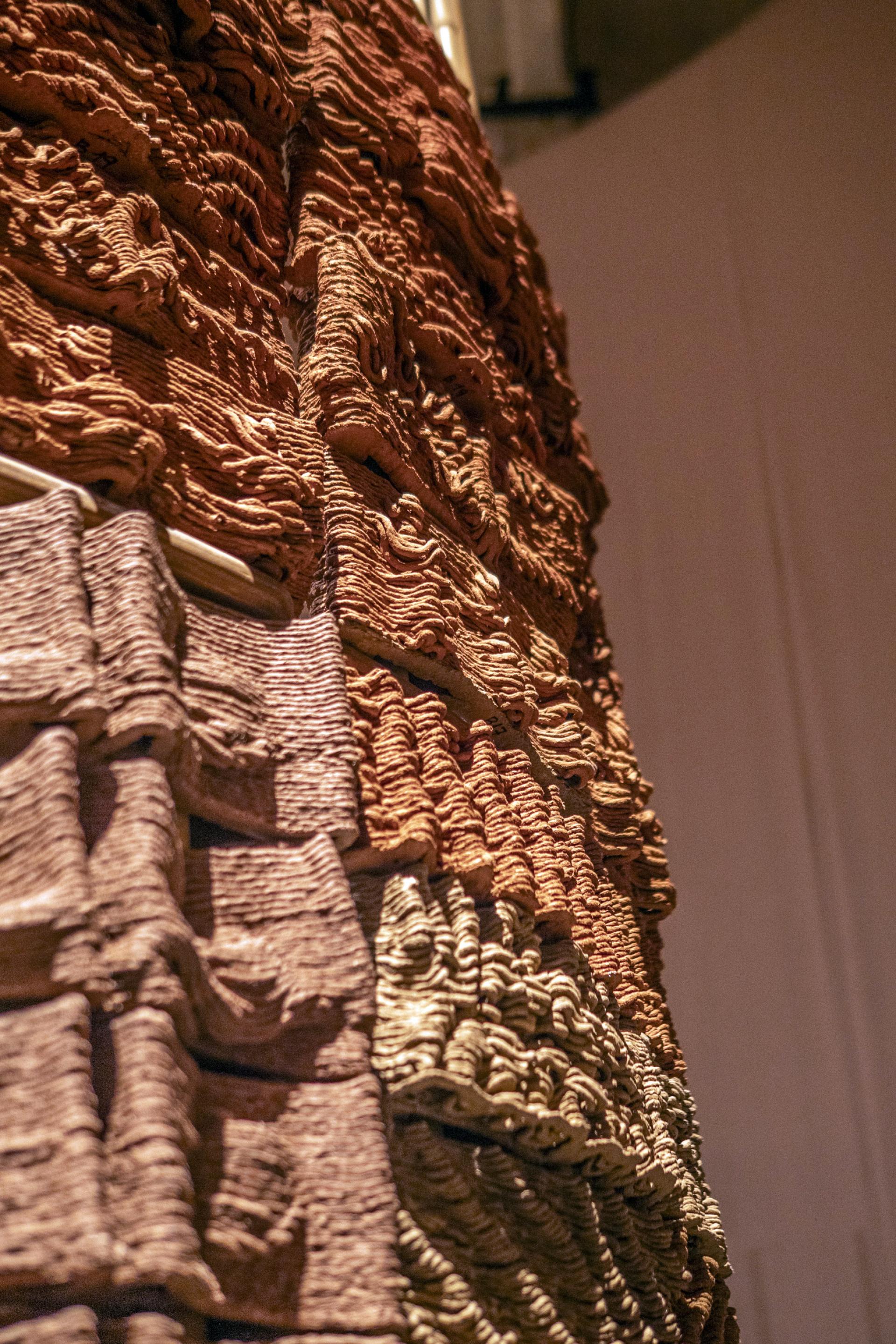
Earthen Rituals at the 19th Venice Architecture Biennale. Photographer: Alessandro Terranova
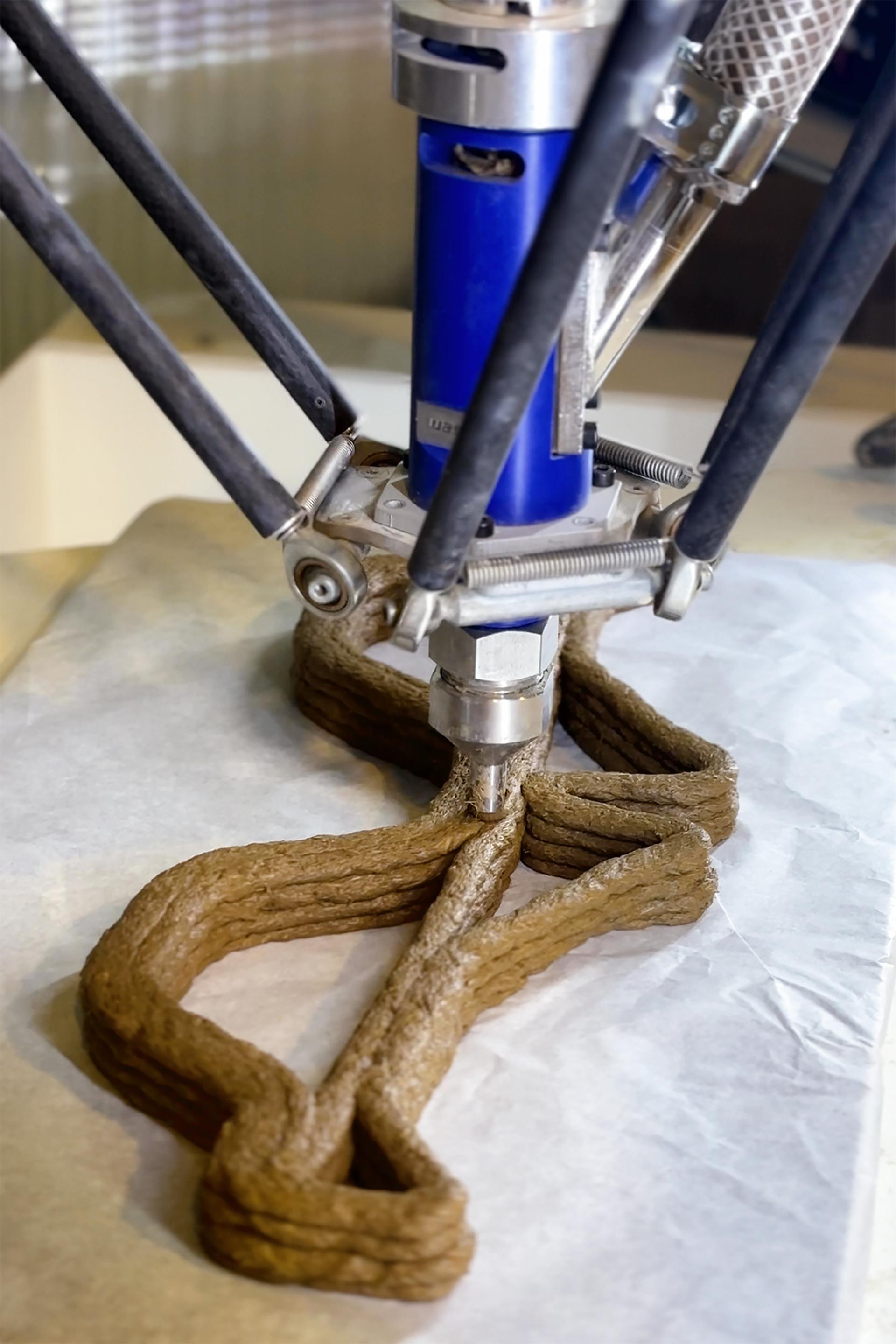
Making of the Earthen Rituals Installation, for the 19th Venice Architecture Biennale. Photographer: Alessandro Severi
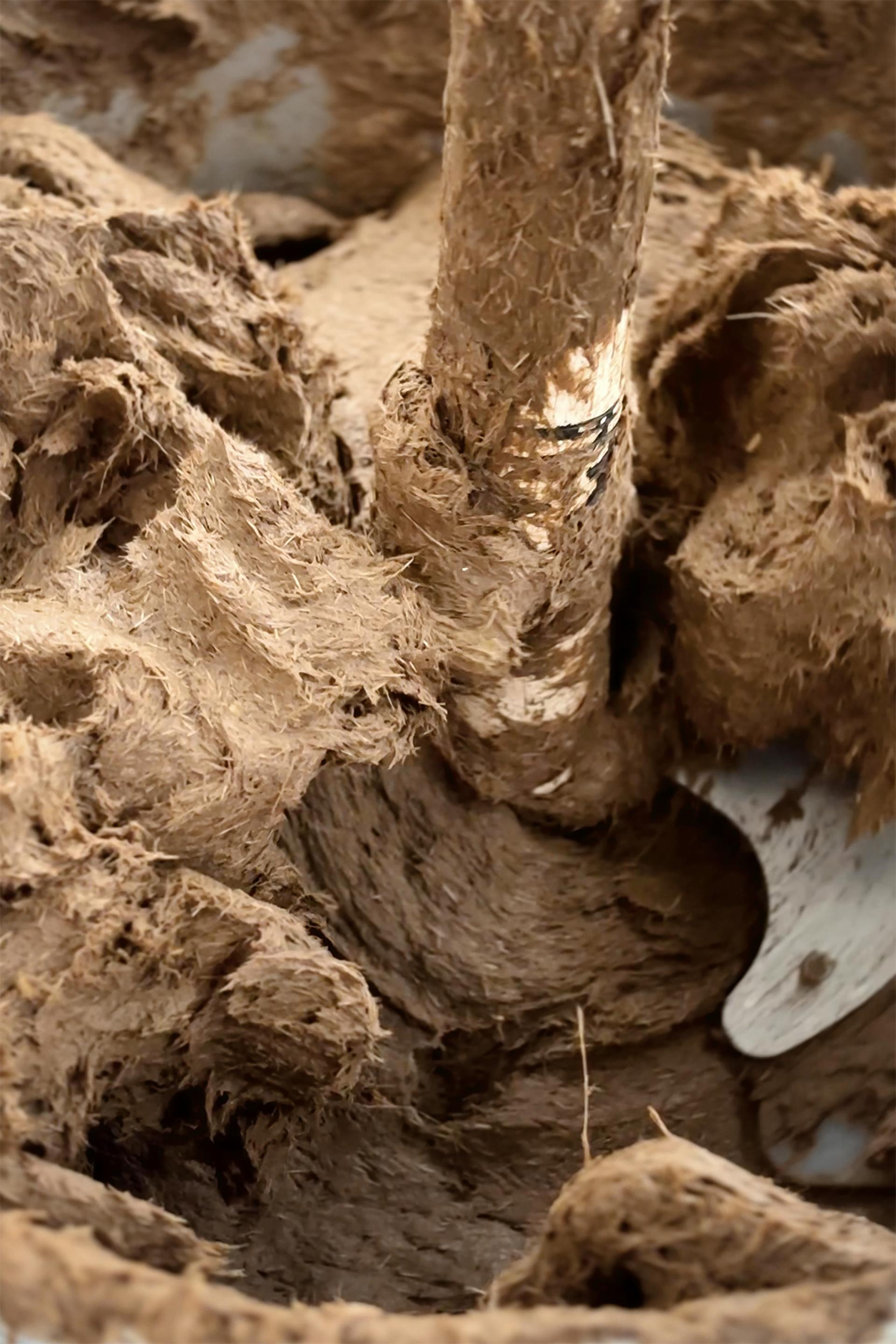
Making of the Earthen Rituals Installation, for the 19th Venice Architecture Biennale. Photographer: Alessandro Severi
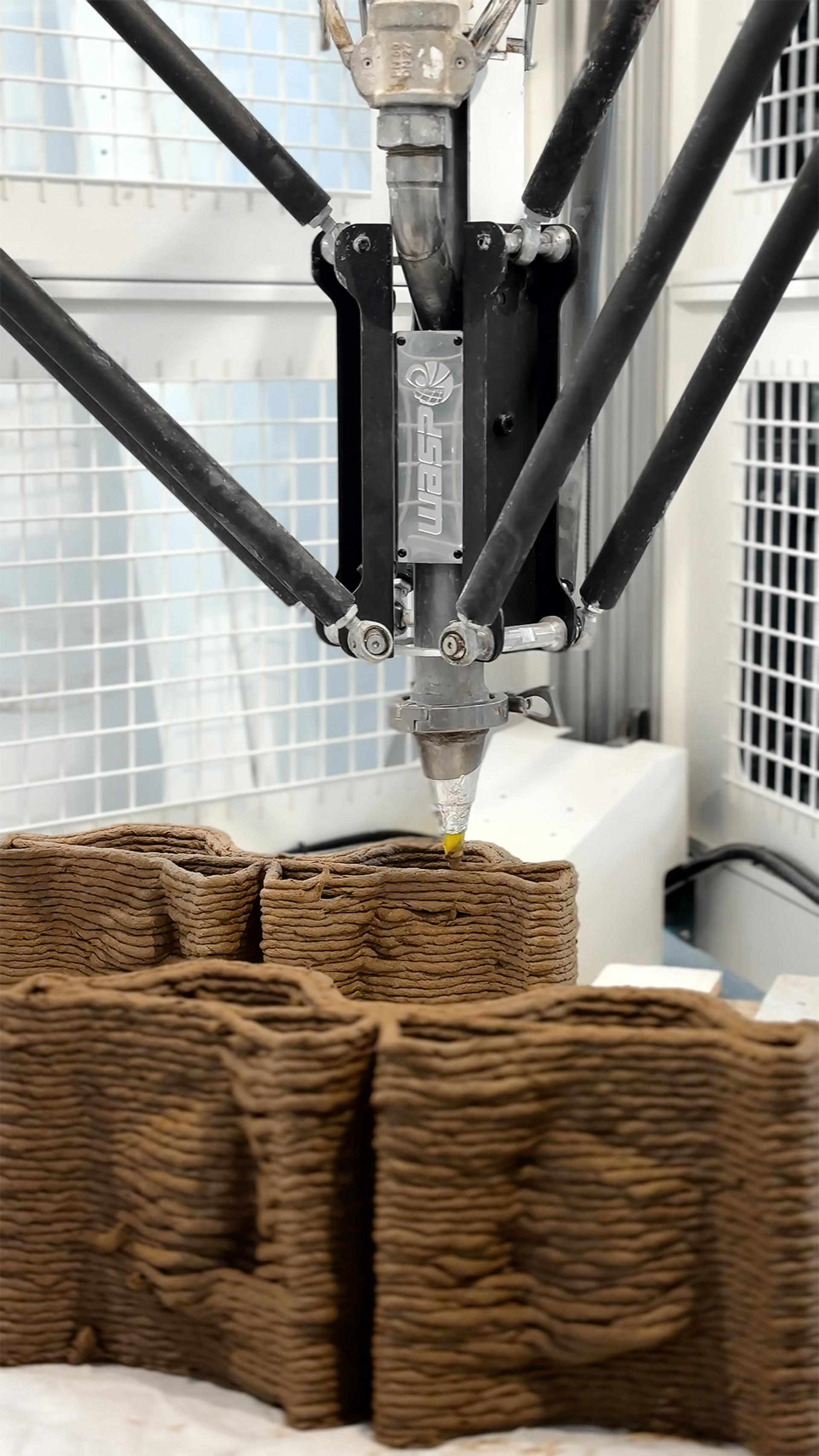
Making of the Earthen Rituals Installation, for the 19th Venice Architecture Biennale. Photographer: Alessandro Severi
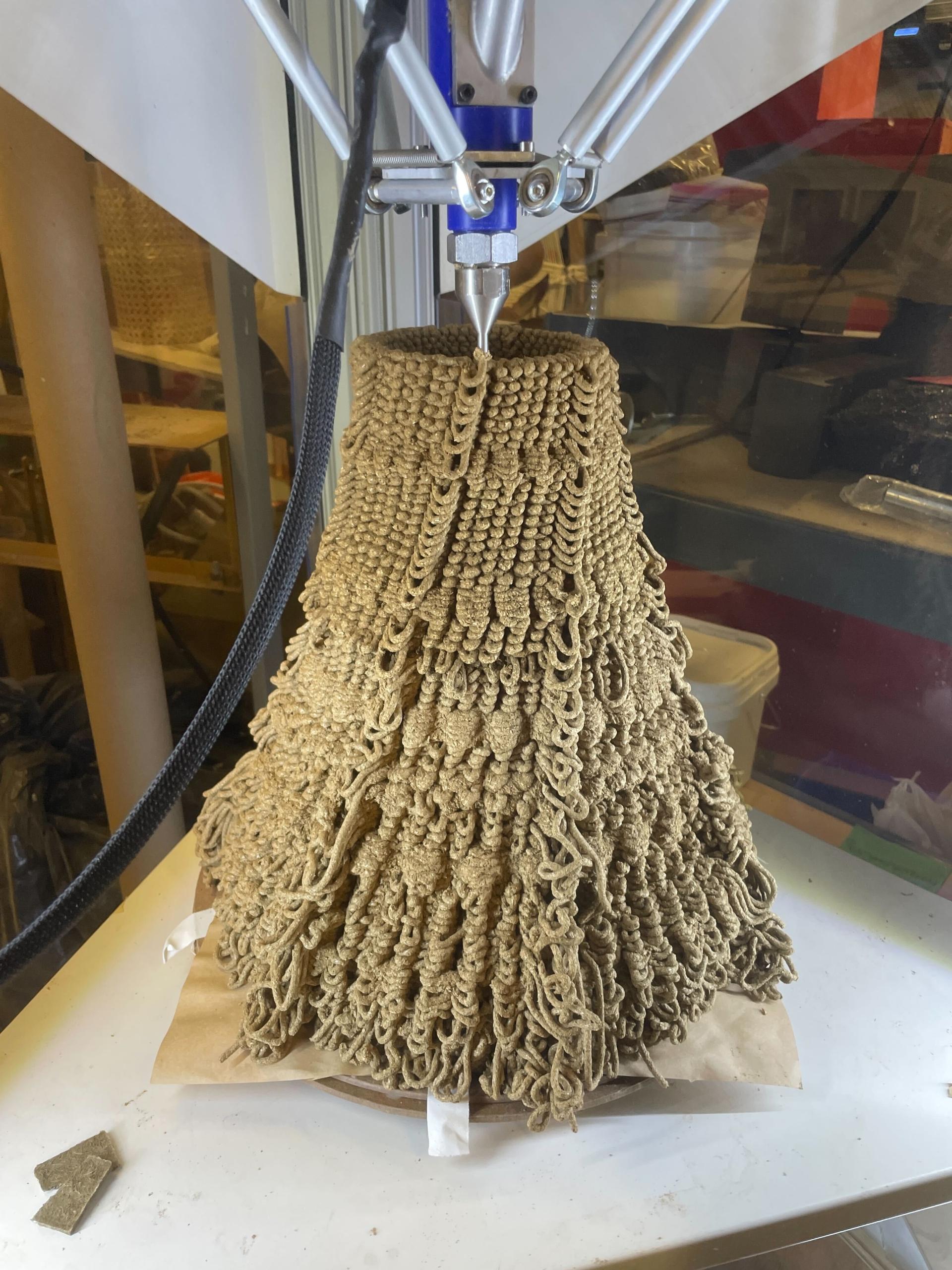
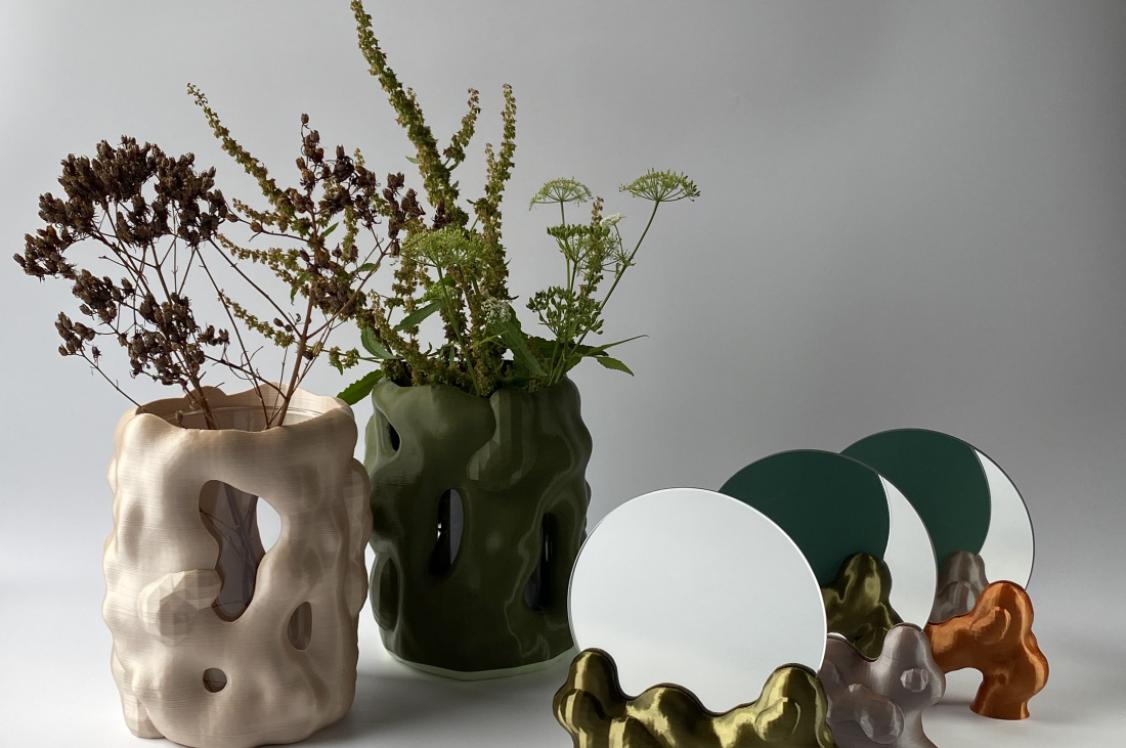
Vertical Vessel, 3D Printed Vessel made with Earth and Straw. Photo Courtesy Lola Ben-Alon and the Natural Materials Lab
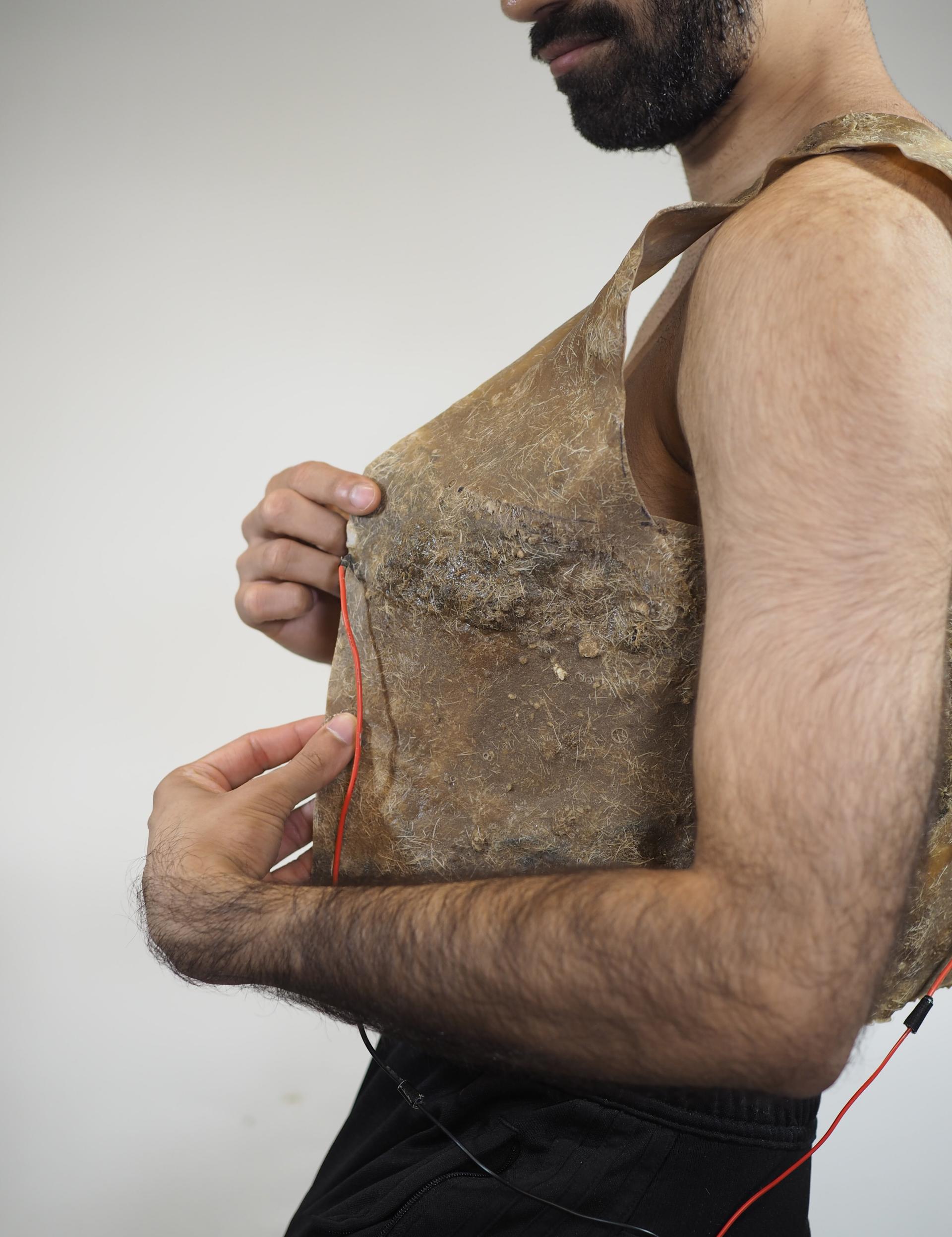
Heated Biomud Vest. Lab Assistant: Saralee Sittigaroon. Photo Courtesy Lola Ben-Alon and the Natural Materials Lab
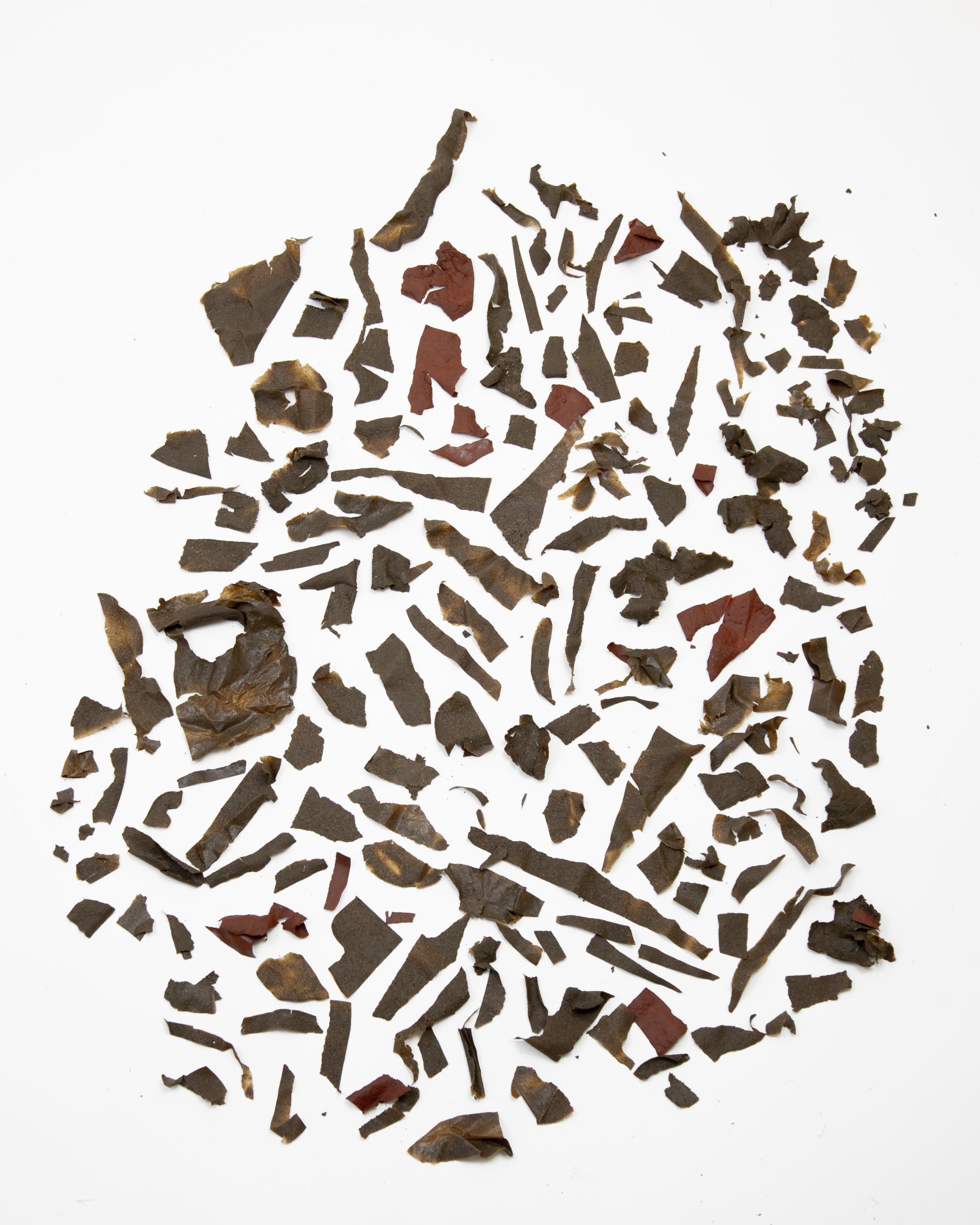
Samples from the Biomud Fabrics. Research Assistant: Penmai Chongtoua. Photo Courtesy Lola Ben-Alon and the Natural Materials Lab
Can you tell us about some of your current projects?
"We have several parallel tracks running right now:
3D-Printed Earth-Fibre Basketry: An active research track exploring rope-like earth-fibre composites that reinterpret traditional basketry through contemporary additive manufacturing.
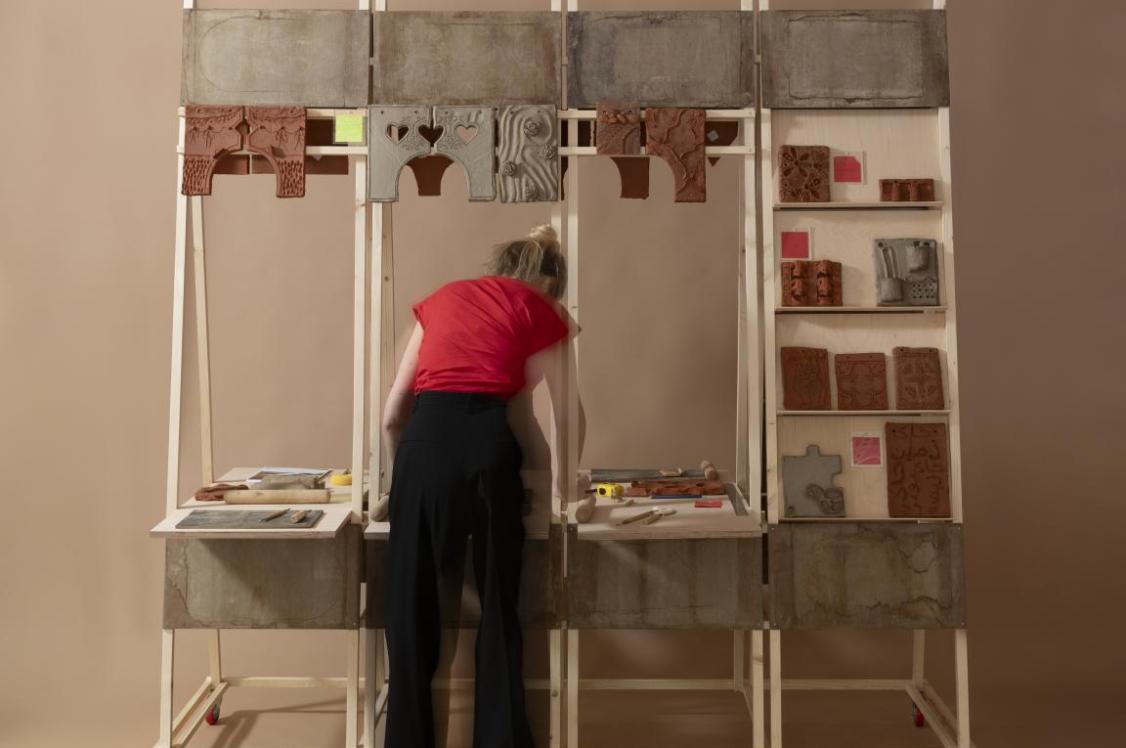
Earthen Rituals: A major project focusing on AI-generated earthen bricks and complex geometries, featured in high-profile 2025 exhibitions.
Muddy Makings – Natural Materials in Digital Commons: A 2025 project/workshop series focused on reconciling natural materials with digital commons and fabrication.
BioMud Fabric & Heated Garments: Recent and active experimentation into all-natural soil-based textiles and wearable thermal earth garments.
Grounded Chairs: Development of 100% organic, biodegradable, and thermally-regulated seating systems."
What does sustainability mean to you?
"To me, sustainability isn’t just a carbon metric or a LEED certificate. It’s about metabolic sustenance, labor equity, and community solidarity. It’s asking: 'How can the act of building support the people who shape the materials?'
"If a material can't eventually return to the earth without harm, is it truly sustainable?"
"It means seeing buildings not as objects but as unending flows of matter and energy that are forever tethered to the places they were borrowed from."
What materials have you found the most untapped potential with?
"We’ve been looking at everything from straw and hemp to more ‘forgotten’ fibres like banana fibre and dung. In our research on 3D-printed earth, we’ve found that by maximising fibre content, moving from the 2% fibre found in traditional cob to 64% volumetric fibre in our ‘light straw clay’, we can create materials that aren't just structural, but have incredible thermal insulation properties."
Are there any materials you feel have potential yet to be harnessed?
"Most modern ‘earth’ construction uses a high percentage of cement to ‘stabilise’ it, which defeats the environmental purpose. The real untapped potential lies in raw earth, using the natural chemistry of clays and the mechanical interlocking of fibres to create durability without the carbon footprint of chemical additives."
What's the aim of the Natural Materials Lab? What do you hope to achieve?
"The aim is to imagine and invent socially equitable and ecologically sustainable futures. I hope to prove that natural materials aren't just for small-scale DIY projects but are viable, high-performance solutions for the mass building sector. We want to bridge the gap between the high-tech world of digital fabrication and the low-tech wisdom of traditional craft."
You mention using digital/AI to support your work - are these emerging tools making your work easier?
"Yes, absolutely. We use robotic 3D printing and AI-generated design to explore geometries that would be impossible to achieve manually. But ‘easier’ is a tricky word. These tools allow us to handle the material variance of earth which is very unruly, more precisely. However, we always maintain a compassion for digitisation. The machine is another hand in the ritual of making."
Do you think as our world becomes increasingly reliant on digital, a focus back on nature has never been more important?
"I believe the tactile experience of working with earth is transformative. When you work with these materials, there is a sense of devotion and a transcorporeal connection to the land.
"Our work tries to reconcile the two: using the digital to celebrate the natural, not to replace it."
"As we become more reliant on the digital, we risk losing that sensory intuition. Our work tries to reconcile the two: using the digital to celebrate the natural, not to replace it."
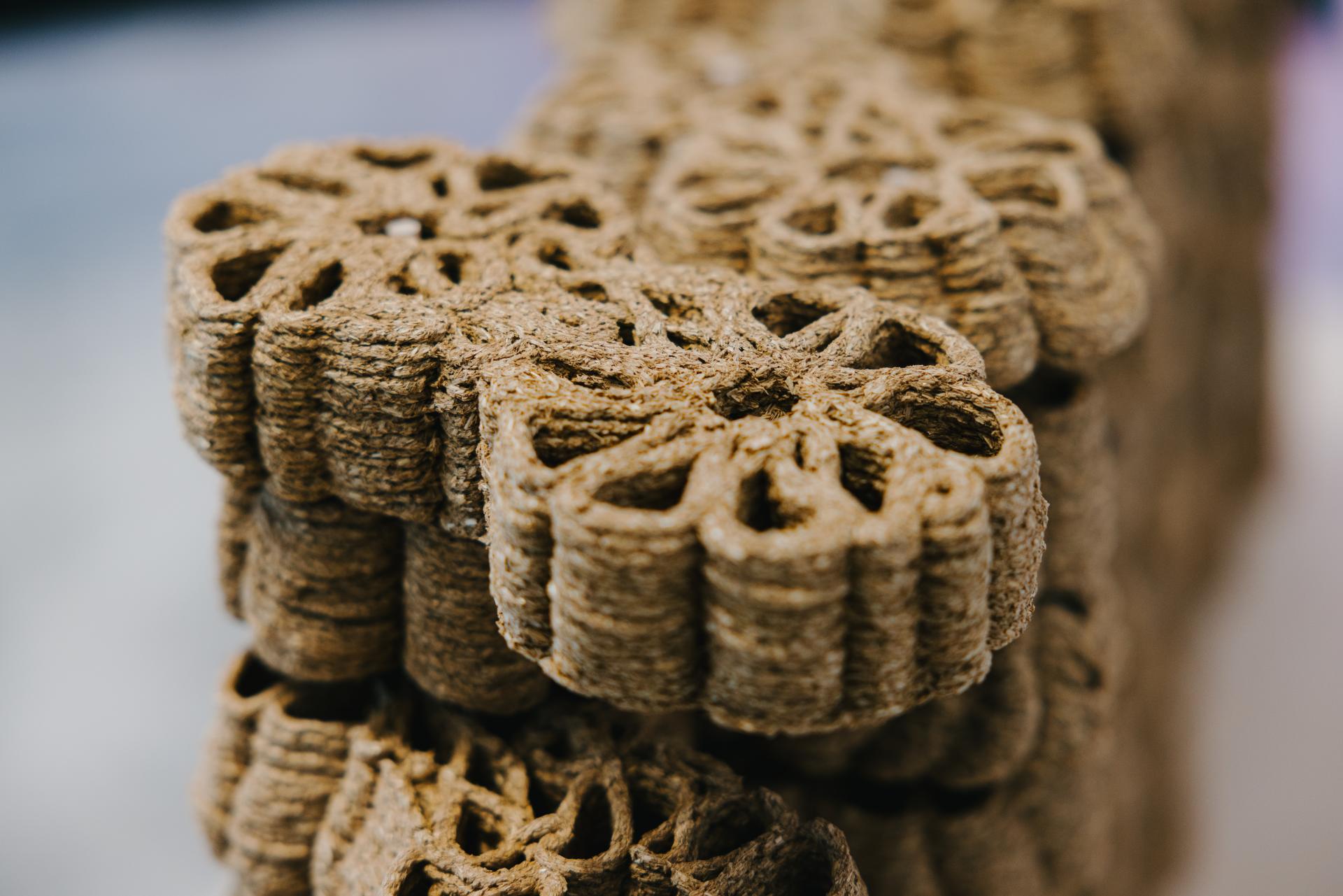
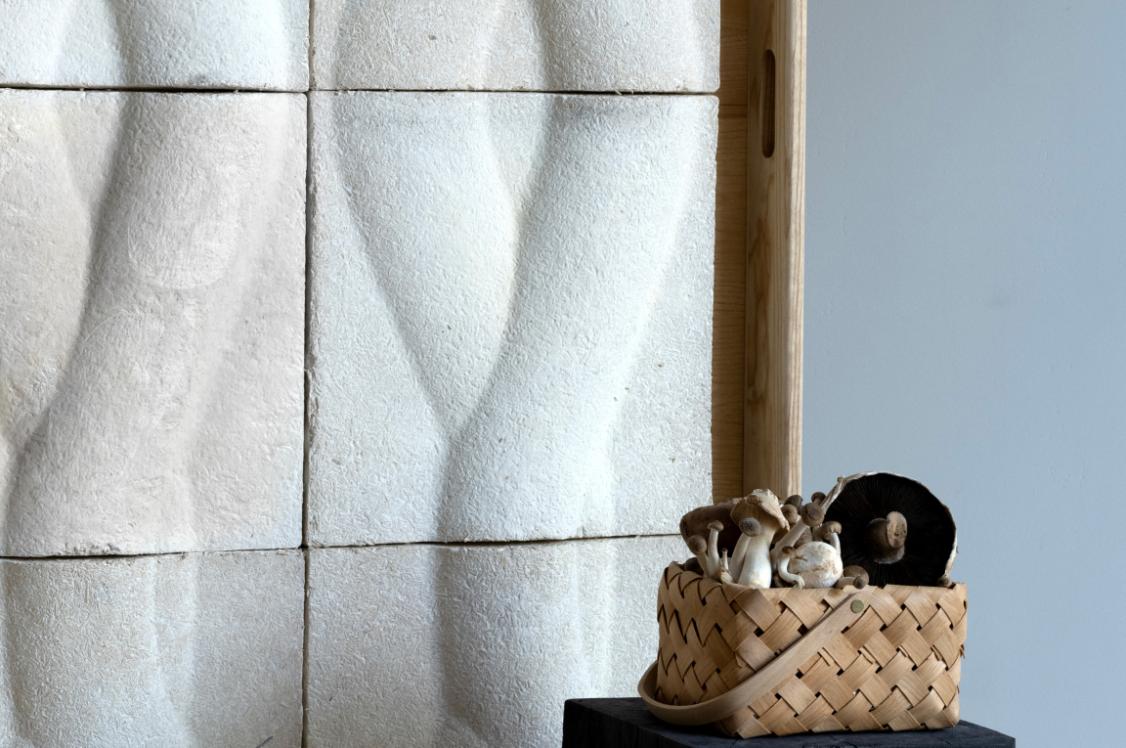
Fiber Ventilation Wall. Exhibited at the Architecture Center Houston. Lab Assistants: Keenan Bellisari, Kelechi Iheanacho, Trella Isabel Lopez, EunJin Shin, and Kelsey Wang
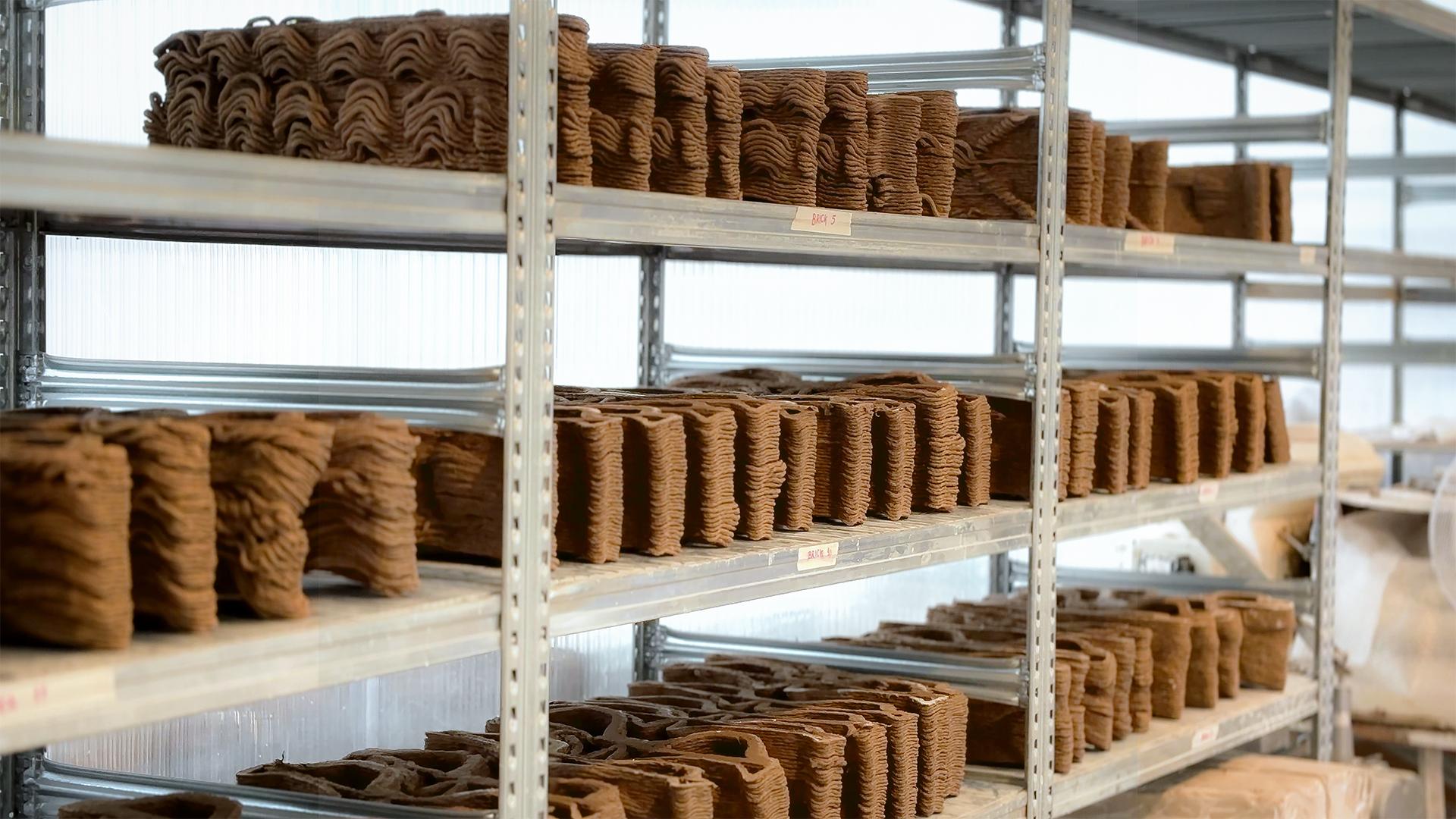
Making of the Earthen Rituals Installation, for the 19th Venice Architecture Biennale. Photographer: Alessandro Severi
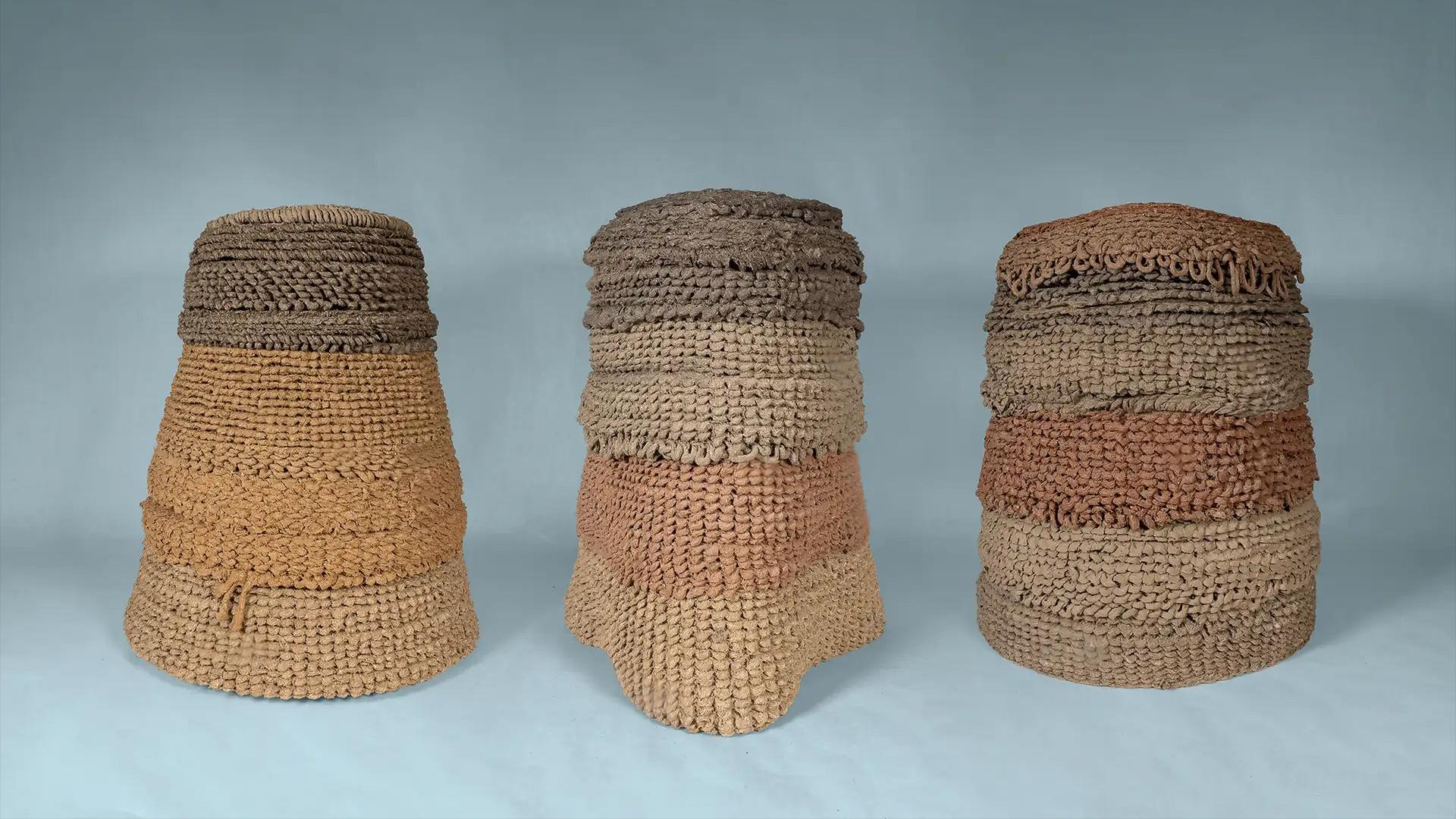
The Muddy Stools Series, 3D printed with Soil, Fibers, and Horse Manure. Lab Assistant: Mohammad-Hossein Zowqi. Photo Courtesy Lola Ben-Alon and the Natural Materials Lab
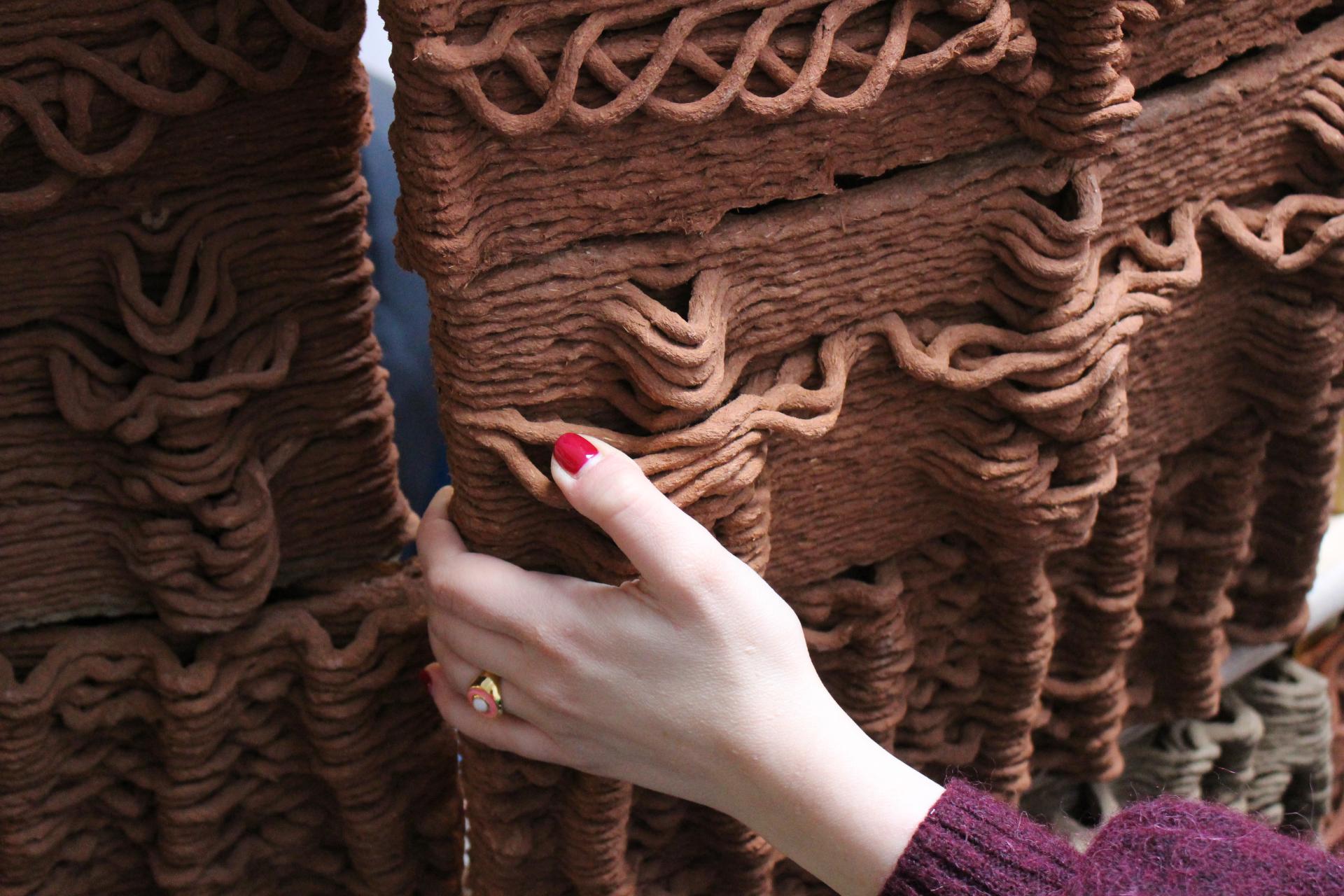
Earthen Rituals at the 19th Venice Architecture Biennale. Photo Courtesy Lola Ben-Alon and the Natural Materials Lab
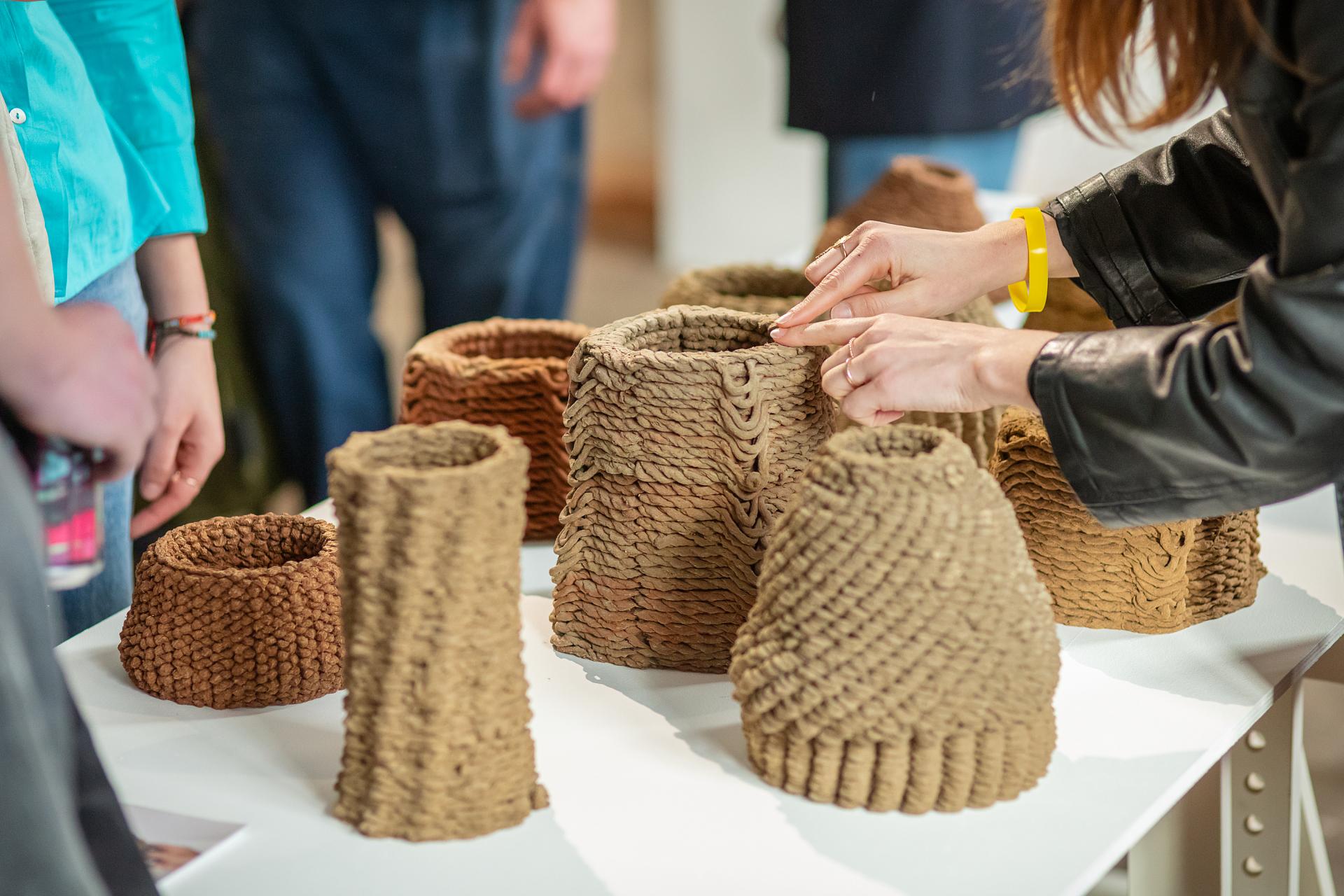
3D Printed Earth Fiber Basketry. Exhibited at the Future Icons Selects at London Craft Week, London, UK, 2024. Lab Assistants: Mohammad-Hossein Zowqi, EunJin Shin, Tashania Audrey Akemah.
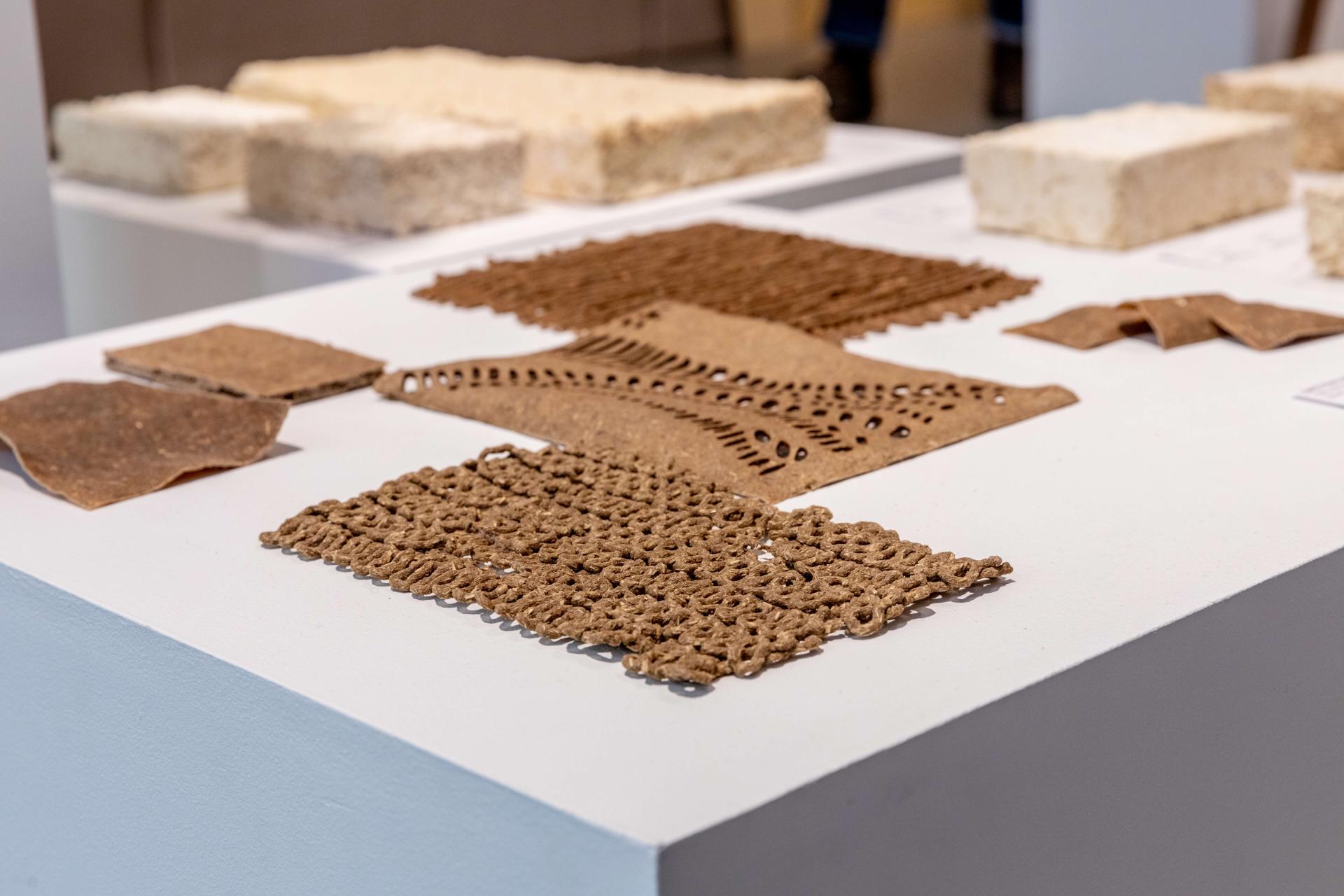
3D Printed and Laser Cut Biomud Fabrics made with Soils and Flax Fibers. Exhibited at the Anna-Maria and Stephen Kellen Gallery, New York. Lab Assistant: Sherry Aine Te. Photographer: Michelle Gevint
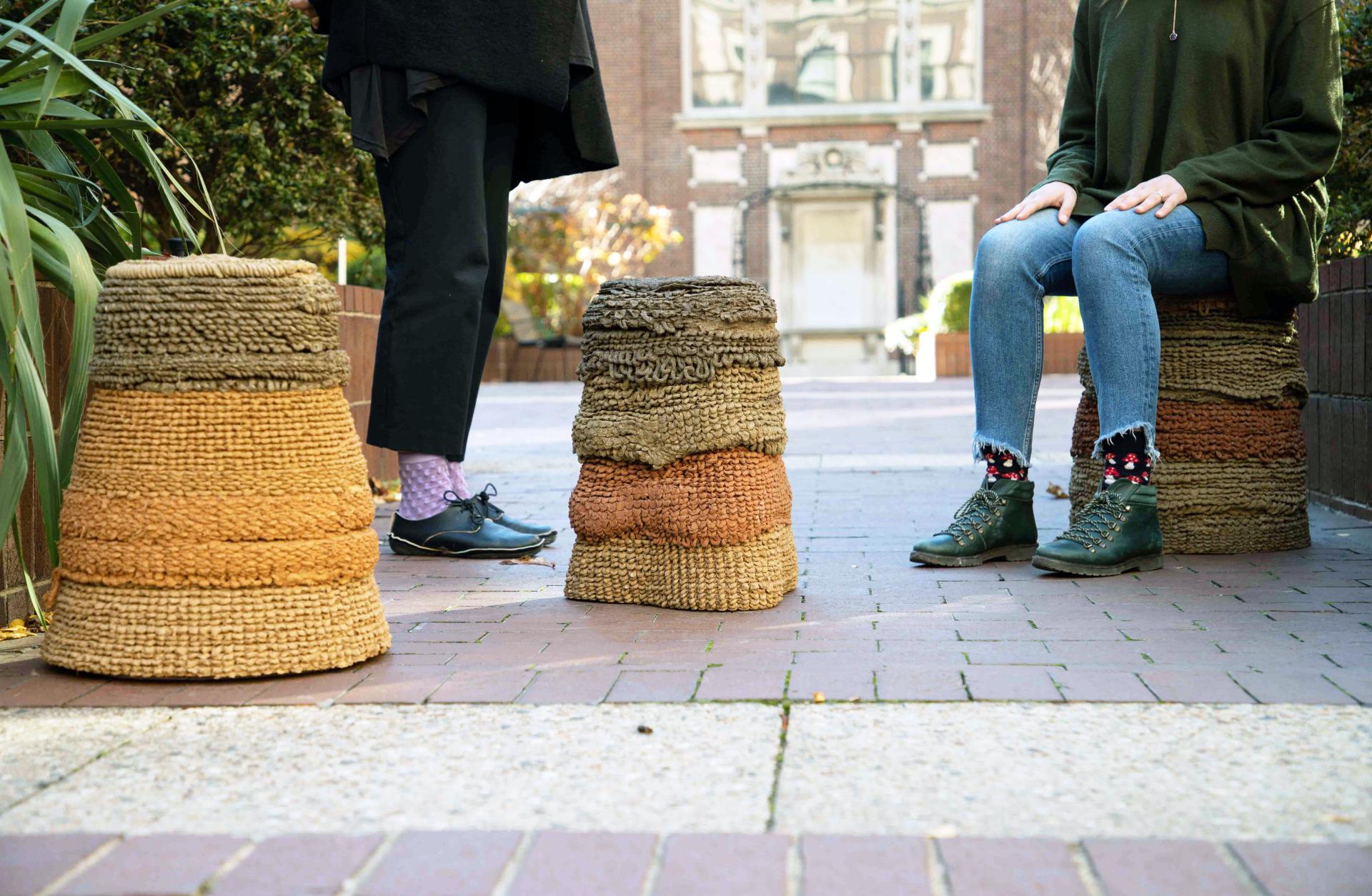
The Muddy Stools Series, 3D printed with Soil, Fibers, and Horse Manure. Lab Assistant: Mohammad-Hossein Zowqi. Photo Courtesy Lola Ben-Alon and the Natural Materials Lab
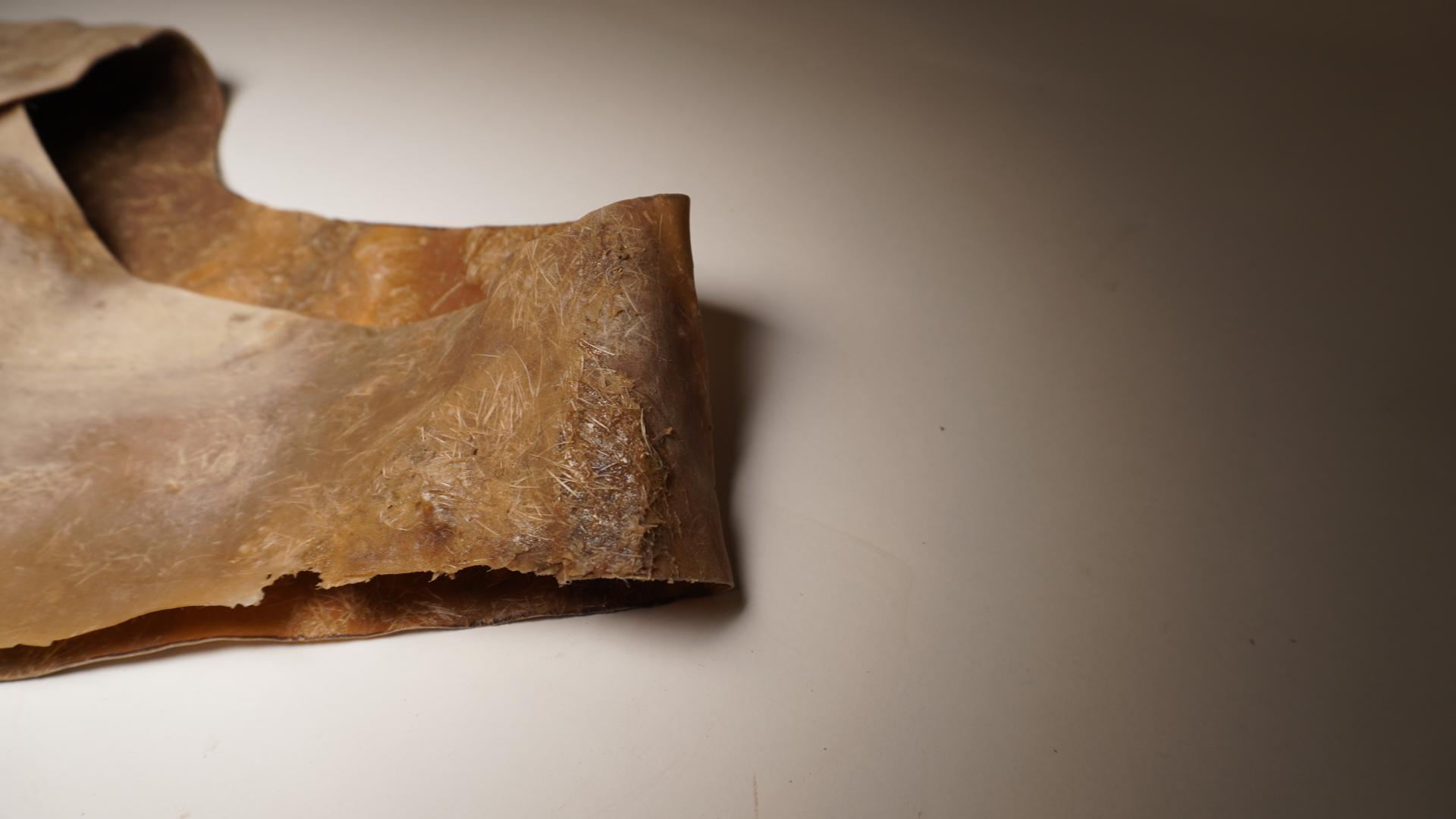
Heated Biomud Vest. Lab Assistant: Saralee Sittigaroon. Photo Courtesy Lola Ben-Alon and the Natural Materials Lab
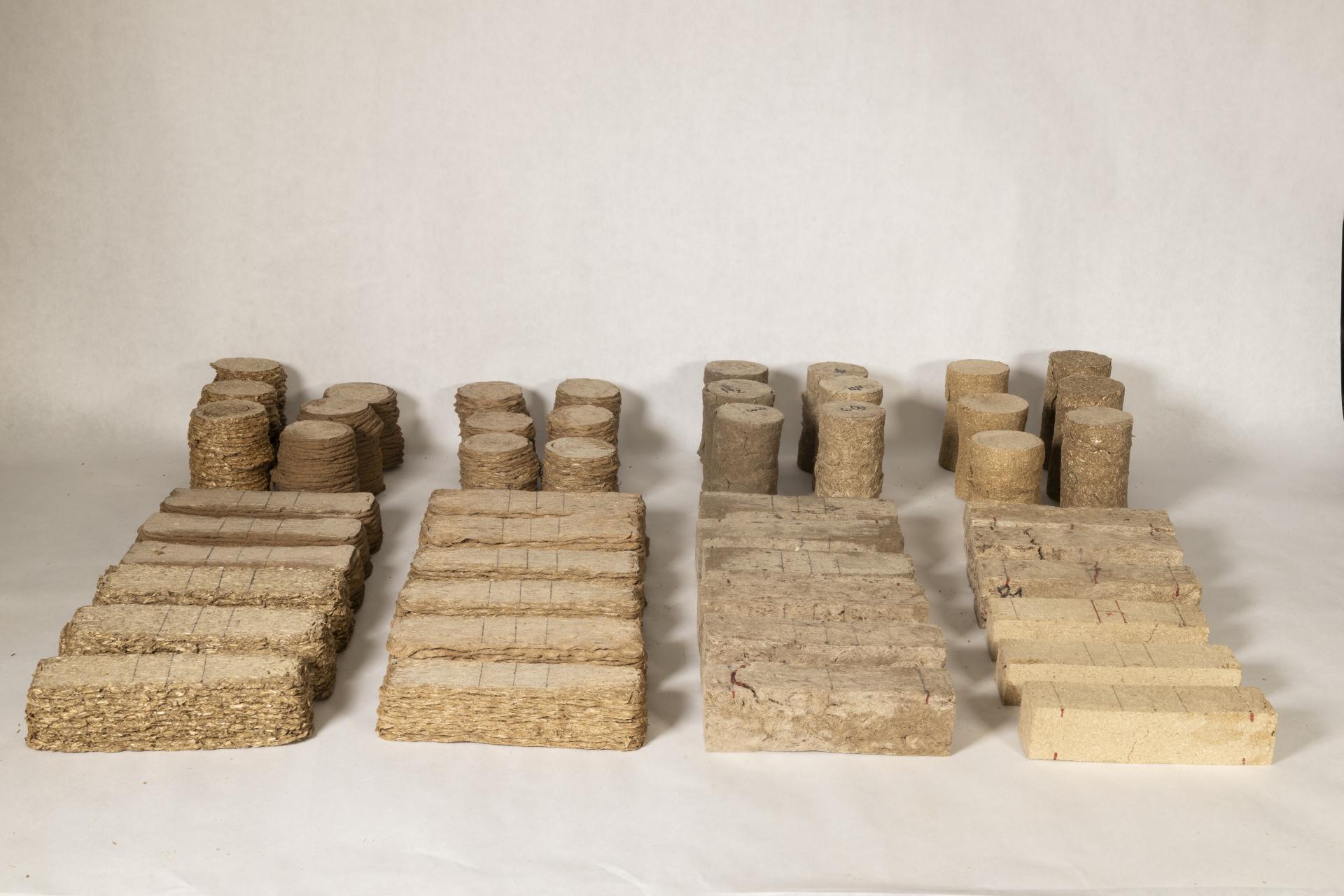
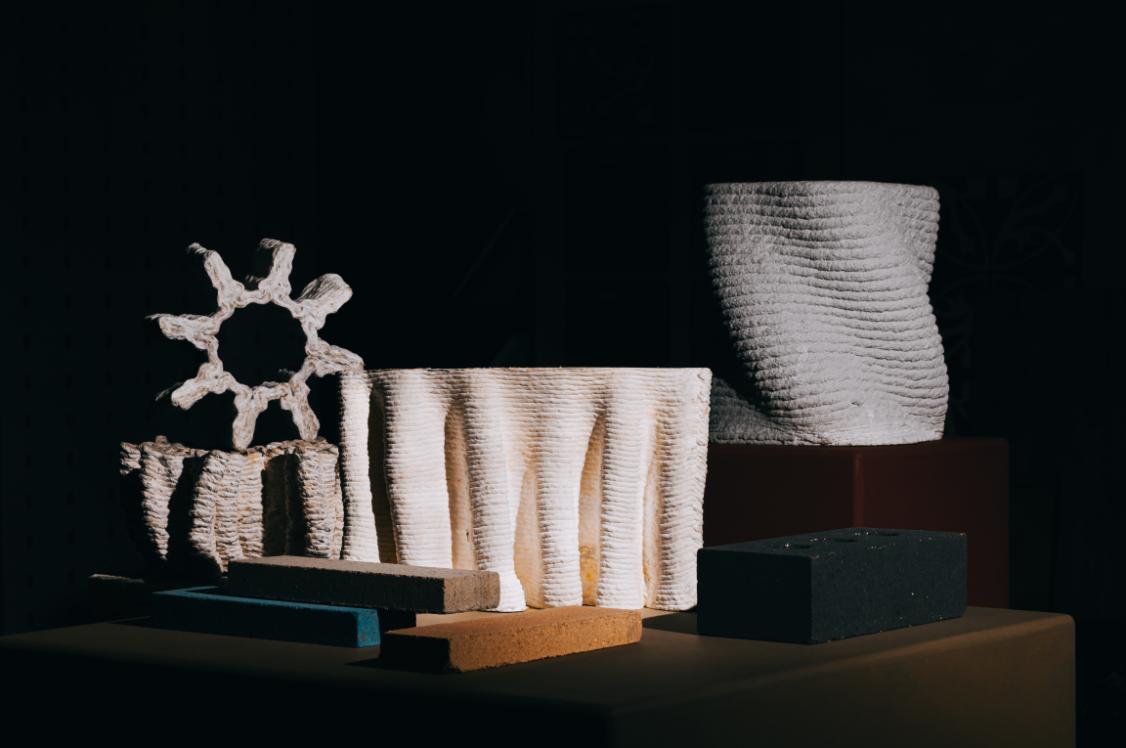
Pressed and 3D Printed Earth-Fiber Samples. Photo Courtesy Lola Ben-Alon and the Natural Materials Lab
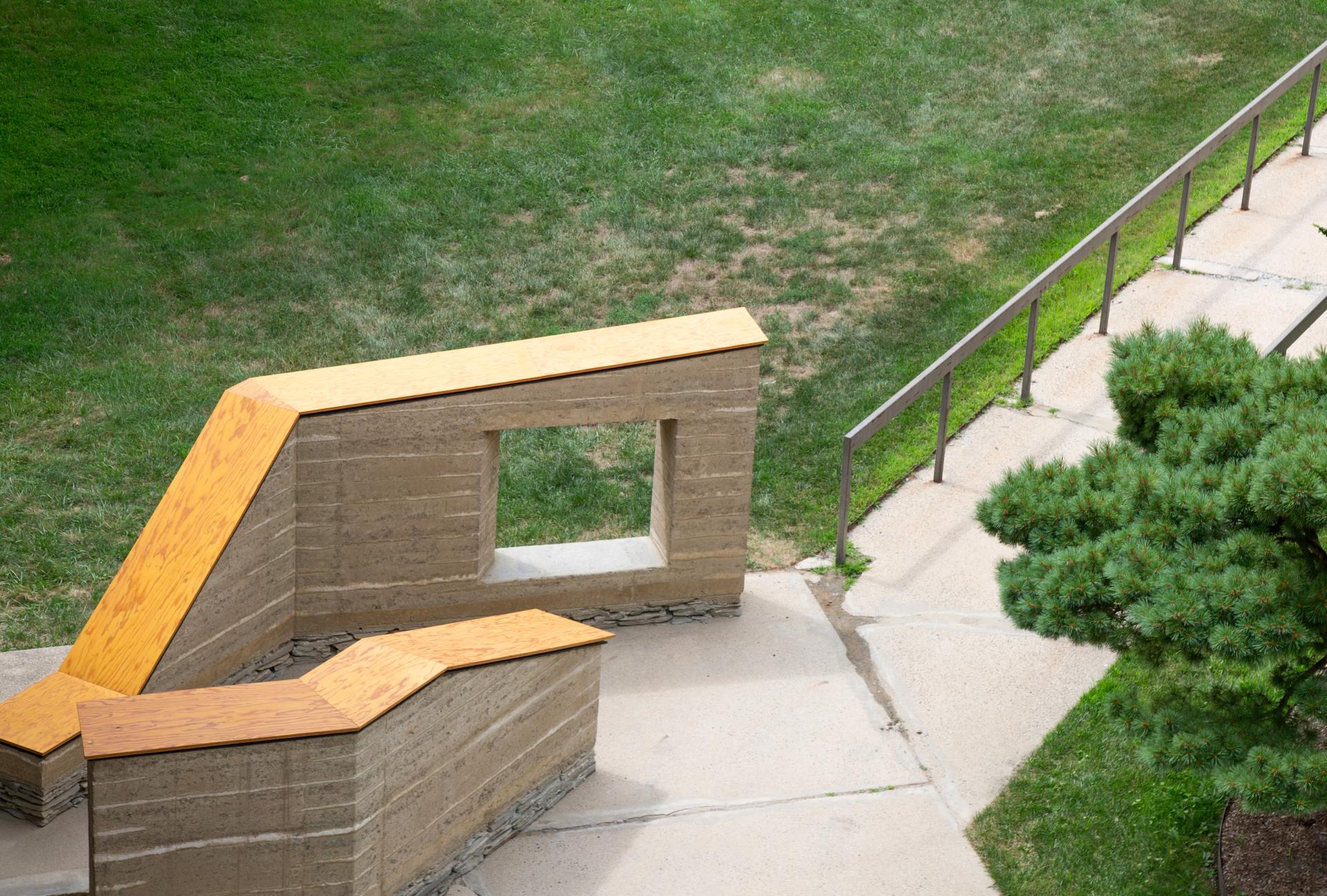
Farm to Building Pavilion, at the Lamont-Doherty Earth Observatory, Palisades, New York. Students: Zina Berrada, Fokunda Mbaru, Wenjing Xue, Shuyang Huang, Xiyu Li. Instructors: Lola Ben-Alon and Tommy Schaperkotter. Collaborators: Sami Akkach, Lorenz Kastner.
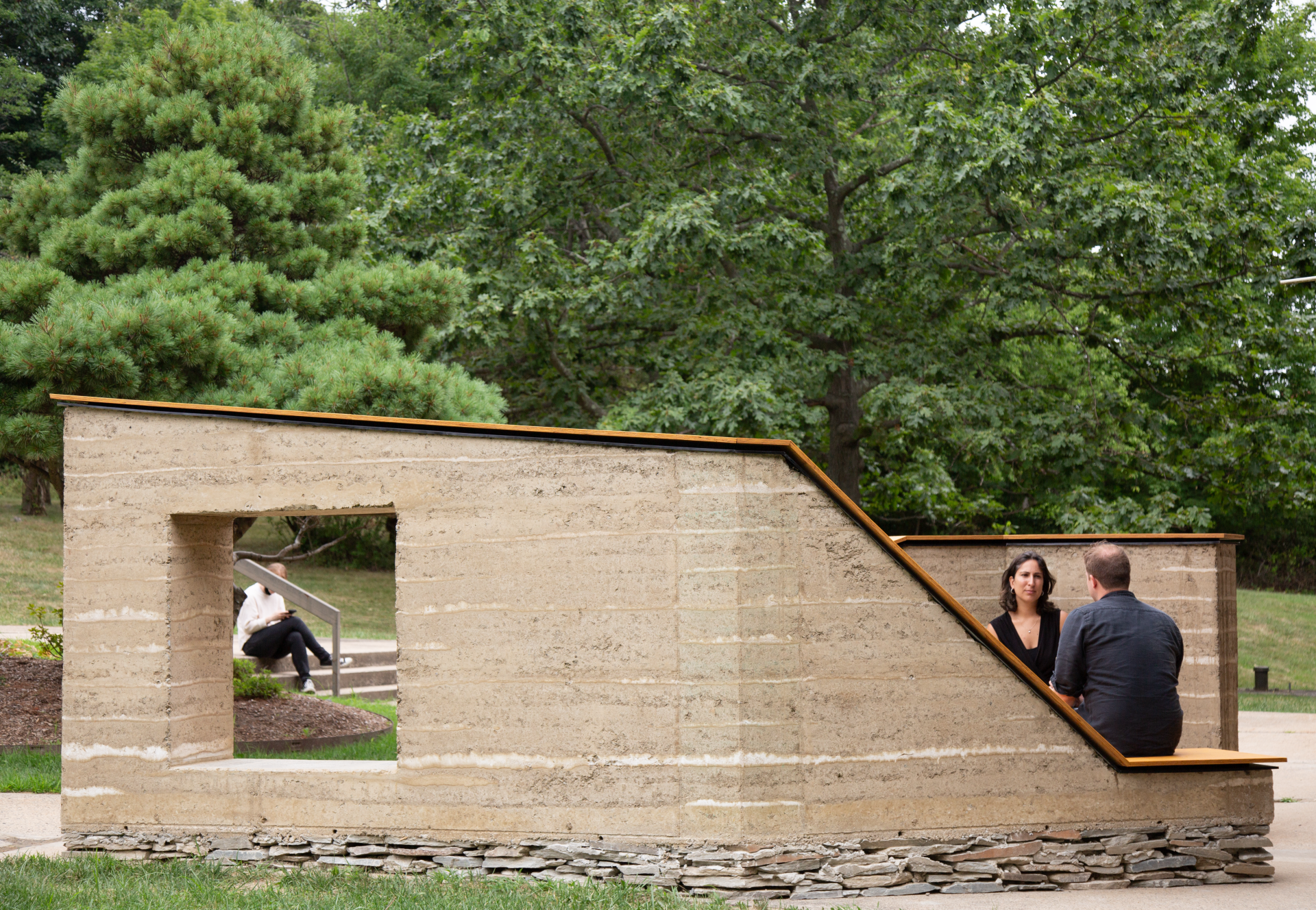
Farm to Building Pavilion, at the Lamont-Doherty Earth Observatory, Palisades, New York. Students: Zina Berrada, Fokunda Mbaru, Wenjing Xue, Shuyang Huang, Xiyu Li. Instructors: Lola Ben-Alon and Tommy Schaperkotter. Collaborators: Sami Akkach, Lorenz Kastner.
For anyone interested in finding out more, where should they go?
"You can visit our website at Columbia GSAPP or our Instagram page: @naturalmaterialslab. We also frequently exhibit, we’ve recently had work at/in:
- La Biennale di Venezia (Venice, 2025) - Featuring the Earthen Rituals installation.
- Interview at The Architect's Rolodex - A Podcast by Cookfox
- Lola Ben-Alon of The Natural Materials Lab - Material Kitchens for Medicinal Bricks, The Architectural League of NY Prize
- Cooking with Clay - Natural Materials Lab’s Lola Ben-Alon encourages compassion for digitisation, Metropolis Magazine
- Columbia Professor Takes a Down-to-Earth Approach to Building Materials - BlueBeam Built Magazine
Can you tell us about any live built environment projects where the Lab's materials are being used?
"We continue to monitor our earlier ‘living laboratories’, such as the Farm to Building rammed-earth pavilion at the Lamont-Doherty Earth Observatory, which is an ongoing study of how raw earth weathers in the New York climate, and our Raw Earth Sgraffito Pavilion at Reid Hall in Paris, which explores urban bioclimatic cooling. These projects aren't just one-offs; they are long-term data sites for how natural materials perform in the real world."
Do you think the building sector is more open to the use of innovative materials than it was?
"We are at a turning point. The industry is waking up to the fact that concrete and steel are responsible for a massive portion of global emissions. However, the ‘one size fits all’ mindset is still a major barrier. The sector is opening up, but we need to update our building codes and regulatory frameworks to acknowledge that natural materials, if engineered correctly, are just as innovative as any synthetic product."
What's the most reassuring stat or find in the Lab's projects that gives hope for the future?
"One of our most exciting finds is that by switching to bio-based and natural materials, we can shift carbon emissions by approximately 60 years. Because these materials sequester carbon during their growth (like straw or hemp) and require almost no energy to process, they provide an immediate climate cooling effect that synthetic materials simply cannot match. Seeing that 64% fibre-mix hold its shape in a 3D printer for the first time gave us immense hope for high-performance, natural insulation."
What's next for Natural Materials Lab?
"We are moving toward upscaling. We want to take our ‘recipes’ out of the lab and into mass construction. We’re working on earth building codes analysis to help policy-makers understand how to permit these buildings. The future is about making the ‘dirty’ work of the lab the ‘clean’ standard for the city."