











































What do specifiers need to know about the ISO TS 17870-3:2023 standard for porcelain facades?
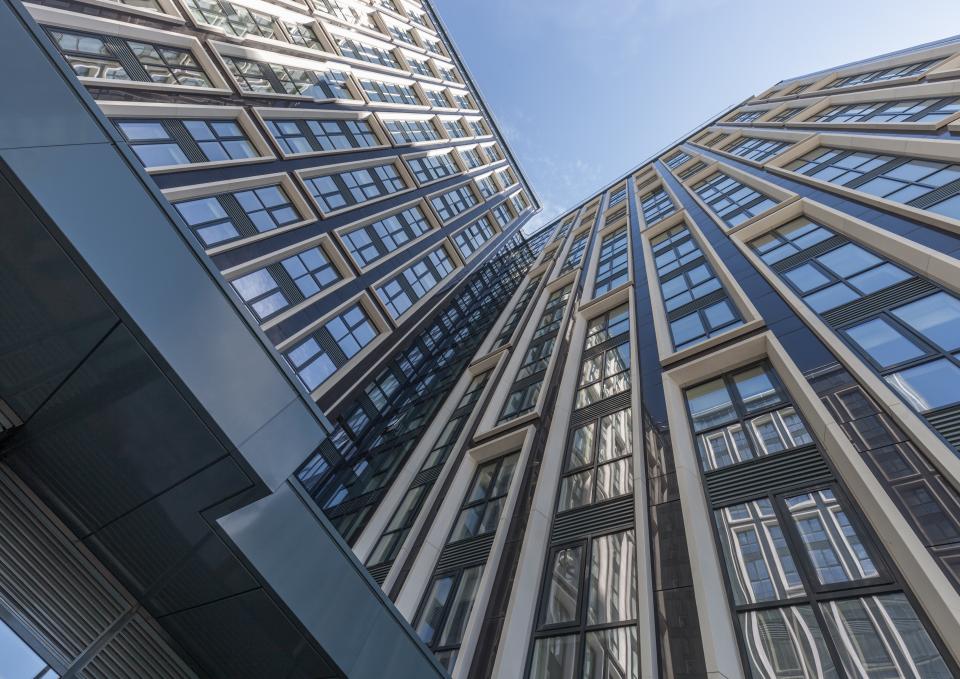
As we welcome British façade manufacturer, Shackerley, as a new Partner at Material Source Studio Manchester, Brian G Newell MBE, founder and chief executive of Shackerley – and the technical lead for the international porcelain cladding standard published by BSI – ISO TS 17870-3:2023, explains what this standard means for you.
There has been a huge focus on fire safety in façade specification since the Grenfell Tower tragedy, and rightly so. But combustibility is not the only safety hazard that needs to be considered when specifying porcelain rainscreen systems. As cladding system innovation has progressed, leading to larger and larger façade panel sizes, the need for precision and exacting quality standards throughout the manufacturing and installation process has become increasingly critical.
Porcelain is a lightweight, exceptionally hard, and impervious material, which makes it an ideal choice for building facades, providing both design flexibility and an extended low maintenance service life with excellent resistance to staining and U/V. However, the lack of a standard to ensure consistently high quality assurance and reduce the margin for error at installation historically resulted in the potential for poorly fabricated, poorly installed cladding that could compromise both the safety and service life of the façade.
Taking ten years to develop, the ISO TS 17870-3 standard addresses this. It was published by BSI in 2023, and involved international consultation with stakeholders from across the façade industry worldwide. The standard applies to mechanically fixed porcelain cladding systems only, and does not cover any adhered or partially adhered cladding systems. It is advisable for specifiers to read the standard in full, but this summary will provide an overview of some of the key guidance.
Engineering out risk with installation ready panels
One of the key risk factors in any façade installation is the potential for site errors, and this risk is increased if the façade system used requires on-site fabrication. While façade installers are skilled specialists, they are not experts in every system they use. Moreover, site conditions are very different from an ISO 9001 certified factory environment, where all processes are quality assured, all equipment is checked and maintained, and contaminants cannot compromise drilled apertures for undercut anchors or connections for fixings.
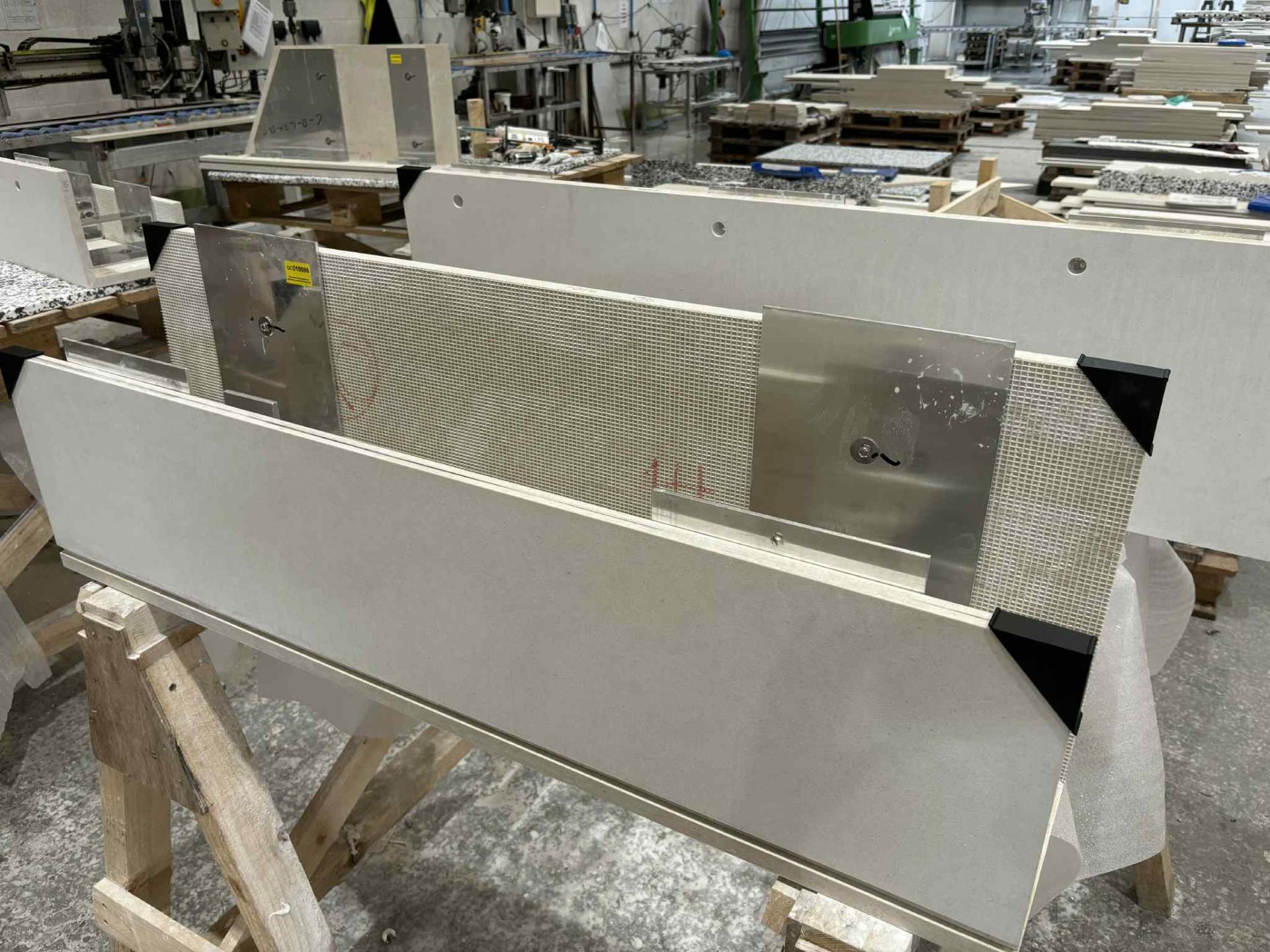
To prevent the risk of poor fabrication practices and on-site fabrication issues, the ISO TS 17870-3 standard requires that all porcelain façade systems are supplied as installation-ready panels, with no drilling or fitting of undercut anchors or attached bracketry on site. All Shackerley facades are fully anchored. The standard requires all drilling and fitting of undercut anchors, brackets or straps etc. to be carried out in quality-controlled and appropriately accredited factory facilities.
This stipulation will avoid the potential for reduced undercut anchor pull-out values due to ill-fitting anchors or contamination, which could result in latent fracturing of the porcelain or affect wind load resistance. It will not only ensure improved installation quality, but will also prevent the risk of large, heavy panels blowing off a building.

Meshing and combustibility
It is common best practice for façade manufacturers to apply an anti-fragmentation mesh to the rear face of porcelain cladding panels. While the standard does not make safety meshing mandatory, it does stipulate that any meshing used should be A1 or A2-s1 d0 compliant to BS 13501-1. As porcelain is usually A1 rated for non-combustibility, this ensures that all ISO TS 17870-3-compliant porcelain façade systems are suitable for residential buildings taller than 11m in compliance with BSA requirements. Shackerley provides A2-s1 d0 meshing as standard and can also offer A1 rated meshing on request.
Fixings
Where a system has been specified with apertures formed through the body of the panel to receive mechanical fixing devices for attachment to the façade substructure, the ISO TS 17870-3 standard stipulates that the fixings should be fitted to allow for anticipated thermal expansion and contraction. This ensures that there is sufficient allowance for movement between the large format panels and the fixing system during all climate conditions, preventing stresses from developing within the façade system that could result in damage and hazards.
For edge-slotted systems, the standard allows for flexibility in the thickness of the façade panel, but recommends that the remaining front and rear edges of the slot walls should be a minimum of 5mm thick. It also recommends that this type of fixing should be avoided for very large porcelain façade panels, as the spans between perimeter fixing points may be too large to achieve adequate restraint against negative wind loading. Once again, clips should not fit too tightly to prevent anticipated differential thermal expansion/contraction.
Visible overlapping clip systems, where the clips overlap the porcelain façade panel around its perimeter and fix to the façade support structure are also not considered appropriate for very large panel formats if the spans between the fixing points are too large to provide adequate restraint against negative wind loading. The standard advises that the façade designer should consider the size of the panels and the anticipated performance requirements for the façade, and that minimum panel thickness for this type of system should be determined by the span between clips without deflection or deformation of the panel, under maximum wind loading, along with the façade system manufacturer’s advice.
Durability and impact resistance
It is also advisable to pay close attention to the section of the ISO TS 17870-3 standard that deals with impact resistance and testing, as all porcelain materials are not the same. Large format porcelain cladding panels should be proven to resist hard and soft body impact testing. The vulnerability of large format cladding panels varies depending on the location of the building and the location on the building. More significant and frequent impact is likely at lower levels where the building is more vulnerable to pedestrians, traffic and thrown objects and this should be a consideration when deciding on the thickness of the porcelain panel specified.
All fixing components should have a high level of corrosion resistance, enabling them to retain their properties with little or no maintenance during the lifespan of the façade, which should be related to, but not necessarily the same as, the building.
Due diligence
It is not possible to itemise every point set out in the standard in a single article, which is why it is important for those with Principal Designer responsibility to scrutinise ISO TS 17870-3 in full. Cladding manufacturers should also be familiar with the standard and ensure that their façade systems deliver the best practice safety and quality values that have resulted from the collaboration and expertise involved in developing this document.
To find out more about how Shackerley can support you with a bespoke façade for your next project, visit Material Source Studio Manchester, any time Monday-Friday, 9am-5pm. You can speak to one of their experts by clicking here.

In association with
SureClad®, BrickClad® and SureWall® Façade Systems from Shackerley.
Shackerley is a trusted cladding specialist, manufacturing fully prefabricated, installation-ready, BSA-compliant and BBA certified façade systems at their extensive ISO 9001-certified manufacturing facilities in Lancashire.