



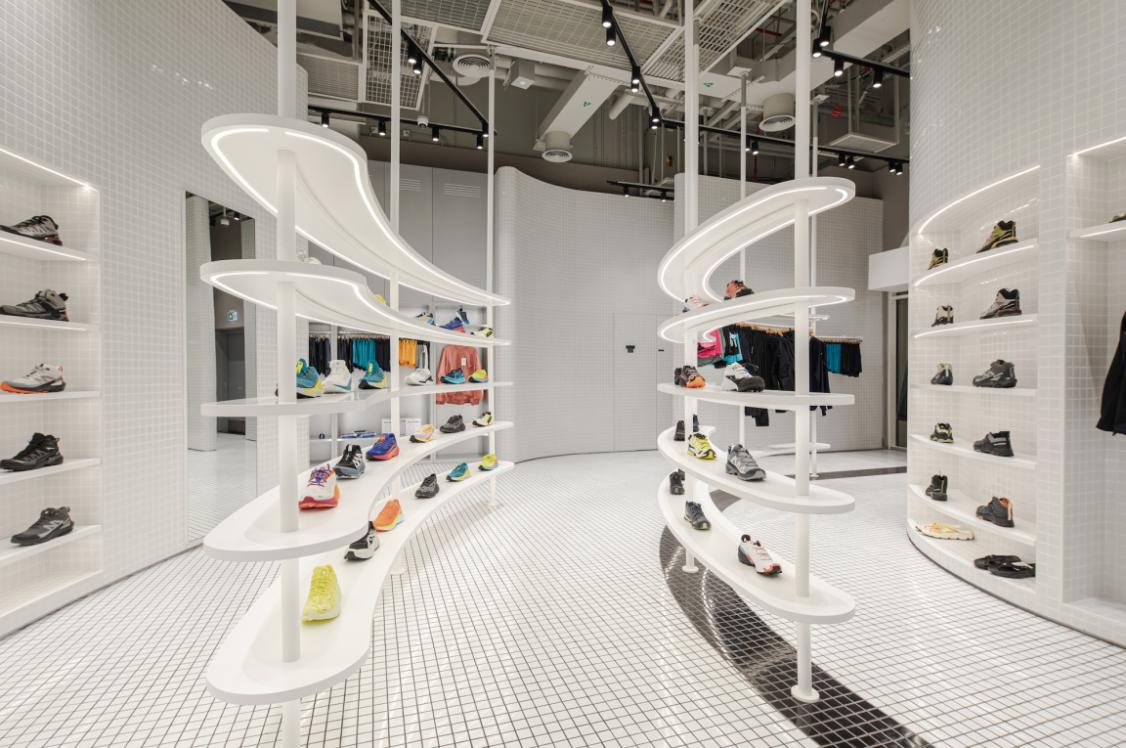
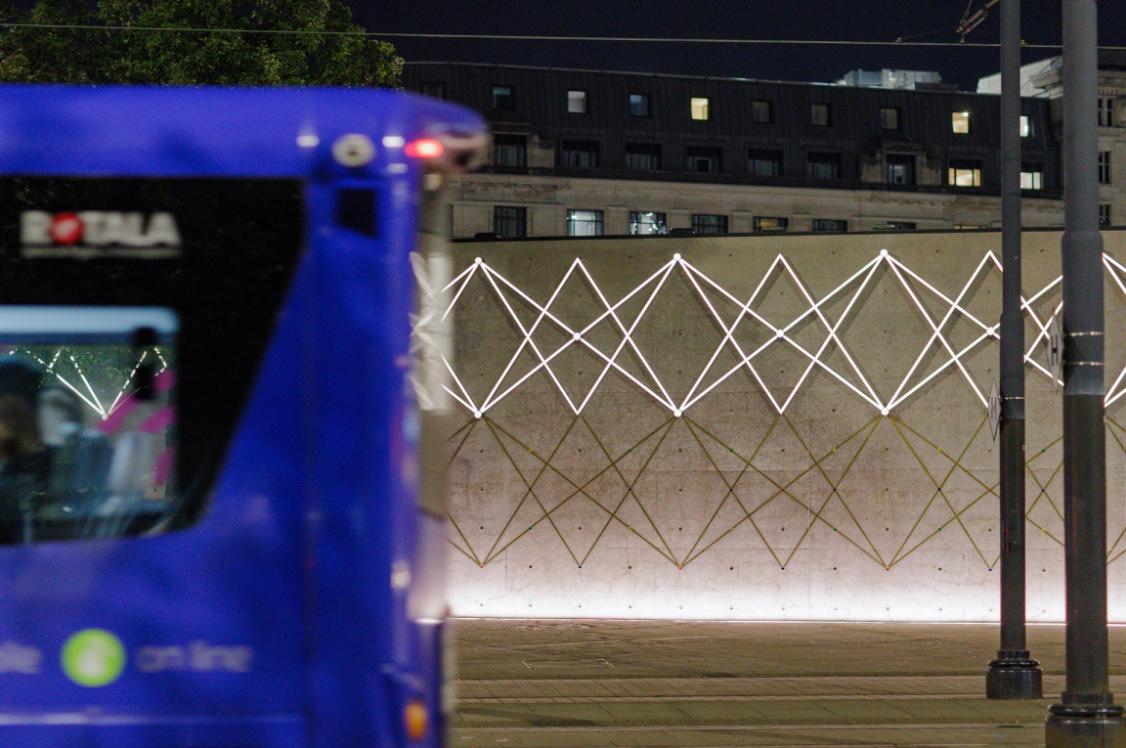
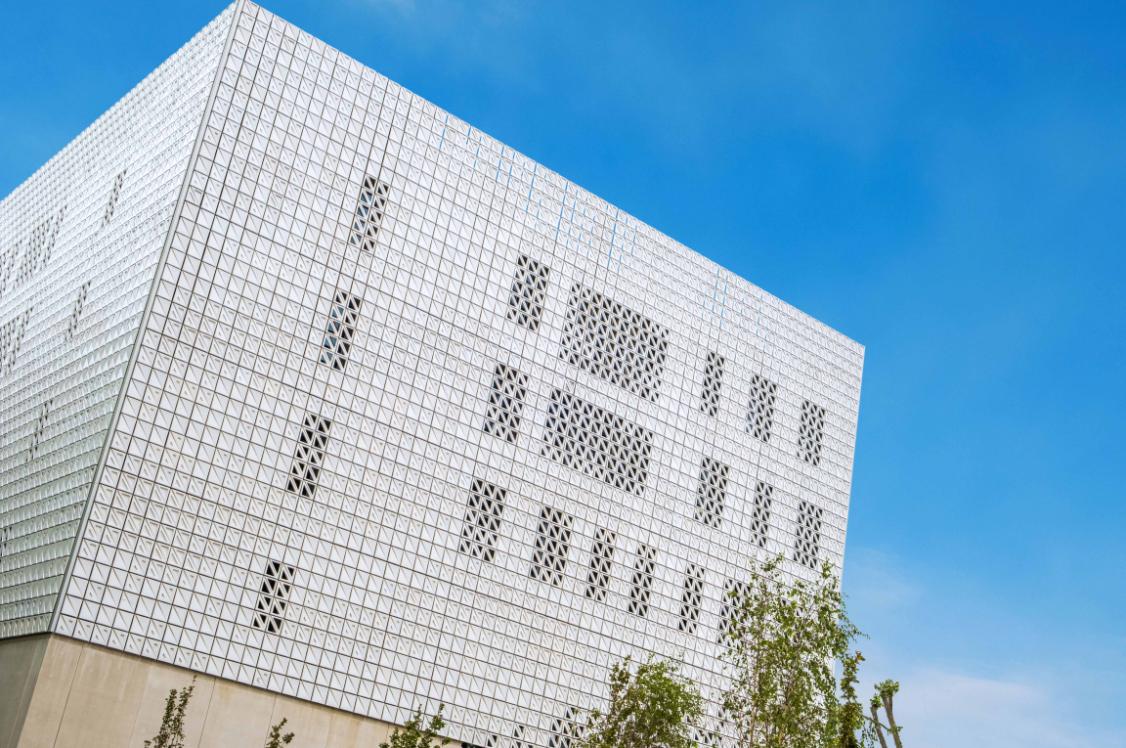

Katy Ghahremani, partner/architect, Make Architects, on EDIB principles, high-profile projects & role models in the workplace.
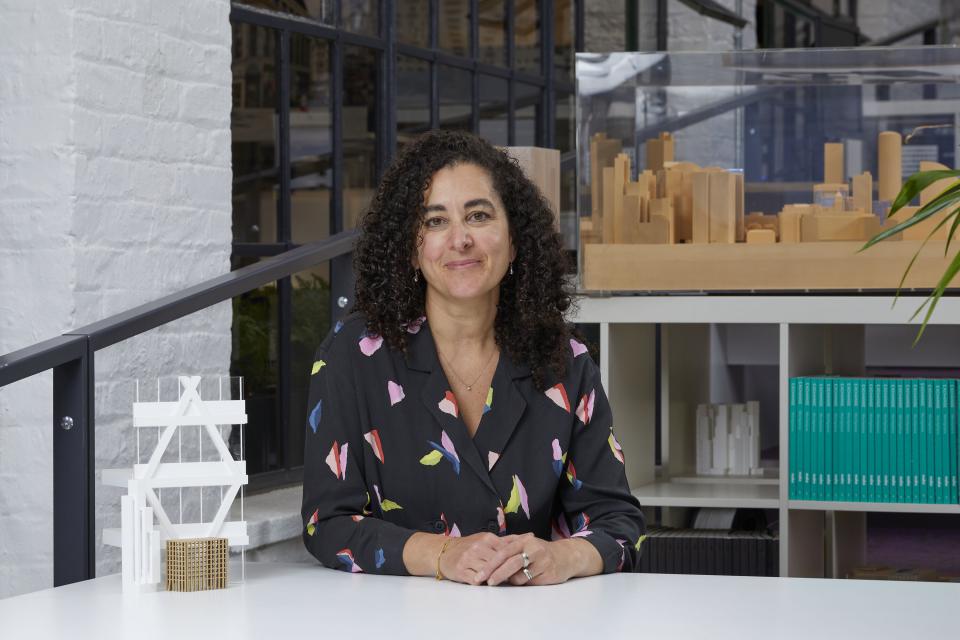
Katy Ghahremani's career trajectory reads like the wish list of an undergraduate architect. From a Part One role at Future Systems during the recession of the 1990s (at the time the practice was bidding for the Tate Modern), to a stint at Enric Miralles' office in Barcelona, followed by Foster + Partners, and then joining at the start of Make Architects in 2004 along with the brilliant Ken Shuttleworth, it's safe to say Katy has a wealth of experience.
When speaking to Katy it's impossible not to feel enlightened. EDIB means a lot to her personally and professionally. It's clear that she truly loves distilling this experience she's built up over her time with the aforementioned practices to share with the younger generations of architects and interior designers coming up.
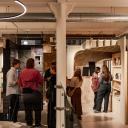
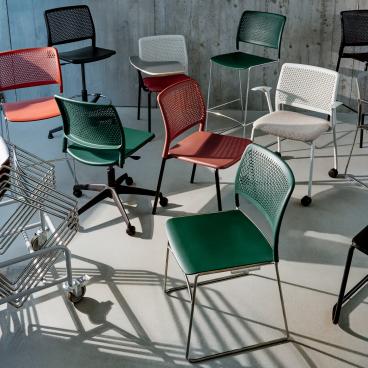
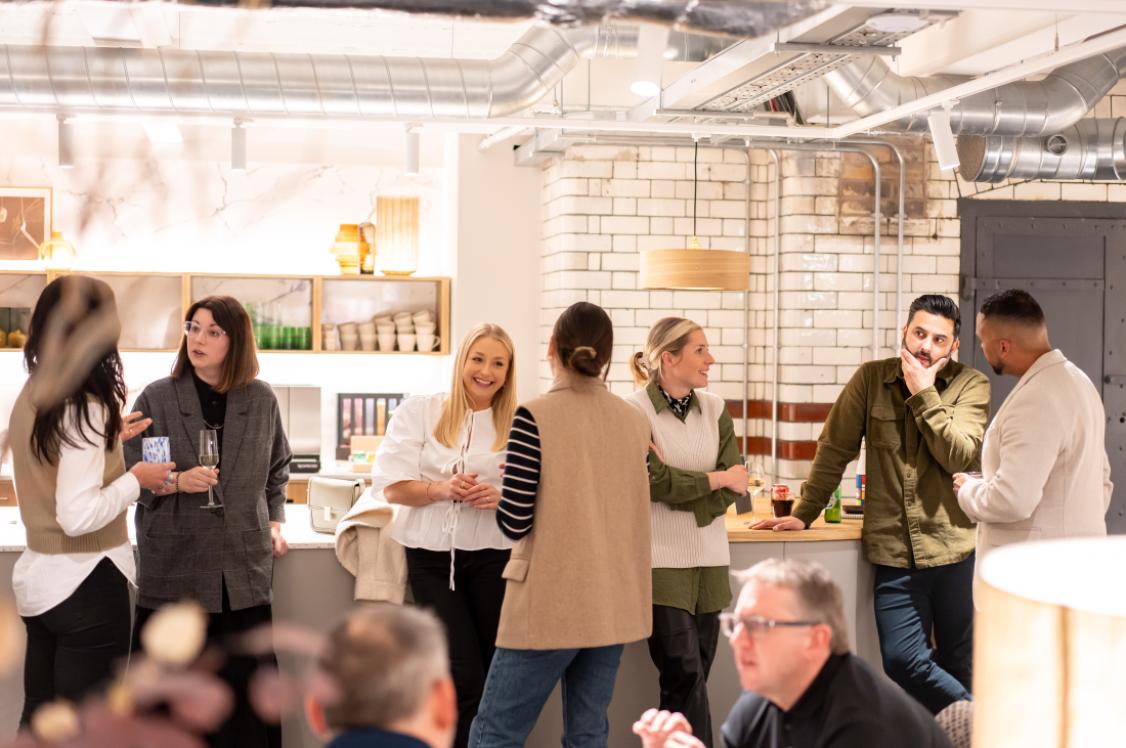
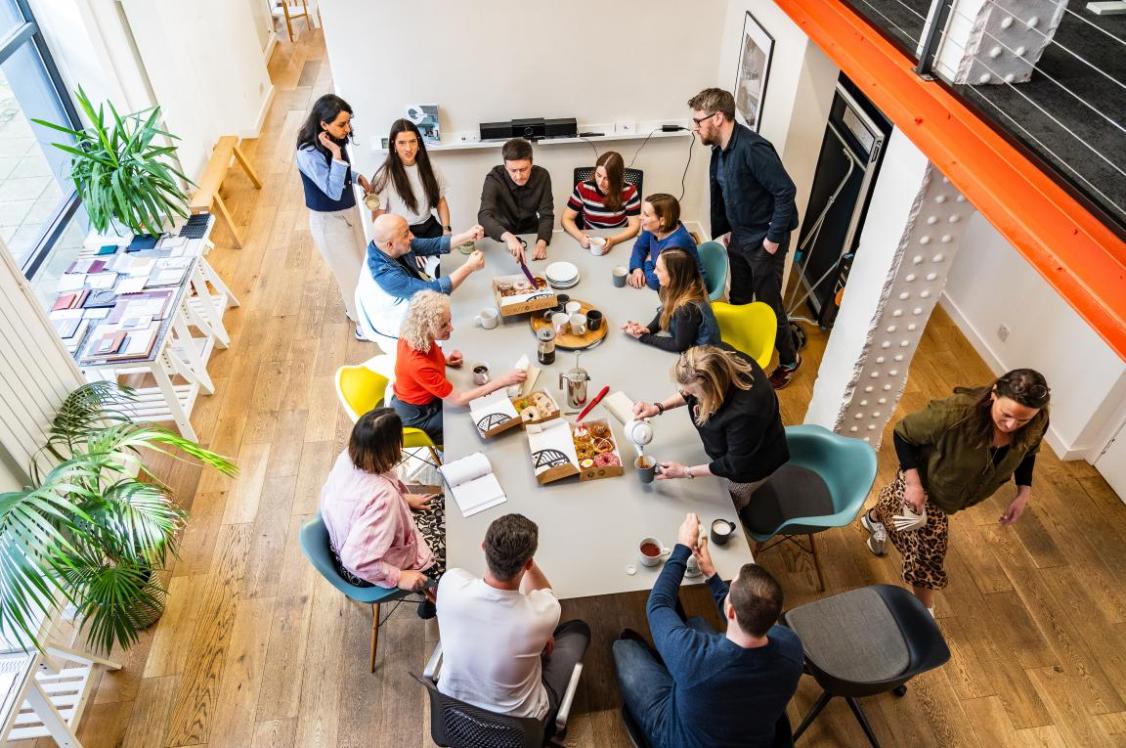
It's also no coincidence that Make gives opportunities to Part One and Two architects rather than "parachuting in senior people." A nurturing, supportive thread runs right through the organisation. This energy is palpable when you walk through the door, descending the ramp lined with architectural models, into a vast, open plan space whose previous life was an old NCP carpark that Make's founder Ken and the team repurposed themselves. Once inside, the environment is a collaborative one. Everywhere you look task chairs are gathered around drawings, models and materials, with people of all seniorities busily chatting away. It's a joy to see. More a live workshop environment than what you might expect of a traditional architecture practice.
Katy's support of young people similarly extends to her work with universities such as UCL. This is in addition to advisory, trustee and board roles for the London Property Association; the Built Environment Trust; and the Westminster Design Review panel.
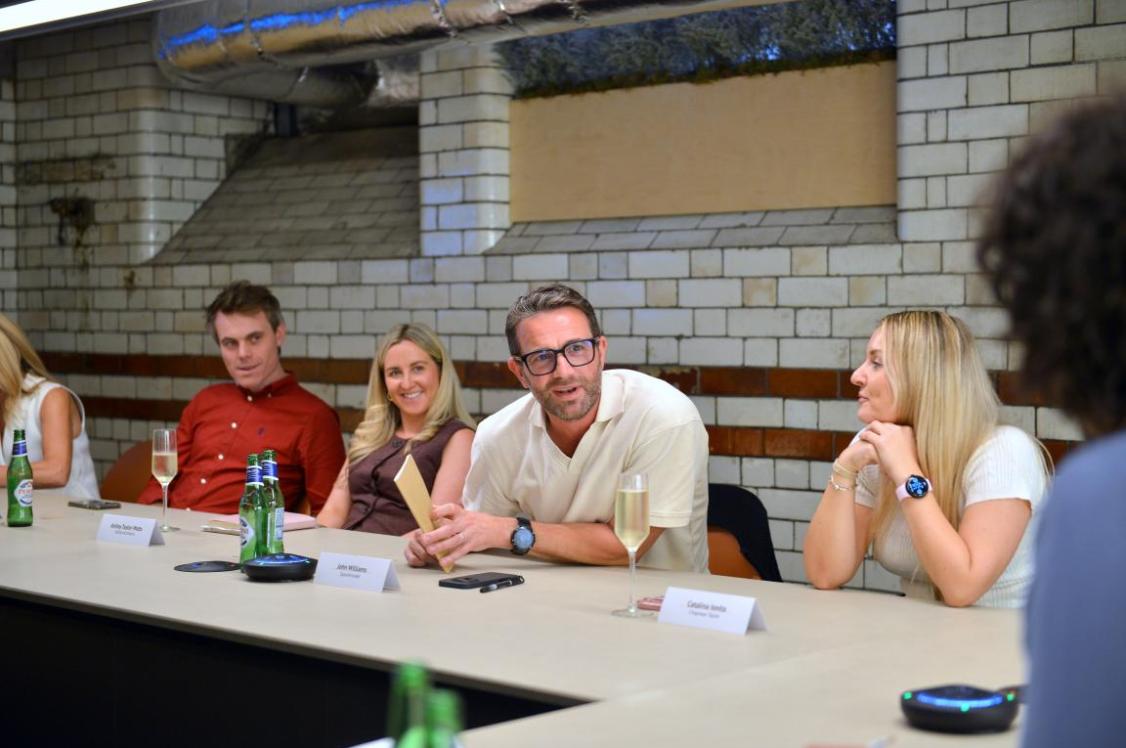
Having recently spent a very enjoyable hour with Katy at Make's HQ to chat about how EDIB relates to both practice and projects, we were keen to share our conversation with you. Here's how it went...
Can we talk through your career to-date?
“I did my degree in Edinburgh. And when I did my Part One, we were right in the middle of a massive recession here in the '90s. A lot of my friends were going to either Berlin or Hong Kong, and I actually managed to get a job at Future Systems, which was unbelievable at the time. I was so happy. There were only 4 of us, including Jan [Kaplický] and Amanda [Levete]. So that was a really amazing experience because that was at the time they were doing the competition for the Tate Modern. Just mind-blowing.
“During the recession, RIBA said that you could do Erasmus as part of your Part One work experience. So the University arranged for me to go to Barcelona for a year. This was transformative in terms of working in practice. It was post-Olympics, just as the city had completely reinvented itself. I had the opportunity at the end of my semester in Barcelona to work at Enric Miralles' office for a couple of months as well. An amazing year out.
“When I came back, I did my diploma at the Bartlett, which was fantastic. Then I got a job at Foster + Partners, where I worked for 7 years with Ken [Shuttleworth]. One of the key projects we worked on together was Electronic Arts' (EA) European headquarters in Chertsey, Surrey. I loved working with such a dynamic company doing architecture and interior design. And I think that’s where my love of interiors really began.
“When Ken decided to leave Foster + Partners and set up Make Architects, I thought it would be great to join him – it was a very exciting time. I’ve been with Make since the beginning in 2004.”
What an incredible wealth of experience! During your 22-years at Make, how has your role changed?
“When we started, we were a very young company. A lot of us were the same age in our 30s. We’ve grown up with the practice. I was made director 10-years ago, which was an honour and a privilege. I was really pleased to be asked. My role has changed, but everyone’s has in a way as we’ve gained more experience.
“I've leaned into my interests in interiors for hospitality and residential, which has been a lot of fun because those sectors are really changing as well.”
What does your day-to-day look like?
“Every day is different! It's really good fun. I may have external meetings - I'm usually working on multiple projects, so there'll be client meetings that I need to go to. It’s great to have physical, real-life meetings back, but of course there are a lot of Teams meetings, particularly with our global clients. This morning we were on a call with Beijing.
“The other side of my role is to support the teams here. That might be doing a design review or supporting in relation to a specific challenge in terms of working with consultants or clients. It might be a design challenge, but it's also sometimes thinking more broadly about how you move a project forwards. It’s not just the design. We need to think a little bit more strategically.”
With your passion for architecture and interiors in mind, how do you consider the two on projects?
“Historically, design was seamless. Think about Frank Lloyd Wright. You started with the architecture masterplan, then you did the interiors and you might even do some pieces of furniture to go in there as well. In more contemporary times, we split it all out. But I actually think design is design. It's all about scale. So, you do need to have an understanding of both scales. A scale that works at architecture does not work at interiors and vice versa. My favourite projects are the ones that we do all the way from the outset all the way through to the styling elements, because actually, those are really important to bring a space to life.
“Having said that, we don't always have the opportunity. It's quite rare to have the opportunity to go all the way from the outset through to those little moments. So we're really happy to work collaboratively. We’ve done both, where we've done the architecture and then collaborated with an interior designer to do the interiors, or we've been the interior designer and worked with the architect.
“We've also done a couple of projects where the scope has been split between two different interior designers. So, although we're designing different areas, it's within the same building, so there needs to be collaboration there to create a more holistic experience. In workplace, or wherever that may be.”
Are there ever any challenges with collaborating in this way?
“It all depends on how the team gels together. I think if the team is really respectful of one another, you can actually get so much more out of it, and that's whether it's an internal team or whether it's a team of lots of different companies. It's about the individuals at the end of the day, the people within that team.”
You’ve been involved with many award-winning projects, such as Temple House, Nobu, and recently Hornsey Town Hall – all very different. Does your approach change depending on the sector?
“I think that there is a commonality to the projects, which is not about style or design. It's much more about looking at a proposition, whether it's a building or a site or whatever it is, and asking, where are the opportunities? How do we create emotion? What are the spaces, and what are the uses? It’s always really great to work with the person who's going to be bringing that building to life, and by that, I mean, for example, on Hornsey Town Hall, we worked very closely with the operator who was going to be managing the space – that’s not the client.
“On Temple House, we worked directly with the hotelier because he was the one with the vision. It's about working with the end user, to really have a vision, and then it's about how we deliver that vision.
“Once you have the vision for what the building is going to be and how it's going to feel and be used, it's then about flexibility. And the design flows out of that. And it doesn't matter if it's new build, or if it's heritage. The same applies.”
How do you go about researching what the end users want?
“For Hornsey Town Hall, we did a lot of consultation work. It’s really important on a project to consult with the community. But they cannot tell you what they want if they haven’t seen it. They need to respond to something. We worked with a lot of specific groups within the community, such as the Crouch End Festival and the Creative Arts Trust – those that would be delivering events and experiences in the community region.”
EDIB is one of your passions – firstly, can I ask how you’d refer to it?
“We call it EDI, and I think the new B Corp term is JEDI – Justice, Equality, Diversity and Inclusion. For me, the term isn't important. It's the meaning behind it.”
What does the sentiment mean to you?
“I think it’s really important because the wider the team, the better the outcome. It kind of goes without saying in a way, because if you have different ways of looking at something, you’ll logically get a better outcome as you've explored more viewpoints.
“It’s obviously a massive subject, but it starts with how we position ourselves externally, so when people are applying to jobs here they can see that there are people like them. Role models are really, really important. For you to see yourself reflected in an organisation is important. All the way through to how we then put teams together, to then understanding that from a diversity, inclusion, and neurodiversity perspective, as everybody's got different strengths. We want to enable people to be the best version of themselves, rather than putting them into positions where they’re set up to fail. That’s not productive for anyone. As well as that, it’s providing support to create a sense of belonging. So people feel part of a team and don’t feel isolated.”
This feeling is palpable when you walk through the door, with people huddled around drawings, chatting, and discussing plans and models. You can’t fake that, can you?
“You can’t. And as an employer we’re really transparent. Everybody’s aware of everything. On a personal level I’ve become more and more interested in this as a topic, beyond just the seven protective characteristics, as I have neurodivergent children. Seeing it from that side, I can understand which situations they thrive in, and which they don’t. It’s crucial we create spaces – and I don’t just mean physical spaces – where people can thrive.
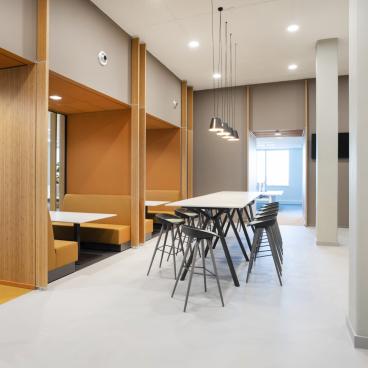
“For client projects, it's about making sure that we are designing with variety and flexibility in mind, because what's right for one person is not right for another. Hospitality, in a way, has been doing this forever. Because if you go to a really great restaurant, for example, there are always the tables which are in little nooks and crannies where you can be away and it's quieter, and there are always the tables which are right in the middle of things which some people love to go and sit at.
“With hospitality, this has been about guest experience, and I think we're now beginning to bring it into workplace design and all of the other sectors.”
Is EDIB something that a client would bring up?
“It depends on the client. Sometimes we don't even bring it up. We just do it. I think it's about gauging whether the client is interested or not. For example, we did a workplace where the client was very aware that a large portion of their employees were neurodivergent because of the type of work they did. So they definitely wanted to make sure that the design catered for everyone. That was great as the client was invested. Some clients aren’t interested. Maybe because they think it’ll cost more. So in that case we’d just do it anyway. From our perspective, it’s better to get those principles into a scheme to make sure it’s really inclusive. That’s better for everyone.
“This is no different to where sustainability was 20 years ago when clients were like, ‘Well, why would I do that? It's going to cost me extra money.’ And so even then, we would do sustainability by stealth. But now it’s totally embedded. In another 10-15-years’ time, inclusive design will be too.
“We've been very good in the last decade to make sure physical accessibility is addressed, but there is more to do on the emotional and mental impact of your space.”
How do you measure EDIB and whether it's been successful in a space?
“We have done a post-occupancy study on some of our buildings, and quite a few of them we’ve commissioned, or the client has commissioned a third party. We like that, because it’s independent. So it’s without bias. Which can exist without us even realising, just from the questions we ask.
“The important thing is, having done the post occupancy, to feed it back to the team and to the studio so that it doesn't just sit on a shelf gathering dust. In any building, there's things to learn. Even if it's been successful, I'm sure that it's never perfect. Nothing's ever perfect. So how can we improve for the next project?”
You don’t really know how a space will be interacted with until there are people in it, do you? How do you feel about Cat A?
“We're taking some thinking from other sectors across into workplace, such as in the residential sector, we would give clients a choice in finishes i.e. it’s the same material but in different finishes. By putting certain aspects together, you can create a very different look. We don't do that in workplace. Why don't we give the tenants a choice in how their toilets will look, for example?”
Is there a golden rule for making spaces more inclusive?
“I think it's about not just having one space, because one space will only cater to one type of individual. It's always about having multiple experiences within the space. And usually, we're designing a building rather than just one space, so we're able to cater for that.
“We've got an in-house spatial psychologist, so we've been exploring what does belonging mean from a scientific perspective? How do we engender that? So it's about creating spaces where people can come together to connect with other like-minded people.”
You’re involved with universities including UCL. Do you think for the younger generations that EDIB is already ingrained in their minds?
“I think in a way it works the other way around now. Sometimes I've overheard students say, 'Oh, well, I don't want to be in that unit because all the tutors are white and male,' – it’s almost the inverse.
“When I was part of the RIBA Architects for Change group, we did quite a lot of research into professional drop-offs, looking particularly at gender and ethnicity. And it was at key stages - applying to university, and then actually going to study architecture, then at Part One, then coming back from Part One, then at Part Two people make specific choices. And I think that goes back to my point where if people can't see people like themselves ahead of them, they might change direction. So it's really about making sure that if you are a diverse organisation, you are portraying yourself so people can see it. Because if they don't see it, they don't know, and therefore they won't apply.
“I listened to a really interesting presentation by Black Females in Architecture just coming out of Covid, and there was a really powerful part where people were talking about their own personal experiences. It was completely anonymised, but somebody was reading it. The comment was ‘If I can't see that there's a black woman architect in this practice, I won’t even apply for a role there.’
“Things have changed radically; we mustn’t forget that. When I started in practice to now…the way contractors behaved around the table. There were no female clients. But we just need to keep going – we’ve still got a long way to go.”
What’s next for you?
“I love seeing my teams thrive doing projects, and just being there to catch them when they need that extra bit of support. We recruit a lot of Part One and Twos so they can grow with the practice, we don't parachute in senior people. And it’s the best thing watching somebody grow from when they're in their early 20s to then leading a meeting with a client. I'd like to be able to do more of that. And I also love doing all of my roles outside of the day job.
“I co-chair the EDI committee for London Property Association. I'm a trustee of the Built Environment Trust. I sit on the Westminster Design Review panel. I sit on the Industry Advisory Panel for UCL's Engineering and Architectural Design MEng course. All of these things which are external but tangential to the project work.
“They’re all great because I learn so much from everybody else around the table that I can bring back to practice. That dialogue is really fascinating for me.”