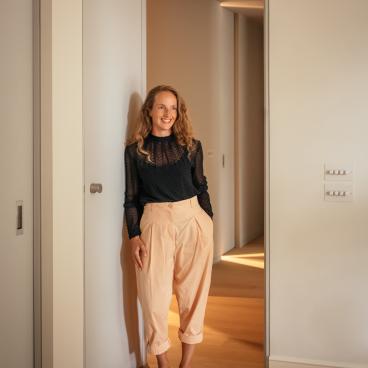














Stuart Rogers, national operations director, Muse & board member, LandAid on shaping places that support people.
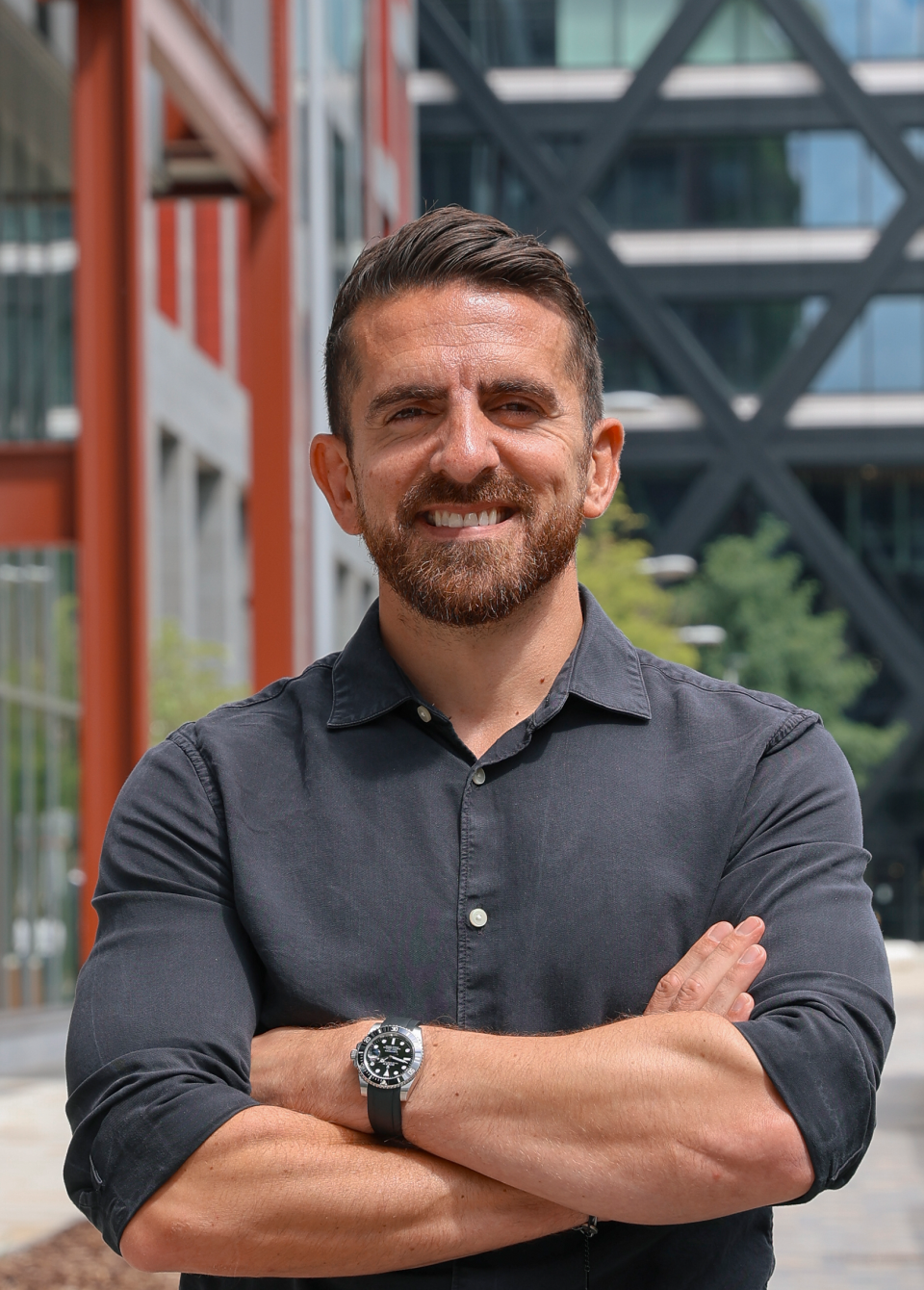
Muse is a nationwide placemaker. Its whole ethos is built around long-term regeneration, with a simple aim: leave communities socially and economically better off than when it arrived. That long-term view, Stuart Rogers, national operations director, tells us, shapes everything.
Stuart was a panellist on our very first seminar at Material Source Studio Manchester 5-years’ ago. And his comments have never left us. An advocate for true sustainability, Stuart’s passion for innovative, future-facing materials, certifications and processes is palpable. When we first met, he highlighted graphene concrete.
And his recommendation for a material with untapped potential when we met this time, 5-years’ on? Timber. More on that to come.
As well as the sustainability of buildings, the sustainability of people is also extremely close to Stuart’s heart. He is a board member of the charity, LandAid, a fantastic organisation working to end youth homelessness in the UK.
With both ‘hats’ on as recently appointed operations director at Muse, and as LandAid board member, Stuart and I had a chat about how the constant thread of “leaving things better than when we found them” guides his (very busy) day-to-day.
“We’re not just delivering buildings. We’re trying to change places in a way that lasts”, began Stuart. “Sustainability sits right at the centre of that approach, but not in the narrow, headline-grabbing way the industry sometimes falls into.”
"The priority for us is creating sustainable communities, the buildings are only one part of the jigsaw"
Muse has, sometimes - potentially to its own detriment, Stuart says – been particularly humble about its achievements – “we obsess about delivering buildings, not just talking about delivering buildings”. Over the last few years, the developer (through its ECF joint venture partnership, with Legal and General, and Homes England) has delivered some truly exciting projects, including Eden, New Bailey, in Salford – “A place of firsts, it’s designed to achieve net zero carbon in operation, meaning a reduction on running costs of up to 60% compared to a Grade A office.” It’s a distinctive space in the city thanks to its living wall façade, the largest in Europe with 350,000 plants and 32 different species attracting birds, bees, and bugs to support biodiversity. There’s also Greenhaus nearby, comprising sustainable, accessible, and affordable eco-friendly homes.
Just two examples of how Muse’s dedication to sustainability works in practice, there are countless others, Stuart explains Muse’s approach is set out in an internal framework called Our Sustainable Future, developed in 2021 and applied across every project in the portfolio.
“It’s managed with proper oversight, and the key point is this - it isn’t just about carbon. The framework is built around five pillars; net zero carbon, social value, health and well-being, nature, and circular economy. Under each pillar there are mandatory KPIs, with a baseline threshold, a desired target, and a stretch target. Then beneath that is a deeper layer of best-practice metrics - usually 11 or 12 measures under each heading - so projects can be assessed with real data, not just good intentions. That data is captured across projects nationwide, which means lessons are shared and decisions can be made with evidence”, Stuart shares.
The standards are deliberately high. In fact, Stuart said that since 2021, Muse hasn’t hit its aspirations on everything on a single project - because the bar is set above common industry benchmarks.
The mindset is honest: “if you push hard and get close, you’ve done a really good job”. It’s a culture of admitting where you fall short, learning, and improving every time, rather than pretending everything is perfect.
That expectation is set from day one. “Consultants, partners, councils, and contractors inherit the sustainability approach through the brief, and contractors take on contractual responsibilities tied to whatever targets are appropriate for that scheme.”
Crucially, Muse likes sustainability that can be proven. That’s why third-party certification matters, things like Passivhaus, BREEAM, Home Quality Mark, NABERS, and high EPC targets. Not because badges are “trendy”, but “because certification forces you to prove performance instead of relying on marketing.”
“Greenwashing is one of my biggest frustrations”
“Greenwashing is one of my biggest frustrations”, commented Stuart “You see hoardings claiming, ‘net zero from day one’ or ‘the first ever zero carbon building,’ and often it’s just a slogan. Muse’s preference is simple: don’t say it unless you can evidence it against a recognised standard, checked independently. If you’re serious about being responsible, proof matters.”
Speaking of the Eden scheme, Stuart said, “We wanted to deliver higher sustainability standards than ever before for a new build office, but there was a fixed budget. Instead of simply adding cost, the challenge became: achieve the target and find the savings elsewhere. That created a practical feedback loop; questioning materials, stripping back what wasn’t needed, and improving what mattered. It also created real learning, especially around air tightness and how one design decision can affect other outcomes like ventilation and health.”
This consideration of people is central to Muse’s sustainability approach, Stuart adds. Providing genuine, tangible benefits that make a difference to the way someone lives.
“On Greenhaus, an average 68% reduction in energy bill costs wasn’t just a claim - it was real-world impact for residents. And when the homes are affordable, that impact matters even more. Lower bills put money back in people’s pockets, especially for people who need it most. It’s the difference between just getting by and having room to breathe. Sometimes it’s the difference between relying on a food bank and being able to afford the bus to a training course that leads to a job. Those ripple effects are huge, even if they’re hard to measure.”
Tracking energy is one thing, monitoring equipment can do that. Tracking the full economic impact is much harder, Stuart said. “There are models and reports that estimate long-term value, but it’s difficult to fully trust headline numbers because assumptions can be stretched.
“In the end, the most ‘real’ evidence often comes through people’s stories: the resident who’s moved into stable housing, the person who’s gained independence, the family who’s able to plan ahead. That kind of change doesn’t always fit into a KPI, but it’s the whole point of the work.”
What’s also striking, Stuart noted, is how innovation spreads when you treat it as shared learning.
“Greenhaus wasn’t originally an ECF-led brief, it came from a partner pushing for high-density Passivhaus, which was rare at the time. But once the team leaned in, it became a teaching project. People on site took ownership of quality in a very practical way, right down to making sure there were no gaps bigger than a few millimetres. Floors were air-tested as the building went up, not just at the end. The result wasn’t only better performance; it improved overall build quality and reduced the need for extra quality monitoring because the Passivhaus process demands that discipline anyway.”
That’s why “Passivhaus principles” without certification can be a problem, Stuart believes. Designing fabric-first is a good start, but if it isn’t verified through construction, “you can still end up with a performance gap”.
“Certification isn’t about being precious. It’s about making sure the people living there actually get what was promised.”
Zooming out, Stuart said that Muse’s view of sustainability is really “a view of what makes a place work over decades”. Mixed use helps, but not as a gimmick. The goal isn’t to force a building to be used 24 hours a day in a way that feels unnatural. The goal is a proper mixed-use community: a blend of homes, workspaces, hotels where needed, and crucially a mix of tenures: owner-occupied, build-to-rent, affordable, social, so the place doesn’t become segregated. “Ideally, you shouldn’t be able to tell who lives where. Everyone should feel like it’s for them.”
Because Muse projects often run for 15–20 years, the real test, Stuart shares, is what happens when Muse eventually steps back. “Does the community feel ownership? Do people feel stewardship? Have local people had opportunities because of the regeneration - jobs, skills, pathways into the industries being created on their doorstep? That’s the version of sustainability that lasts.”
“Need” is the anchor. Muse won’t build apartments just because it’s fashionable, or insert the same “market hall” idea into every town. Some places have a strong market heritage where a modern take can genuinely bring life back to the high street. Other places don’t. Same with hotels, offices, and different types of housing - it has to be based on what the area needs, not what makes the easiest business case in the short term.
That’s why early engagement matters. Muse does formal public consultation, but it also does what it calls “community conversations” from day zero, often even while bidding for work. The point is to listen before decisions become fixed. And that listening has real consequences: the first phase you assume will happen can change completely once you understand what the community actually needs.
Muse isn’t always arriving to “make” a place from scratch. It is a “place grower”, Stuart explained. “Most sites already have communities who are proud of where they live and understand what their area is missing. The job is to work with that, not over the top of it. It also means supporting local businesses where possible, especially independents who can easily be crushed by rents and rigid leasing terms.
"Sometimes the most useful thing a developer can do is listen, test ideas, and create conditions where local business can survive.”
Returning to a point made by Stuart at our first Material Source Studio seminar in 2022, on graphene concrete having massive untapped potential, I asked "what’s next?"
“Timber”, Stuart replied, “I love it.”
Having got a “fully designed up mass timber frame office”, which he worked on for St Helens 3-years’ ago, Stuart said the initial feedback he had internally was it would never get past the insurers. However, bringing insurers into the design process before planning, instead of hoping it worked out later, is a practical lesson that was learnt, and applies far beyond timber. Though the scheme is currently on ice, it’s a fully designed and deliverable scheme, Stuart said. And if it went ahead in the North West, it would be the first of its kind.
“The frustrating part is that viability can still stall good ideas: in some towns, office rents don’t currently support even a standard steel frame building, never mind an enhanced timber one. But building a proven, insurable model now means it can move to the right location when the opportunity comes.”
Alongside place-making, Stuart also has a strong commitment to helping people in immediate need, and that’s where LandAid comes in. For those who haven’t come across it, LandAid is a property industry charity tackling youth homelessness. Getting involved can start with something simple: sponsoring, donating, joining a team for a challenge, or turning up to events, but ‘the why’, Stuart says, is powerful once you hear the stories. A passionate sentiment shared by all those we’ve spoken to about LandAid over the last couple of years.
Stuart shares that the North West has already seen direct impact through projects supported by fundraising and gap funding, including new accommodation provision, Salford Foyer.
"It becomes impossible to shrug off as ‘someone else’s problem’"
“The bigger point is that youth homelessness is growing, and it can happen to anyone. One story shared by a young person, how quickly life can unravel through circumstances outside your control, can change how you see the issue forever. It becomes impossible to shrug off as ‘someone else’s problem’”, commented Stuart.
If you want to get involved, the simplest route is to connect directly with LandAid through its website (landaid.org.uk) or reach out to people already active in the cause such as Stuart.
Beyond LandAid, there’s a similar spirit in support for places like Salford Youth Zone, an incredible facility giving young people somewhere safe to go, learn, play sport, be creative, or simply breathe. “For some, it’s the difference between going home into pressure and walking into a space that supports them. Again, once you visit a place like that, it’s hard not to want to help.”
And while all of this is happening, the regeneration pipeline keeps moving. Across the North West and beyond, Muse is working on major long-term schemes: low-energy affordable housing projects through joint ventures, coastal regeneration opportunities like Marina Village in Barrow, big multi-phase regeneration at Salford Crescent, community-led projects like Prestwich Village, and large-scale town centre delivery like Oldham with thousands of new homes planned in a true mix of tenures.
Add in Stockport’s continued phases, industrial and logistics projects, and a national footprint that stretches into Yorkshire, the Midlands, London, and the South West, and you get a sense of the scale Muse works on.
“Not talking about delivery - actually delivering.”
What ties it all together, and perhaps summarises Stuart’s get-it-done attitude is a simple focus: delivery. “Not talking about delivery - actually delivering.”
That’s where reputation comes from in regeneration, Stuart adds, especially when you’re asking communities and public-sector partners to trust you over decades. “Do the work, prove the outcomes, share what you learn, and leave the place better than you found it.”