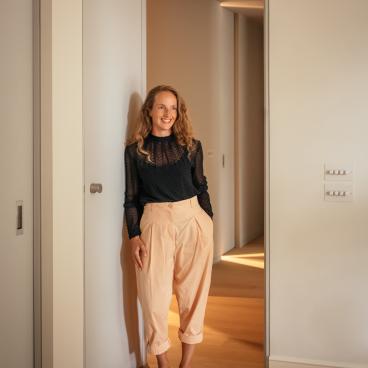



Paula Camiña Eiras, founder, Co-Obradoiro Galego, on combining craftsmanship with culture for regenerative outcomes.
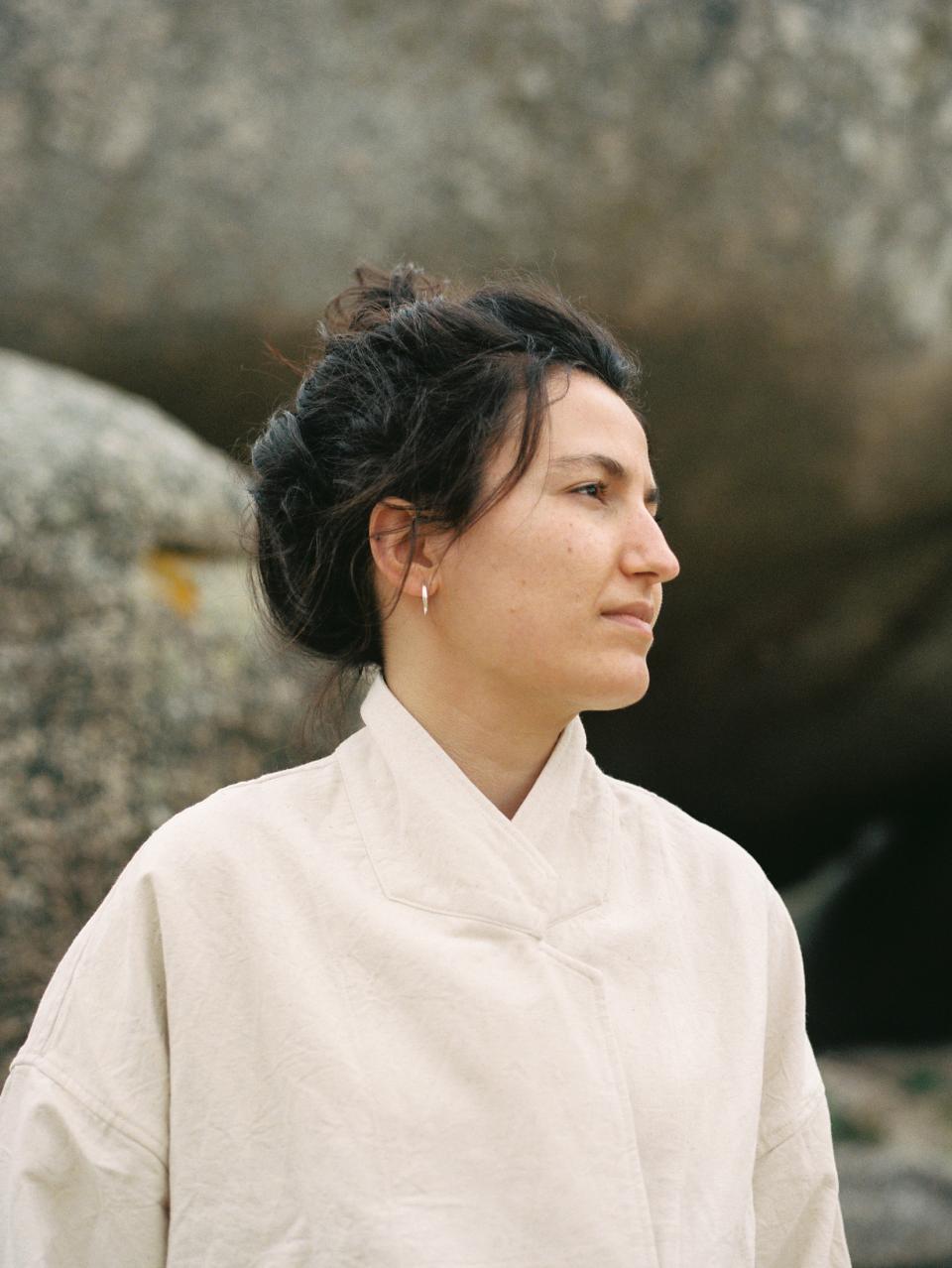
Credit: Sabela Andrés
Working across academia, innovation, and craft, Paula Camiña Eiras sits at a compelling intersection - material research that is as much about ecology and systems as it is about culture, identity and place.
In her previous positions as associate lecturer on the MA Biodesign course at Central Saint Martins, and Biodesign Lead at Dulcie Skincare (formerly Haeckels), Paula has led and contributed to projects spanning edible packaging, algae bioreactors and biocomposites - always with an emphasis on regenerative thinking and material storytelling.
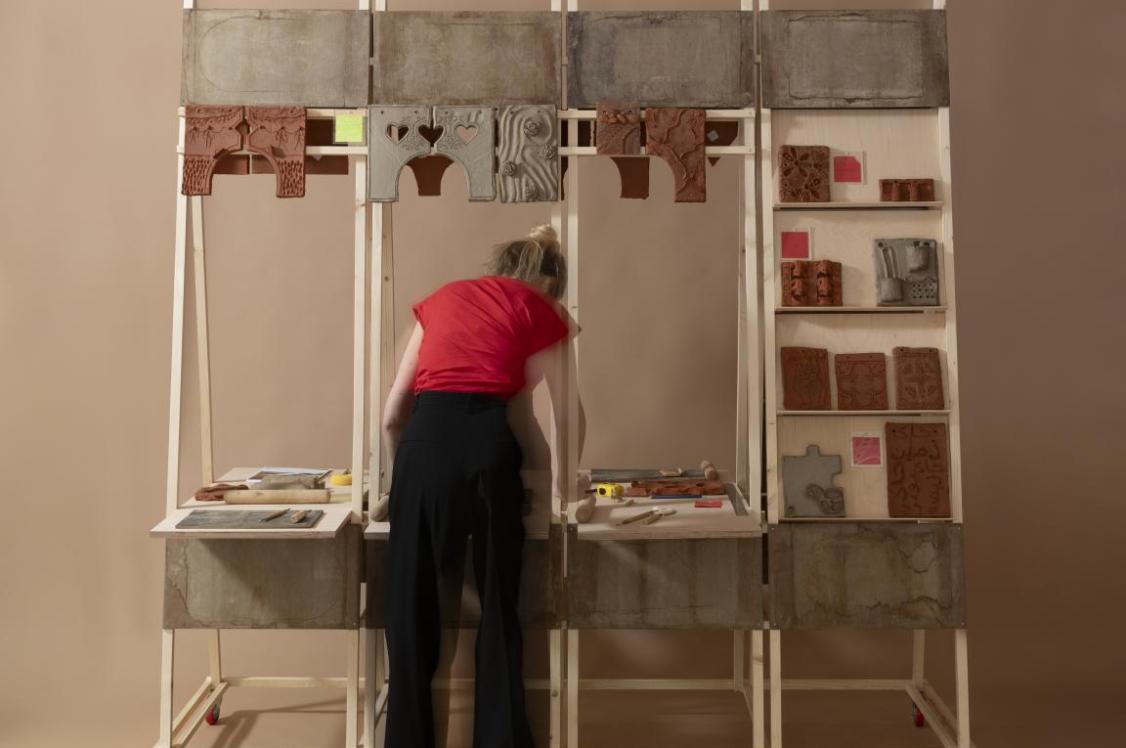
Her ongoing craft-led project, Co-Obradoiro Galego, connects contemporary design with basketry traditions in Galicia, Spain, exploring how local resources and coastal material landscapes can shape new futures.
In a recent interview, we sat down to discuss Paula’s unique approach to regenerative design, while considering how this might feed into more supportive systems for the future of our built environment.
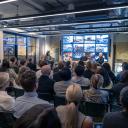
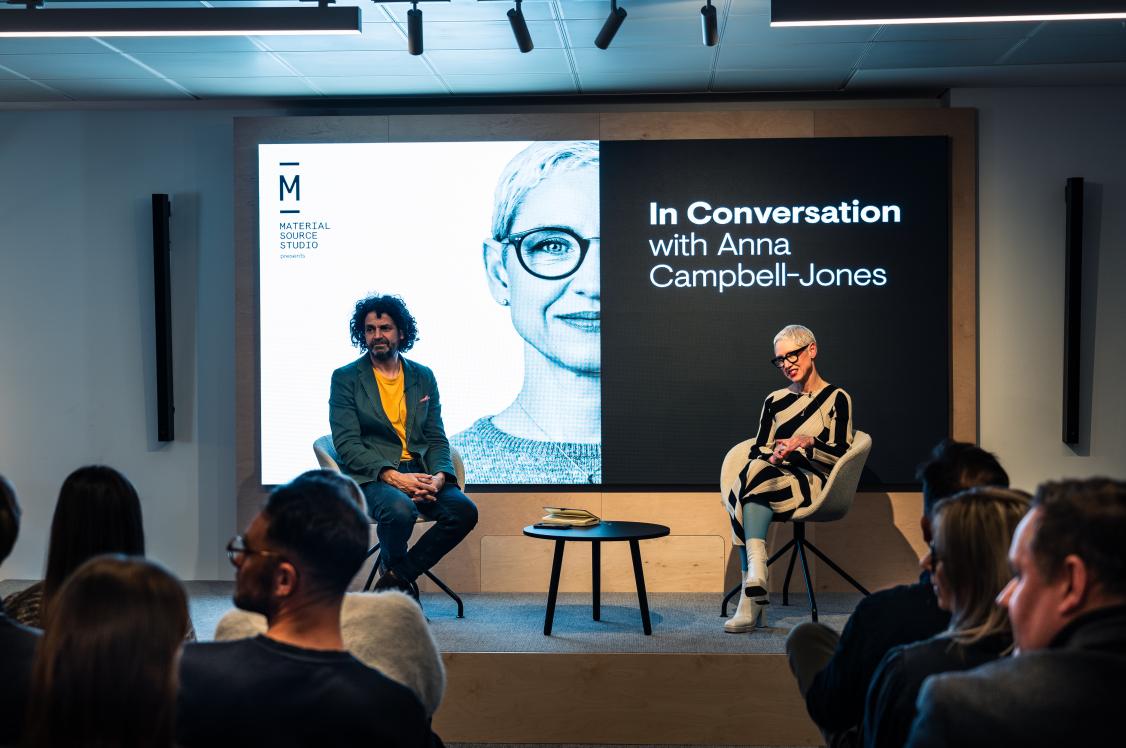
Paula will join us as a panellist during Clerkenwell Design Week for our seminar (20 May, 2pm) on the topic of specifying regenerative materials. Get your ticket for Future Materials: The challenges of specifying them, here.
To start, can you talk us through your career journey so far?
“When I look back at my career journey, I’d say I’ve been focusing on three different areas. The first is the academia sector, where I was an associate lecturer on the MA Biodesign course at Central Saint Martins, UAL. The second is innovation, where I’ve specialised in materials, including my previous role as Biodesign Lead at Dulcie Skincare (formerly Haeckels), and developing commissions for Zara Home. And the last sector is craft, through my project Co-Obradoiro Galego, which explores the intersection between material research, tradition and contemporary design in my region, Galicia in Spain.”
You’ve worked on projects for Red Bull, Sebastian Cox and Selfridges. How do you approach a project across such different contexts?
“For any type of project, it always starts with the idea of integrating a regenerative system. To do that, I look at materials - especially bio-based materials - and how those materials can take shape through collaborations. Sometimes those collaborations are with brands, like Red Bull or Selfridges, and other times they’re with makers, start-ups, innovators, individuals.
“It always starts with the idea of integrating a regenerative system.”
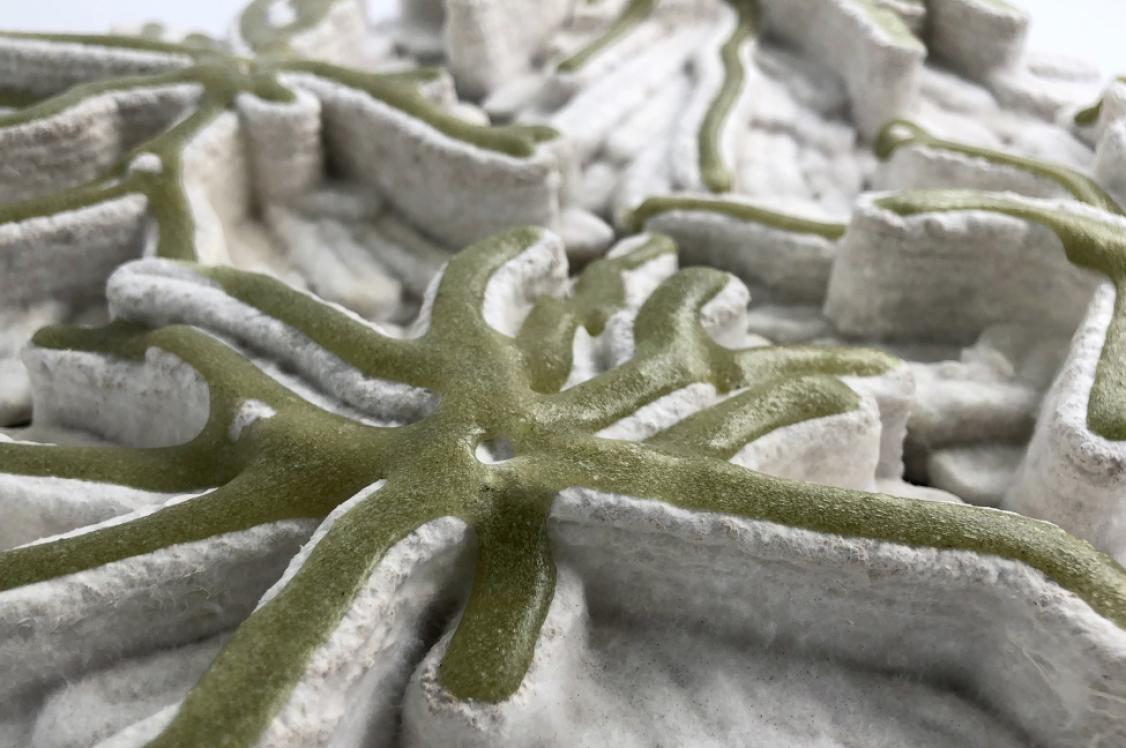
“Those projects are different in their outcomes: the Red Bull edible cup; the Sebastian Cox project, where we co-developed biocomposites like seaweed chalk that spoke about the landscapes of Margate for a pop-up store in Edinburgh; and the Selfridges activation, which involved an algae bioreactor. But I think together they prove the power of material storytelling.”
Credit: Sabela Andrés
What do you mean by 'material storytelling'?
“Materials can offer the possibility of developing something new for products, but there are other sides to how materials help us understand their landscape; the material landscape. It’s the idea of how a product has been made, who has made it.
“By introducing products or materials into a different context, there’s an opportunity for human empathy and reflection. So the question becomes: how can you design biodesign narratives that are accessible for customers and people, but also engaging? Ideally, those narratives spark reflections on new material realities, aiming for better solutions - not only for humans, but also for the planet.”
When you start developing a material, where do you begin?
“It’s about understanding the context you are developing a material for. That means understanding the ecological needs: what’s the end life cycle of that material? Understanding the social needs: who is benefiting from that material, and how are they going to experience it? And on a cultural level: what’s the connection of that material to the territory, to the heritage?
“When you consider those three aspects, you can arrive at a more long-term solution, and it can create a deeper connection between people and material landscapes.”
Are there any new materials or types of organic matter inspiring you right now?
“I find inspiring the materials, or the matter, that have been overlooked, rather than trying to come up with something completely new. I’m interested in byproducts that can be reshaped to meet present or future needs, while still connecting to the context. Those are the materials that resonate with me.”
You have taught at Central Saint Martins, how do students respond to these ideas?
“Some students arrive already having detected certain needs; others haven’t yet. So it’s about supporting them, coaching and mentoring them through the process.
“Last year, I tutored 11 students in their final MA projects. My approach starts with understanding not only their professional background (which is increasingly mixed in terms of disciplines), but also their personal background: who they are, where they’re coming from, what culture has shaped them, and where they see themselves after the master’s. Then we take it from there.
“I think when you work like this, it’s when you design with purpose, but also with identity. It’s very individual.”
Biomaterials have come a long way in the last decade. Do you think the sector is where it needs to be?
“I still think not enough. We’re not yet in a market where the biodesign position truly exists. We’ve made a lot of progress over the last few years, but there is still more progress to be made.”
Credit: Sabela Andrés
What needs to happen to accelerate progress?
“We need larger infrastructures and companies investing in these types of solutions. Not just as ‘special projects’. They should become the go-to solution, rather than a feature project.”
What do you think holds investment back?
“One aspect is a misunderstanding of the aesthetics of biodesign - connecting biodesign to ‘nature-inspired’ solutions that were perceived as not meeting the aesthetic values or preferences people are used to.
“But when you develop a material, you also design its aesthetic, you ask how do you want the material to look? If you start by looking at already familiar system materials, you can be in a position of advantage, both for public acceptance and from a making perspective.
“With biodesign, we don’t have to redesign the whole process. Innovation can be about rethinking existing systems, processes, and tools, and ensuring the material is compatible with them. Then you can start talking about scaling in an efficient way.”
Credit: Sabela Andrés
So for you, what does ‘true sustainability’ mean?
“Sustainability is not enough. Sustainability is about less harm, less damage, fewer resources. But we have to be talking about regenerative thinking and regenerative systems in design.
“We have to be talking about regenerative systems in design.”
“It’s the idea of regenerating context, introducing materials that have a positive impact not only on the environment, but also on society and culture. That’s what we should be aiming for.”
Do you have a favourite material to work with?
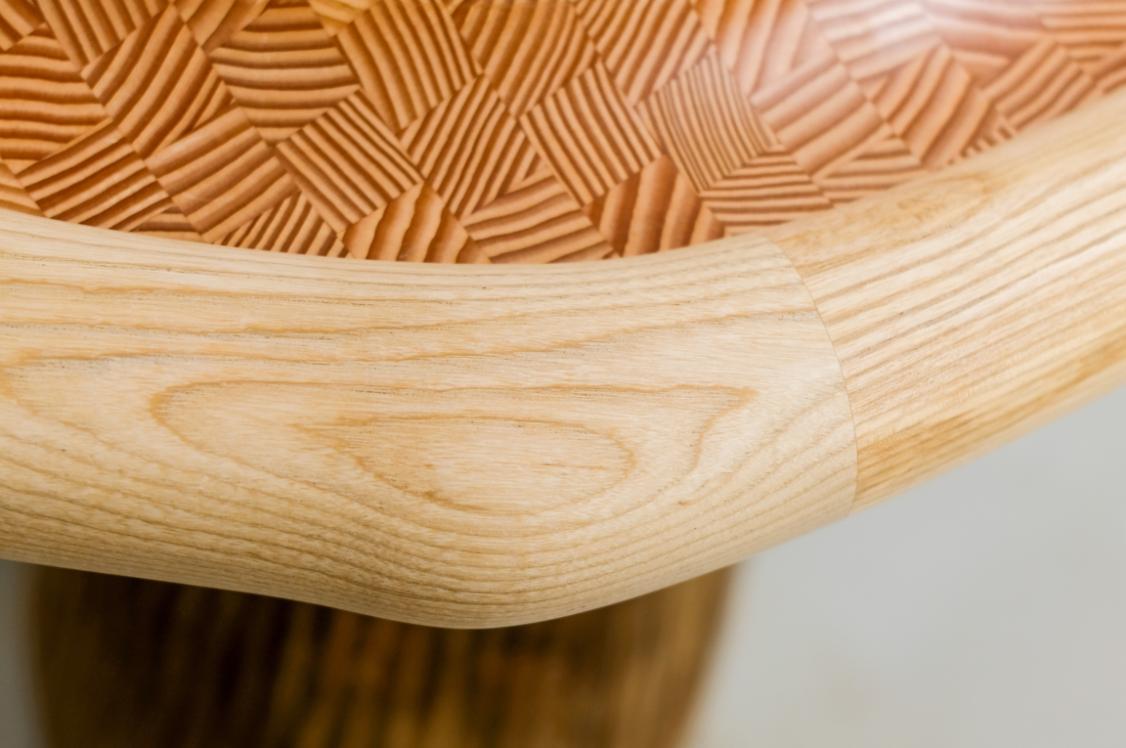
“If I think about my favourite material, I wouldn’t choose one I developed myself, I’d choose one I’ve learned a lot from. And that material is wood.
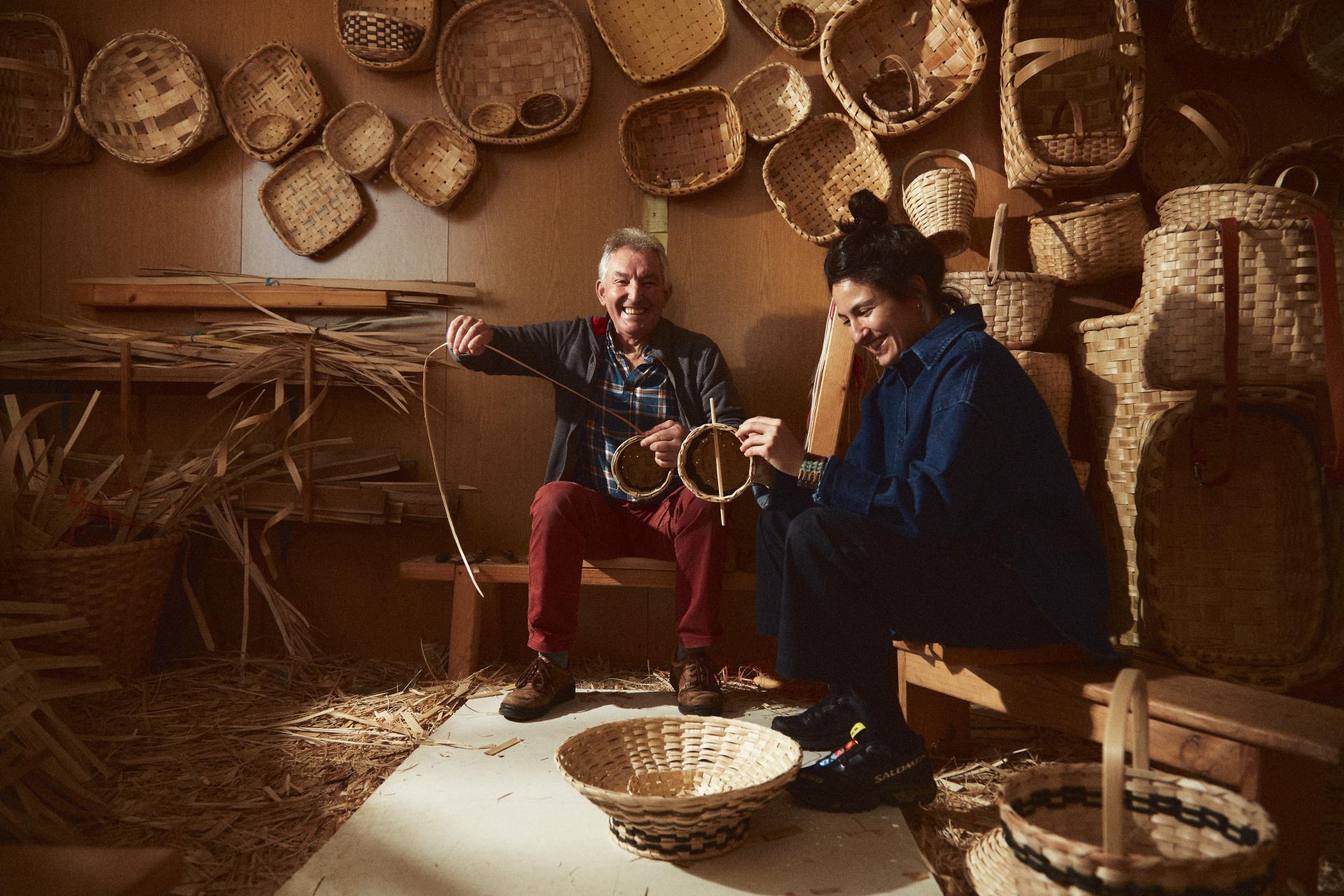
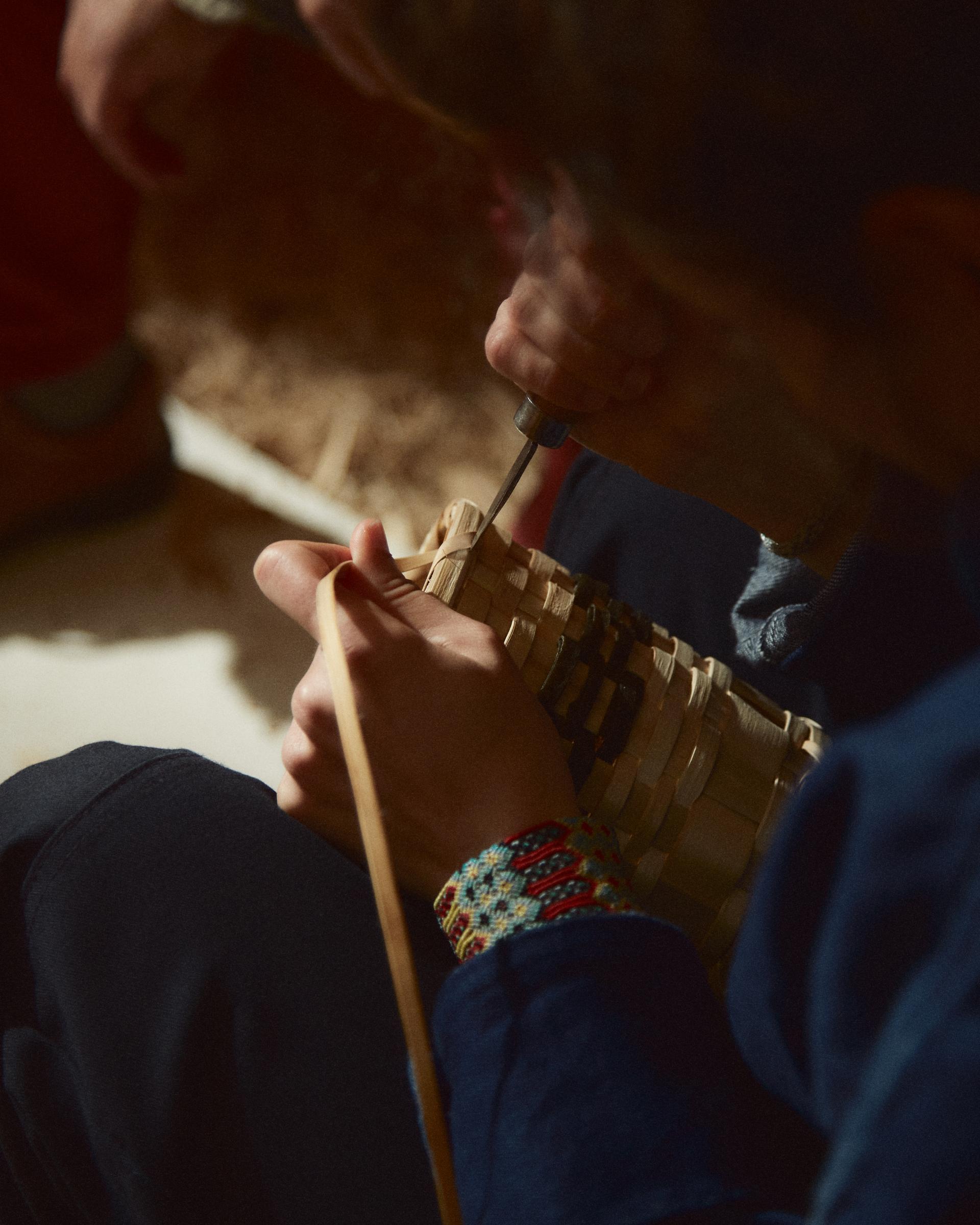
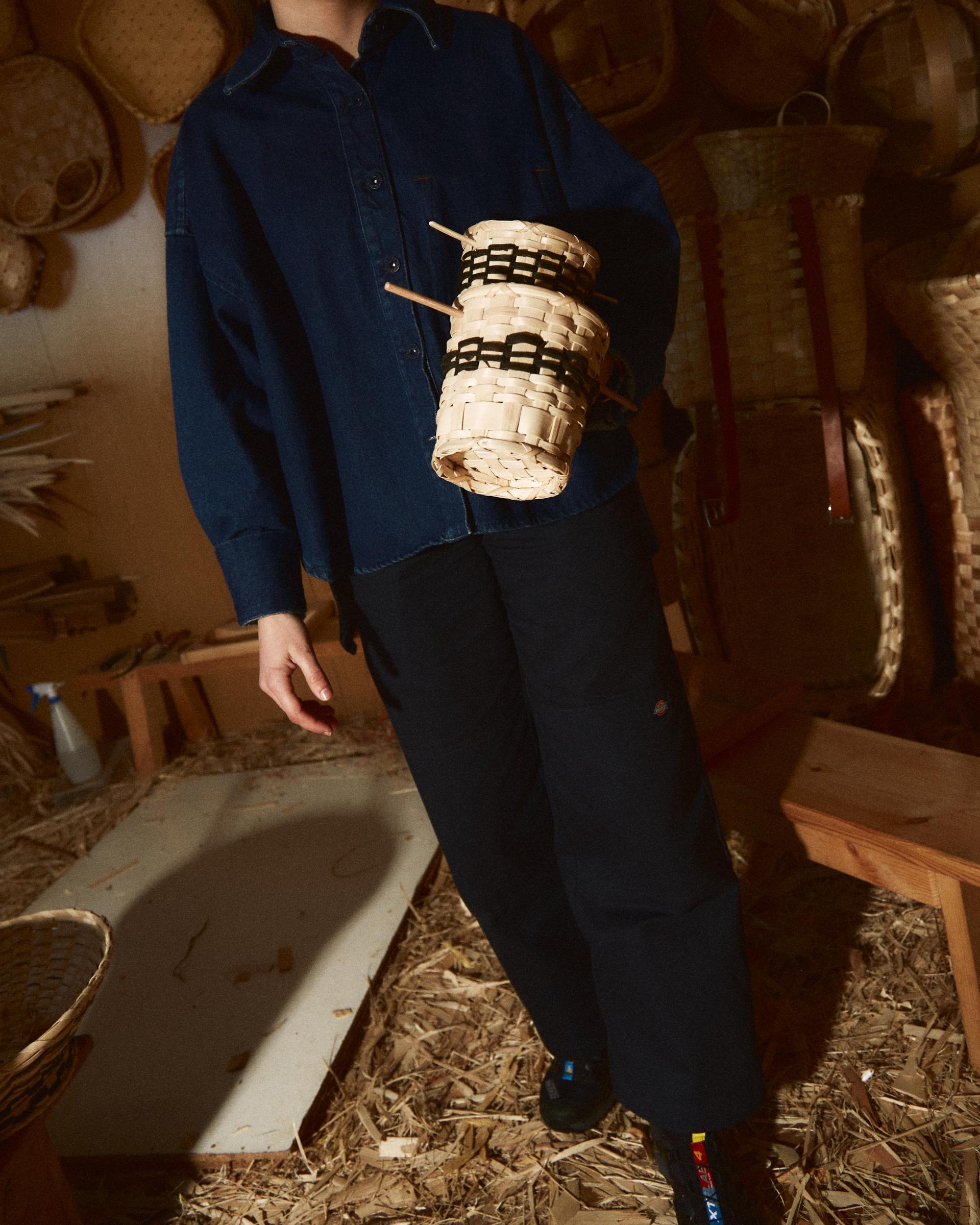
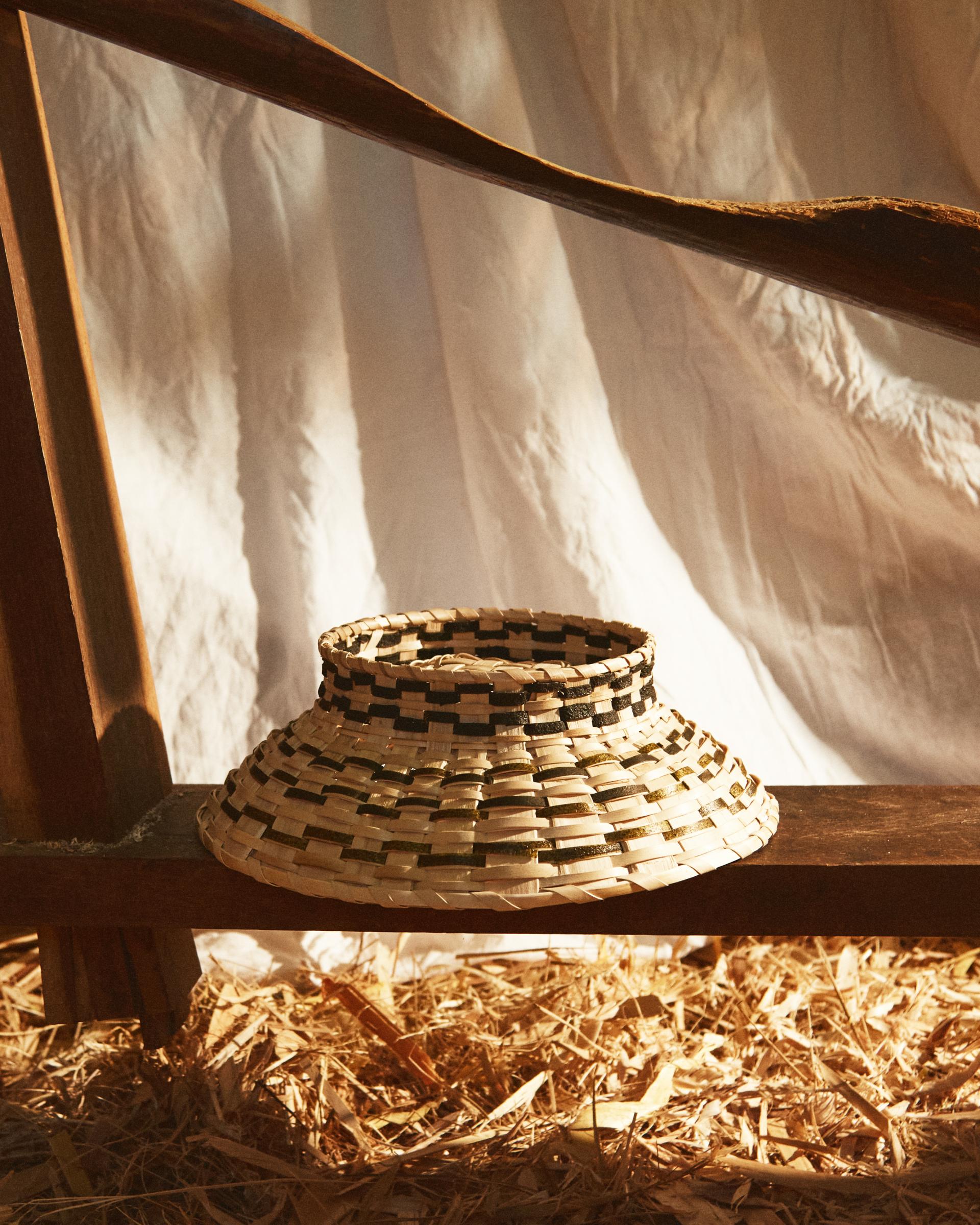
“Through Co-Obradoiro Galego, I established a collaboration with basket weavers where I’m from originally, and I’ve been learning from this community for the last couple of years about vegetal fibres in the region. Wood has shown me the beauty of understanding the whole process from resource to product: harvesting, cutting, meeting design requirements, and how the material behaves depending on how you treat it.
“There is something beautiful about wood’s connection to heritage, time and people.”
"Heat changes its colour. Water makes it flexible. It’s resistant over time. And it has a tactile warmth."
Credit: Sabela Andrés
What does Co-Obradoiro Galego explore in practical terms?
“Basketry is believed to be one of the first crafts, because we’ve always needed to store things. With basketry, depending on the function, the wood follows a different pattern and is treated differently. Even the baskets are called different names depending on their use.
“In my project, the baskets are not functional in the traditional sense, they are more of a statement about the climate situation and the challenges affecting the region, including how this impacts basketry and the social context around it.
“I also explore new resources that follow the same philosophy as basketry by looking at local organic matter - often from the sea, from the Atlantic Ocean - to reconnect the basketry community with fishing communities, as it was historically. Basket makers used to craft baskets for fishing and carrying fish, but that disappeared with the introduction of plastic. The work creates a space for reflection on that shift, and on how we might rebuild those connections through new material realities.”
What’s next for you?
"Next, I’m looking to amplify my impact at a bigger scale at the intersection of strategy and innovation, while continuing to evolve Co-Obradoiro Galego."