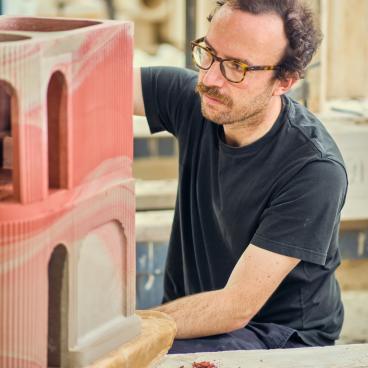




















Romain Charlet, president, GIA & senior architect, Anderson Bell + Christie.

Romain Charlet has recently been appointed president of the Glasgow Institute of Architects. And, for us, there couldn’t be a more passionate or dedicated choice.
Senior architect Romain has a genuine love of architecture. Evident, not only through his extensive commitment to the GIA, but his role at Anderson Bell + Christie (ABC Architects), and involvement with Guiding Architects – a unique group of passionate architects leading tours of the cities they live in, worldwide, through a built environment lens.
Prior to taking up the presidency position, Romain was education convenor – a role now being undertaken by Fiona Wylie – an architect at Oberlanders (interview coming soon). The drive to champion and celebrate emerging talent that underpinned Romain’s time as education convenor will continue to fuel activity under his tenure as president, he tells us during a recent chat.
As Material Source Studio is official ‘Home of the GIA’, we were keen to catch up with Romain on his upcoming plans for the Institute, as well as finding out how best to get involved. With his expertise in architectural tours in mind, we also asked for his favourite building in Glasgow…read on to find out what he said.
Congrats on becoming president of the GIA. How has your first month or so been?
“It has been quite a buzz, I have not had much time to think about it, really. I have had to catch up with a lot of people and partners to ensure continuity with Andrew’s term, which beyond the admin means getting a full grip of the reality of the role. It is amazing how many inspiring conversations and projects I have picked up in so little time. There is so much going on, and I am extremely enthusiastic about it all.”
What are you hoping to achieve/put in place?
“I am hoping to build on the work I have started with the education committee and strengthening the link between the GIA and other professional bodies. The GIA has very strong ties industry wide and I am intending to make the most of it and encourage collaboration between as many strands of the built environment as I can. I have already started a few conversations with different bodies; we have plans for joint events and seminars, but the big event I am looking at to celebrate is still shaping out.”
You were previously education convenor, and have a passion for supporting the next generation of architects - can you tell us how this translates into your new role as president?
“I have yes, and I have been actively involved with the education committee for over 4-years. I joined education because, as a tutor within the University of Strathclyde, I could not stop comparing the education system with the one I studied in, in France, and my own journey. I know from experience that there is so much potential in opening outside of the traditional academia to build your own path and that’s what the education committee was about for me.
“As president, my aim is to be as inclusive as possible with the new generation. We are a young hearted council, and I believe change and enthusiasm comes more candidly from the young people. I will continue to promote young professional and student events as well as making sure our programme of events and the discussions we hold not only addresses them but include them.”
For anyone not familiar with the GIA can you give us a snapshot?
“The GIA, or Glasgow Institute of Architects, was founded by Alexander Thompson and his peers back in 1868. It even predates the RIAS of which it is the largest chapter. As such, any RIAS member practicing or studying within the GIA geographical area is automatically a member. What this means is that the GIA is a powerful tool to promote and support the work of its members (from Dumfries & Galloway to Argyle & Bute). It is governed by a council of trustees mainly composed of its active committee convenors. Each committee sets its own agenda of events spanning conservation, sustainability, education, architecture and urban practices.
“We are proud to have 5 very active committees with a full schedule of events, and I invite anyone who is not so familiar to check our website and socials to see what we are up to and, importantly, how to get involved. It is also important to note that we are here to support the profession, and we manage the W B Whitie Benevolent Fund. All GIA members who find themselves going through hardship can apply confidentially to seek a grant of up to £500 to support reasonable immediate needs.”
Material Source Studio Glasgow is home of the GIA - how has that collaboration supported the GIA's work?
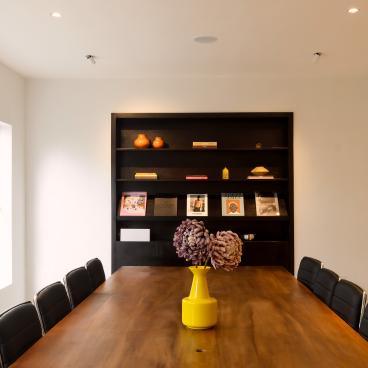
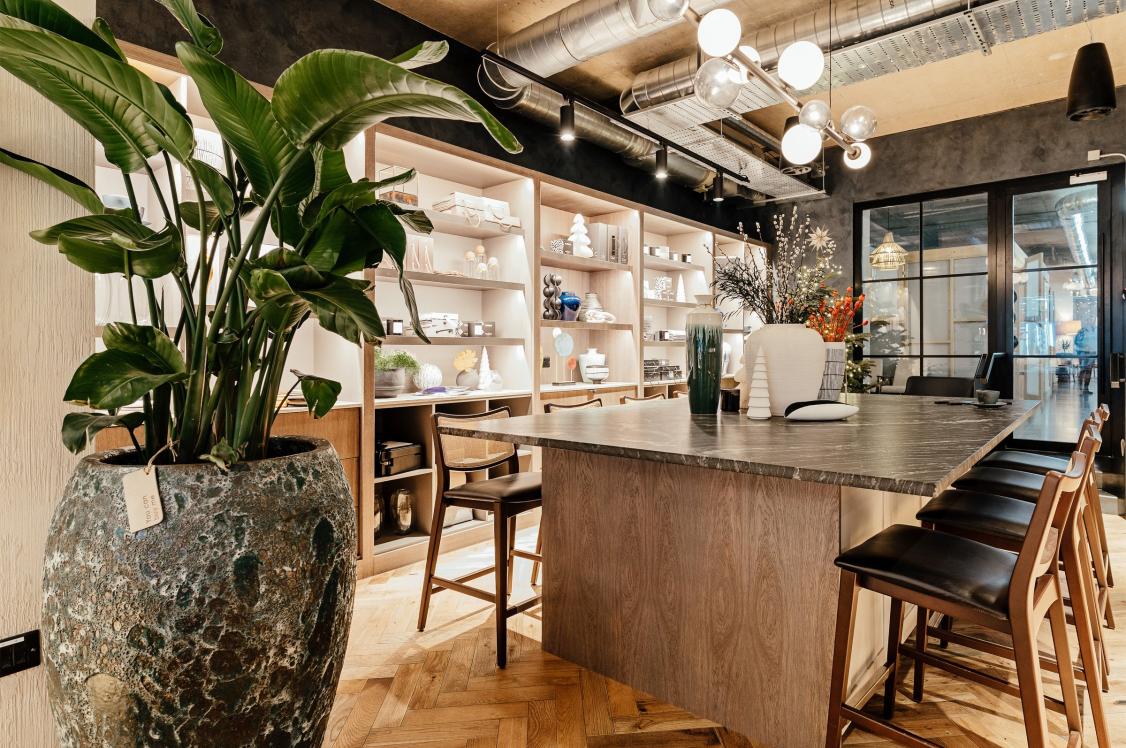
“The partnership with Material Source was set up by our past president, Andrew Hadden. It has been a little bit over a year now and I must say this has become a mutually successful partnership. Material Source has given us access to its spaces, which means that GIA members are welcome to use the spaces for organising events but also host drop-in sessions, meetings or simply use it as a workspace whenever practical.
"The other key element is the visibility. Material Source is a brilliant networking activator and has a very strong media presence which helps us convey our message to the chapter but also nationally.”
Event-wise, what's coming up that people can get involved in?
“Like I said there is a lot going on and the best place to start is our socials and website but as a taster I can touch on a few of the upcoming activities. We have ongoing events organised with GCC on visioning Glasgow’s future. We have a series of talks and tours led in both sustainability and conservation.
"The Student Awards judging took place in May with a multidisciplinary panel, and the gathering will take place in September. This one is a favourite of mine with the students invited to present their work during a nice, open, and fully catered evening.
"Lastly the GIA Design Awards will open for submission in August. It is important to note that both work by GIA members outside of the chapter and work by non-GIA members inside the chapter area are eligible for submission. The Awards Dinner is our ultimate event, which closes the year with a bang. The dinner takes place in November in Glasgow and is open to all.”
As well as being president of the GIA, you're also a senior architect at ABC (Anderson Bell + Christie) - how do you balance your roles?
“Yes, that is true, I am very lucky to be working with such a supportive bunch. There is a mutual benefit of my involvement with the GIA. I am grateful for the flexibility that the practice offers to its employees which allows me to keep a sane work life balance whist keeping on top of my commitments as president of the GIA.
“At ABC, I lead a variety of projects. This means I can work on residential projects both new build and retrofit, healthcare, education or community facilities. It is at the heart of what we do to make sure every architect and assistant has access to a wide range of subjects, to maintain curiosity, enthusiasm, and a critical mindset.”
What do you hope your legacy will be as GIA president?
“The GIA is what its members make of it. This phrase is not mine, but I have adopted it. As I have intimated, we have a very active chapter, and I aim to help this go from strength to strength. However, I feel we should work to improve our communication to our members and the public in general. Whilst we are good at communicating what is happening and what we are up to, we need to improve how we collect our members' feedback and how this informs our actions."
You previously worked as an architectural tour guide - what's your favourite building in Glasgow? And why?
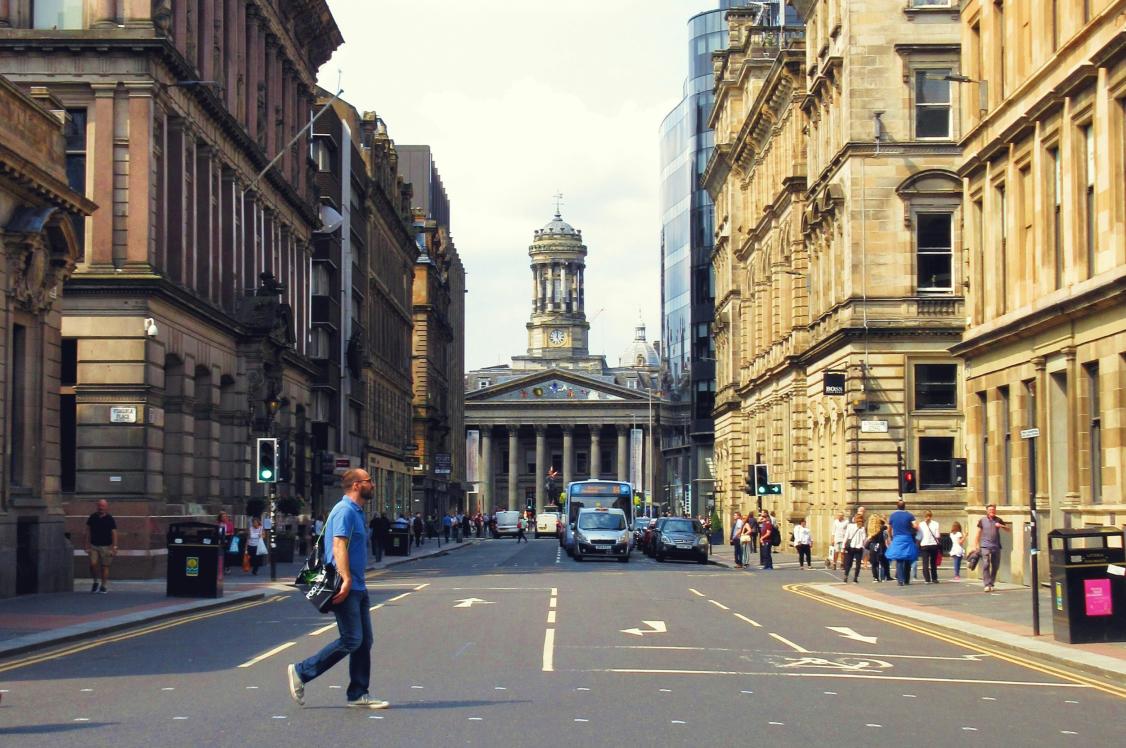
“I am still occasionally involved with Guiding Architects. I have helped deliver tours for this international network since working with the Glasgow practice, ‘Dress for the Weather’ who are the Scottish ambassador of the network. Honestly you should look it up. It is a brilliant group of passionate architects touring the cities they live in, worldwide. A tour that I really like to deliver, and that was created by my colleague Andy Campbell, is called, ‘In search of order’. It is a 2-hour walk from Mitchell Lane up to Sauchiehall Street (weegies will know) that explores how a small group of architects in a short period of time explored what would / could be a distinctive Glasgow Style in a booming industrial city at the turn of the 20th Century.
“My highlight is the Hatrack. Designed by James Salmon Jr. and opened in 1902. It is an exquisite example of a plastic and non-structural stone façade, very revolutionary and criticised at the time. The plot was narrow and long and the use of a cantilevered steel structure to support the façade allowed a maximum of light to penetrate the depth of the building. It is a perfect metaphor for the skills and talent that I see in generations of Glaswegian architects that are still on display today.”
For anyone hoping to get involved with the GIA - how can they?
“As I said, any RIAS member is automatically a GIA member, but you do not have to be registered to be involved. Our committees are always on the lookout for people and if you are interested in being involved in whatever capacity, do send us an email or reach out to our socials. There are no rigid commitments, just a bunch of folks wanting to talk and promote all things architecture.”