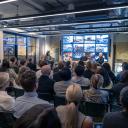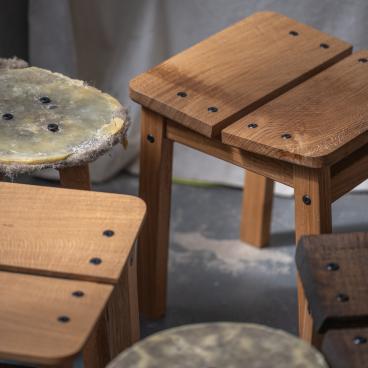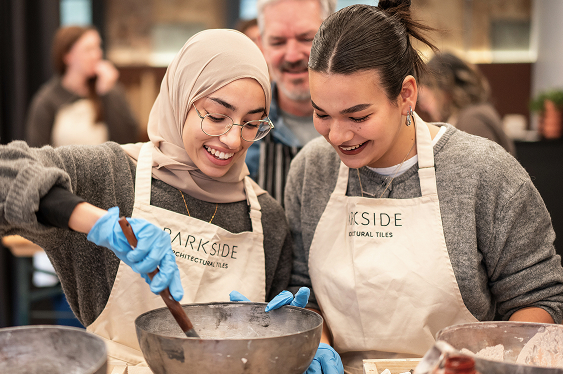

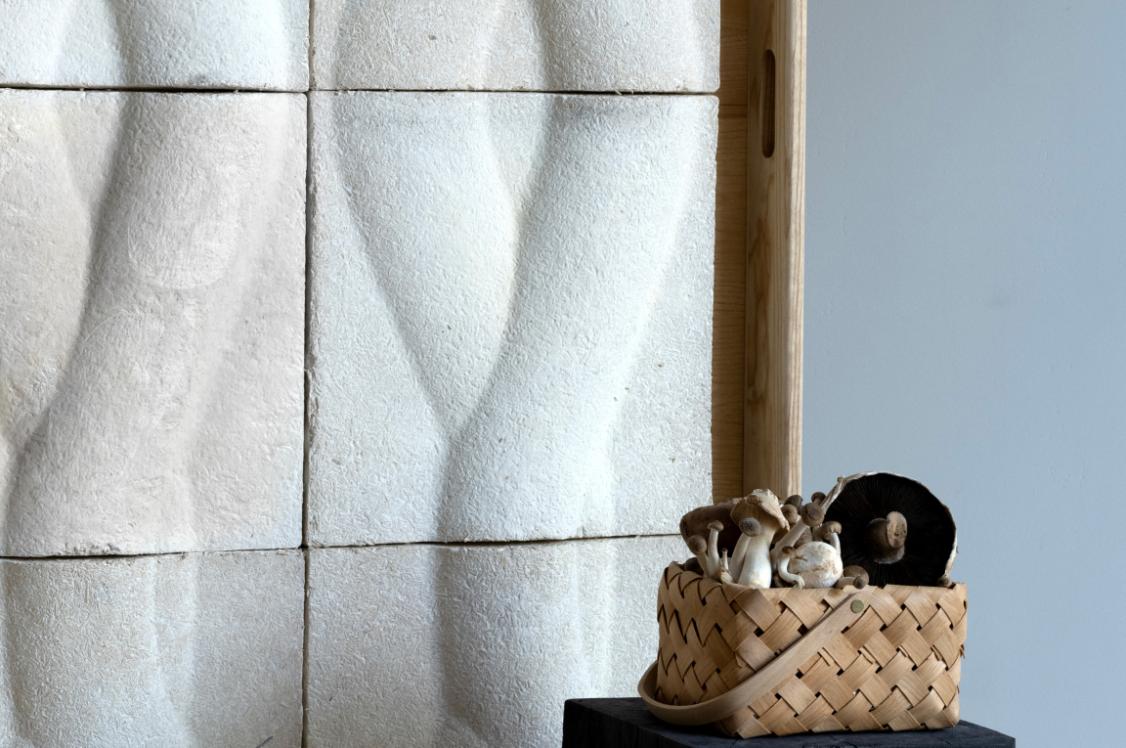
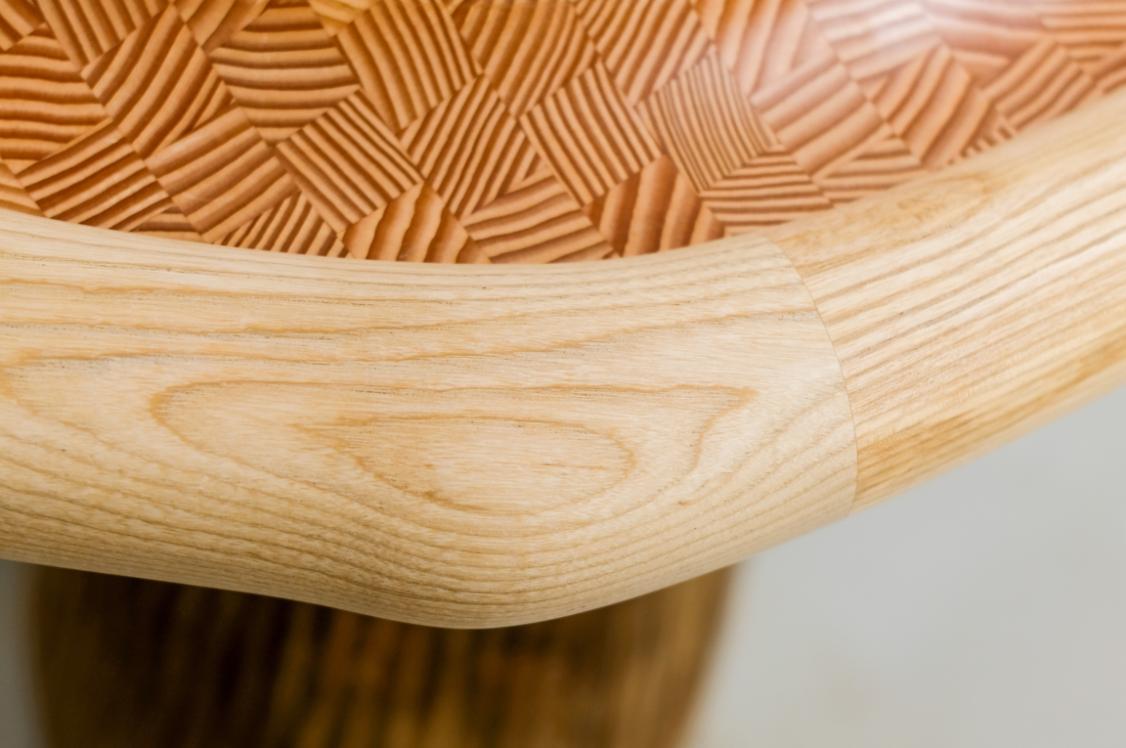
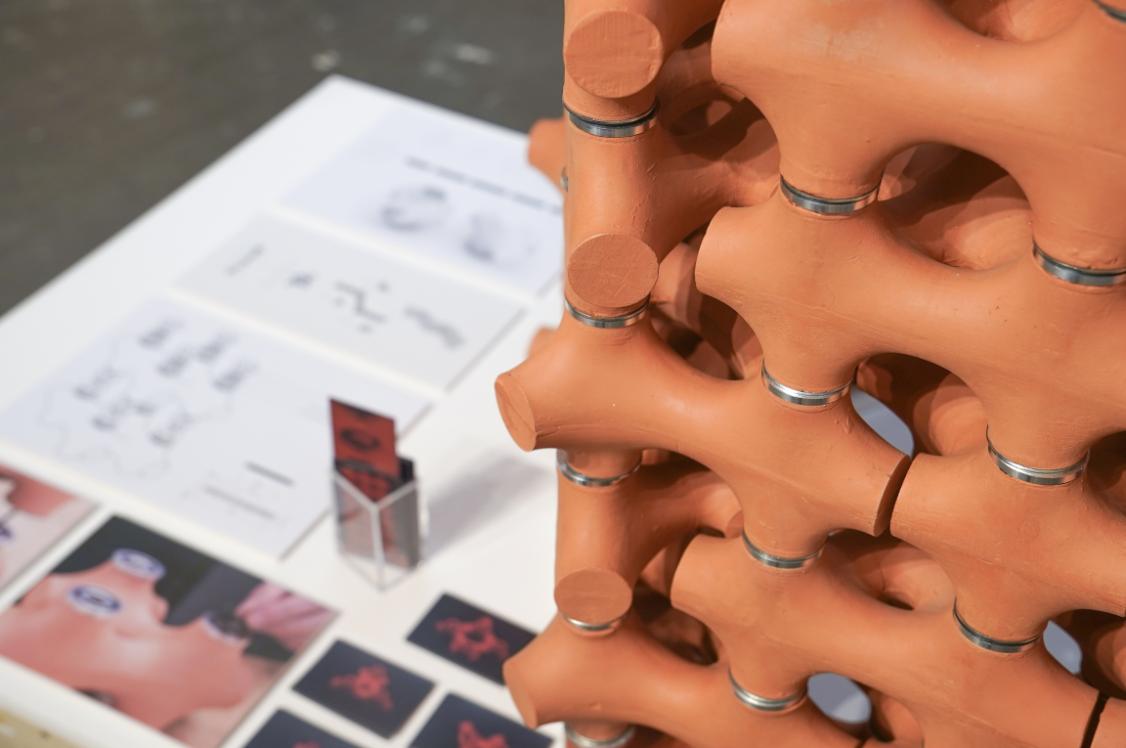
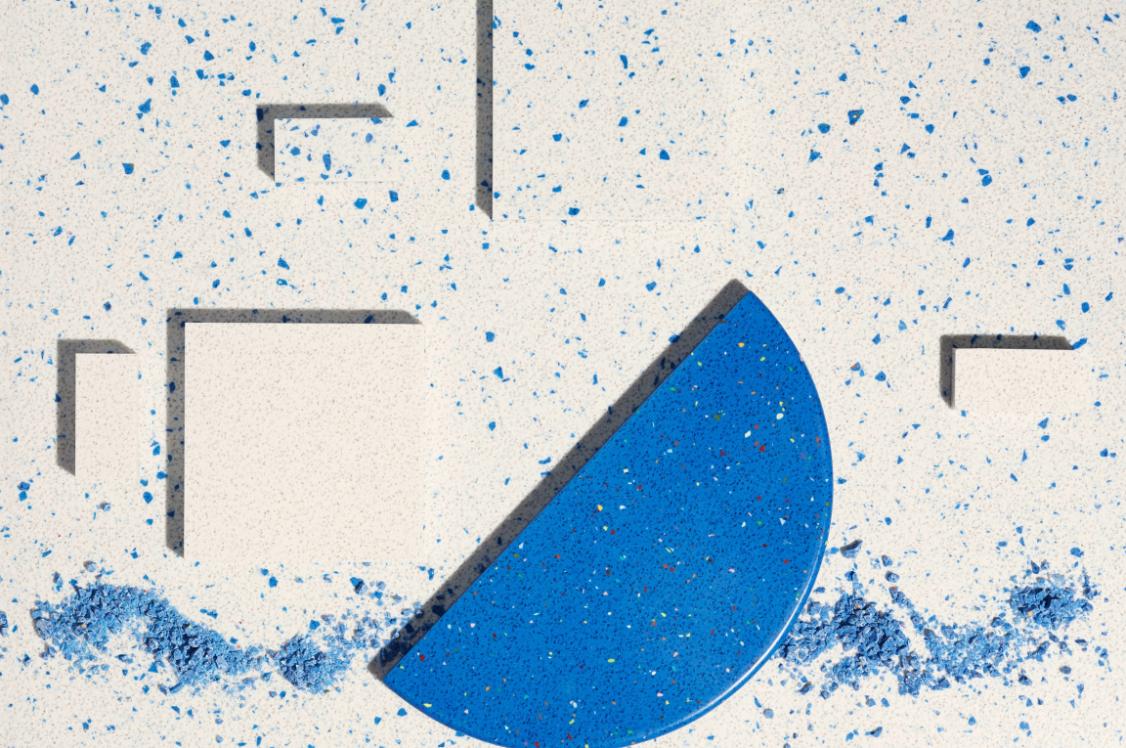
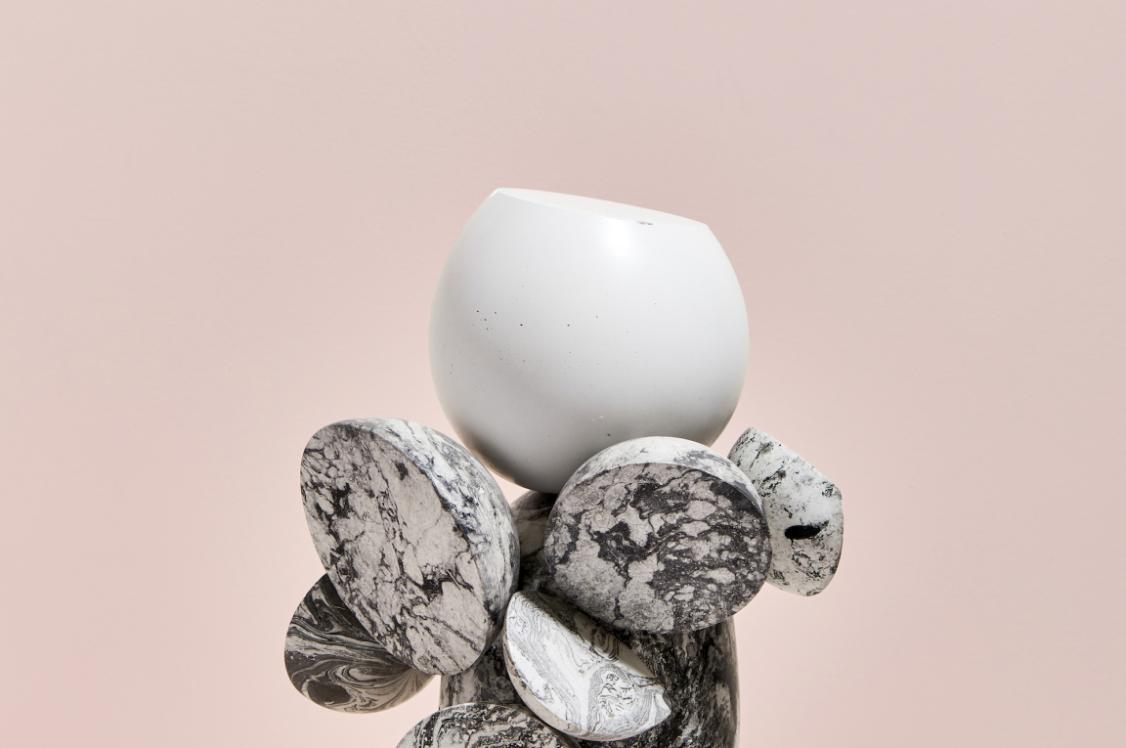
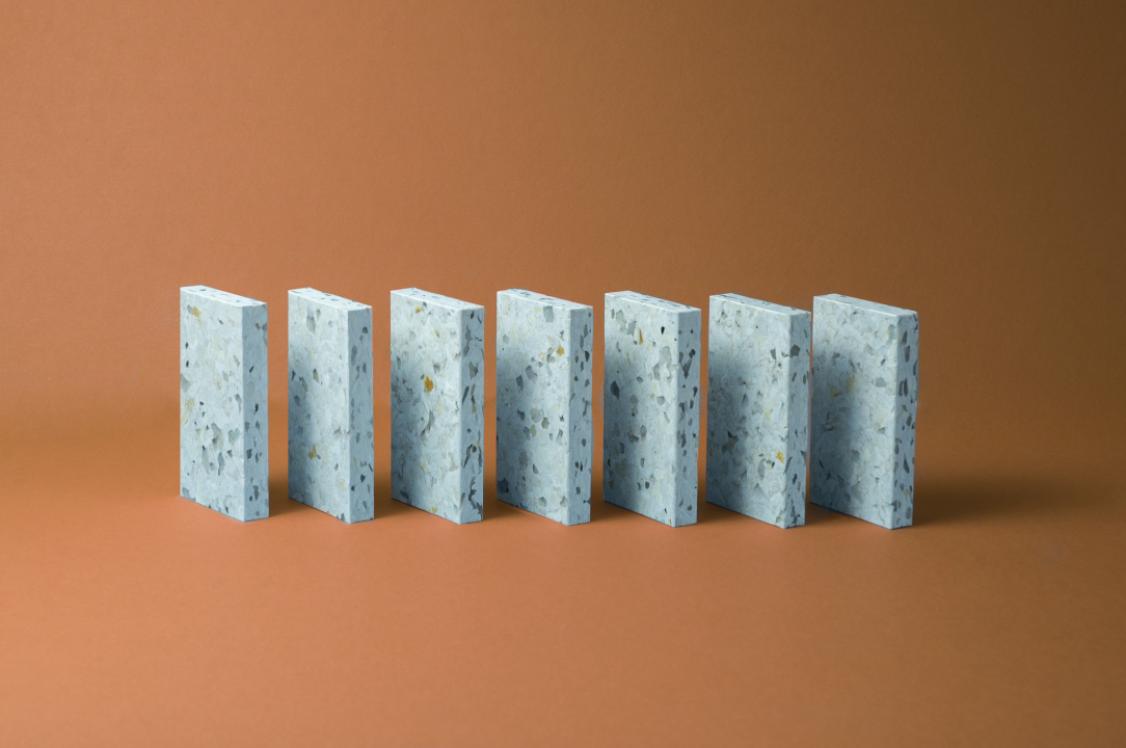
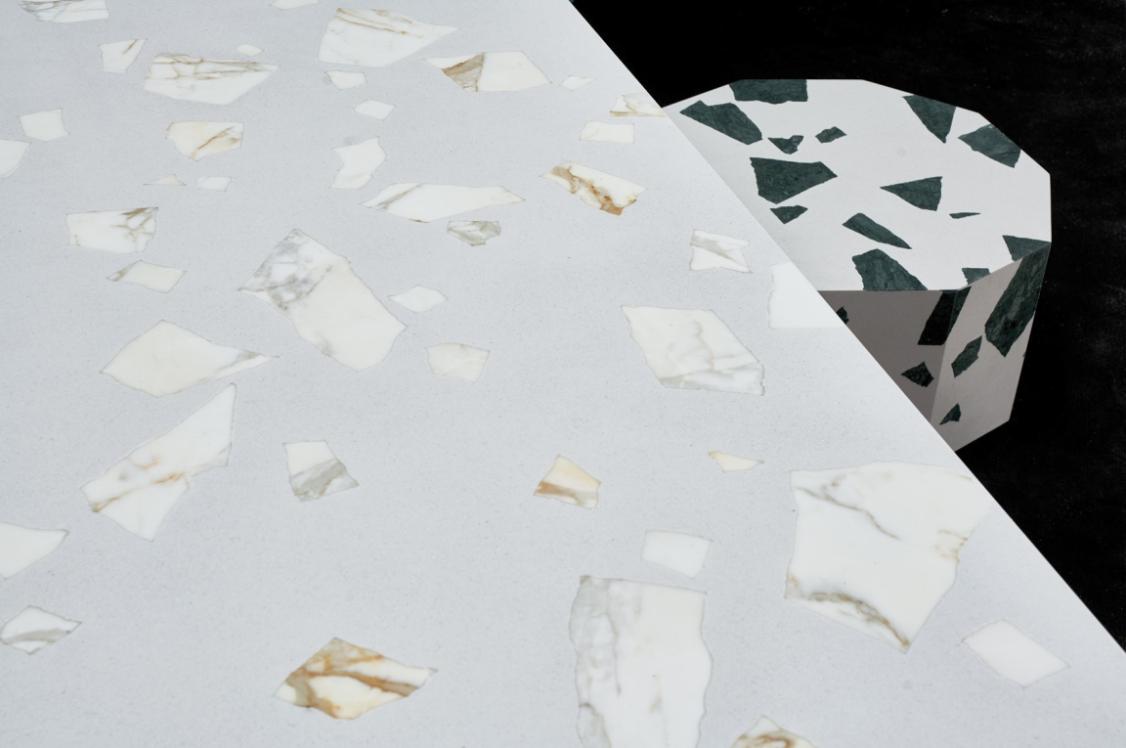
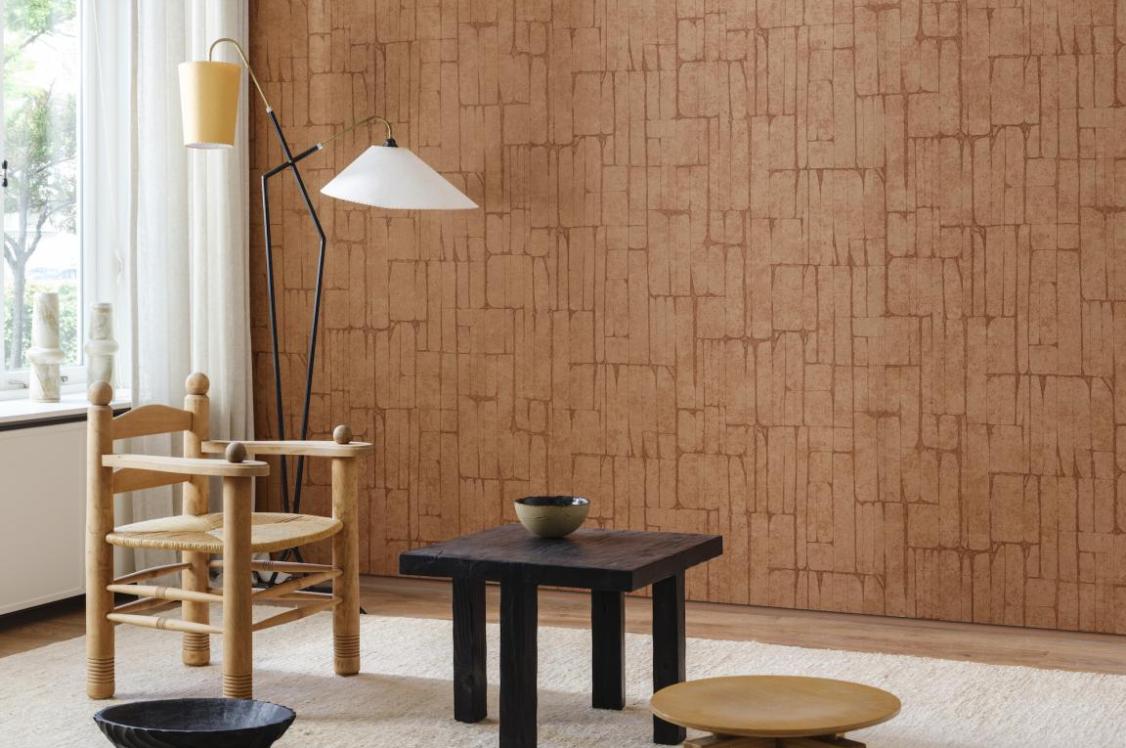
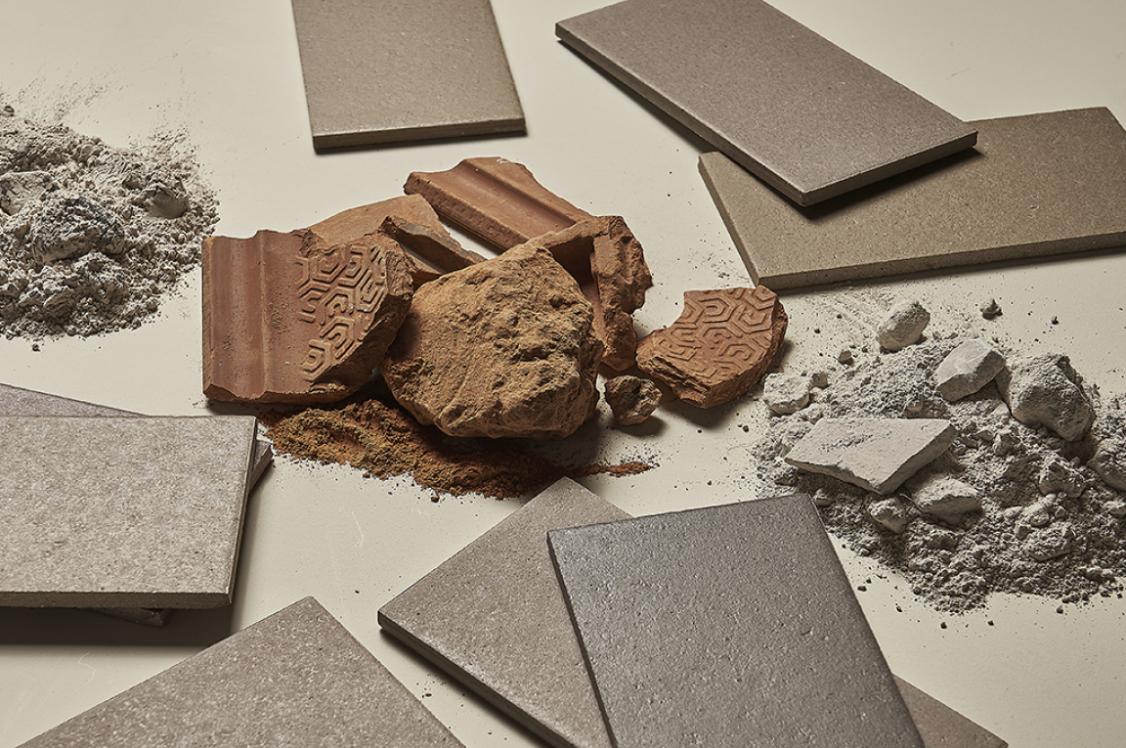
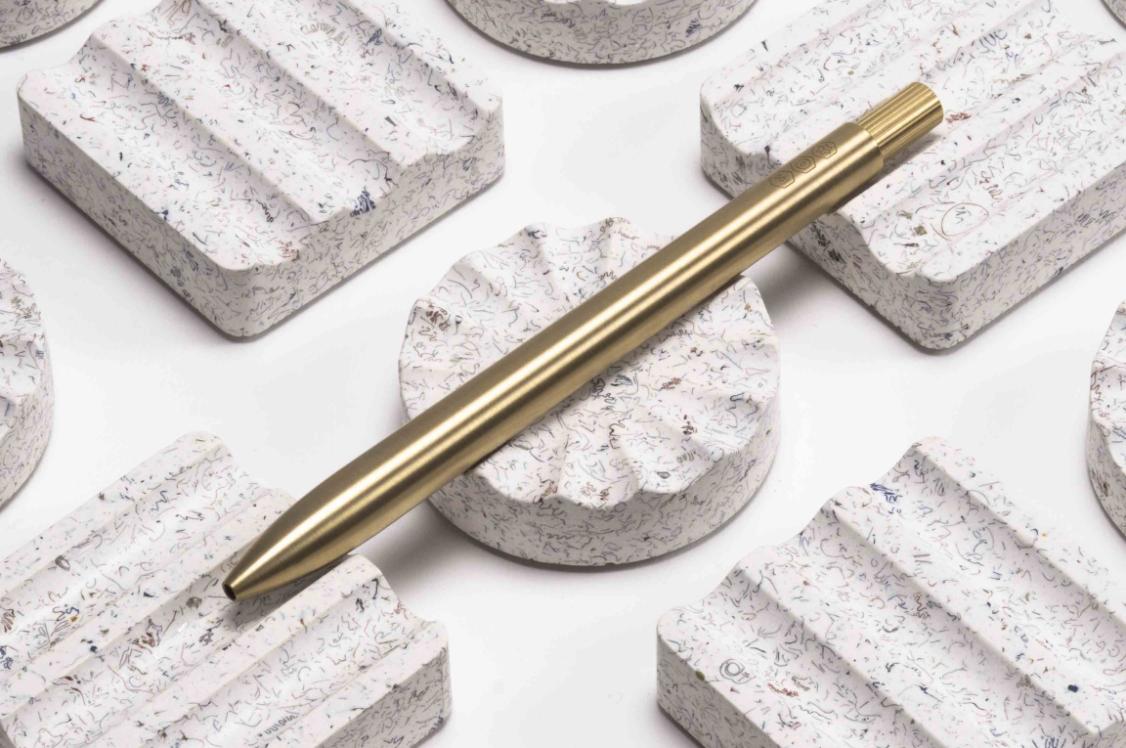

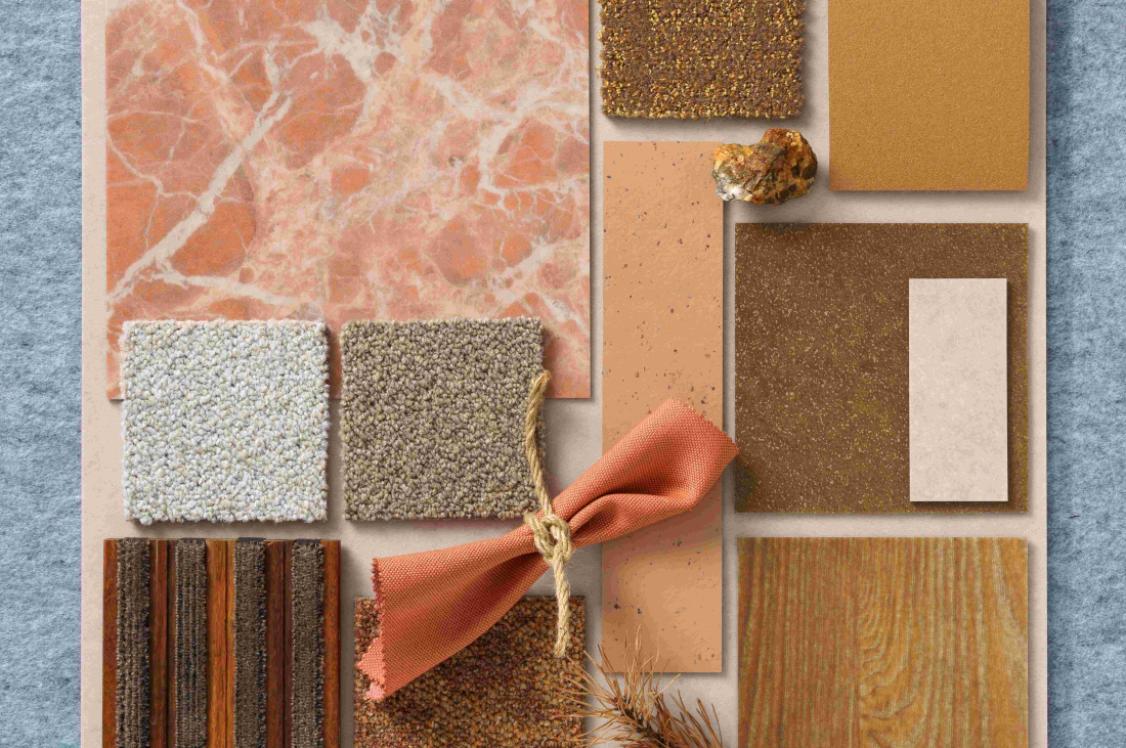
Lewis Jones, co-founder of Turner Prize-winning architecture and design collective Assemble, on Poured Earth.
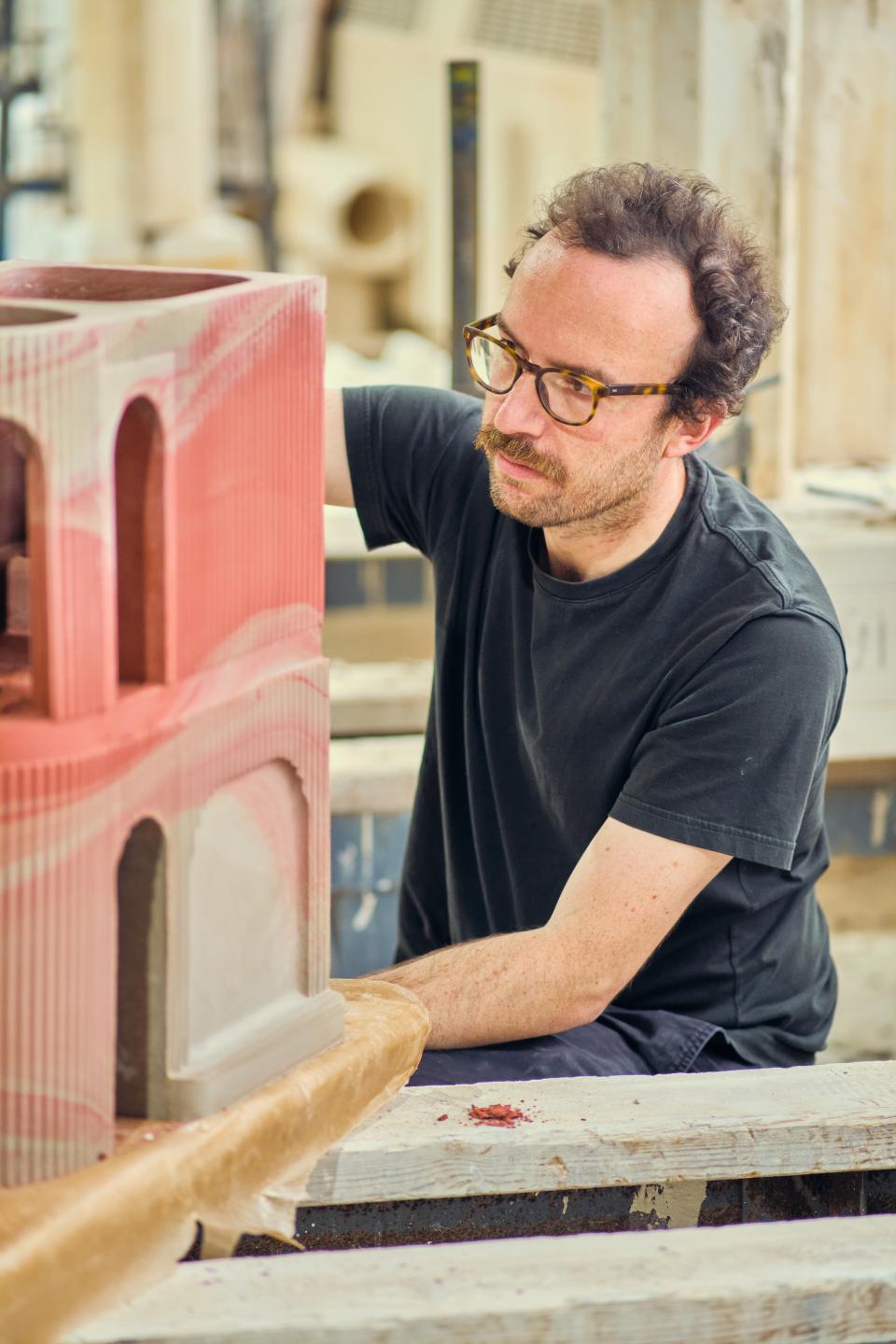
Credit: Danny Allison
Lewis Jones, co-founder of Turner Prize-winning architecture and design collective Assemble, is developing an experimental approach to earth-based construction.
Currently working through a two-year collaboration with Art in Manufacturing - the commissioning strand of the National Festival of Making - what began as material testing has evolved into architectural proposals, prototypes and plans for a permanent structure exploring the future application of the “poured earth” method.
Ahead of the National Festival of Making taking place in Blackburn, Lancashire, this weekend (4-5 July 2026), we caught up with Lewis to find out more about his timely work.
Can you tell us about Assemble and Matter at Hand?
"Assemble is an architecture + design collective that I co-founded in 2010. A lot of the work we’ve done has been about rethinking construction and trying to open up the building site. Through the projects and work that we did, I really got more and more interested in how powerful and important the materials we use are in determining the actual impact of the work in the real world.
So, rather than starting with ideas for buildings and then looking for the appropriate material – I wanted to try and develop working the other way around, starting with a really in-depth understanding of materials, resources, skills and then seeing what can be done with them.
"I did a PhD that was in architecture + material science, and after this I set up Matter at Hand as a way of trying to take that approach back into practice. So the work I’ve been doing as Matter at Hand has really been about asking how we can build more creatively and responsibly with what we already have."
You’ve been working on an experimental approach to earth-based construction — what inspired you, and what are your methods?
"Over the past 10-years or so, through my work with Granby Workshop and my PhD at the University of Liverpool, I’ve been doing a lot of research into clays and other earthen materials.
"Initially that came from a ceramics perspective, looking at how to reduce environmental impacts — and avoiding the firing stage is a huge part of that. But more broadly, it’s been about rethinking the materials we have around us as the most viable way of building responsibly in a climate emergency.
"Clay is an amazing material. It’s everywhere, and it has this incredible shapeshifting ability in the presence of water. It can move between solid and liquid states, which means we can mould, cast and form it in so many different ways."
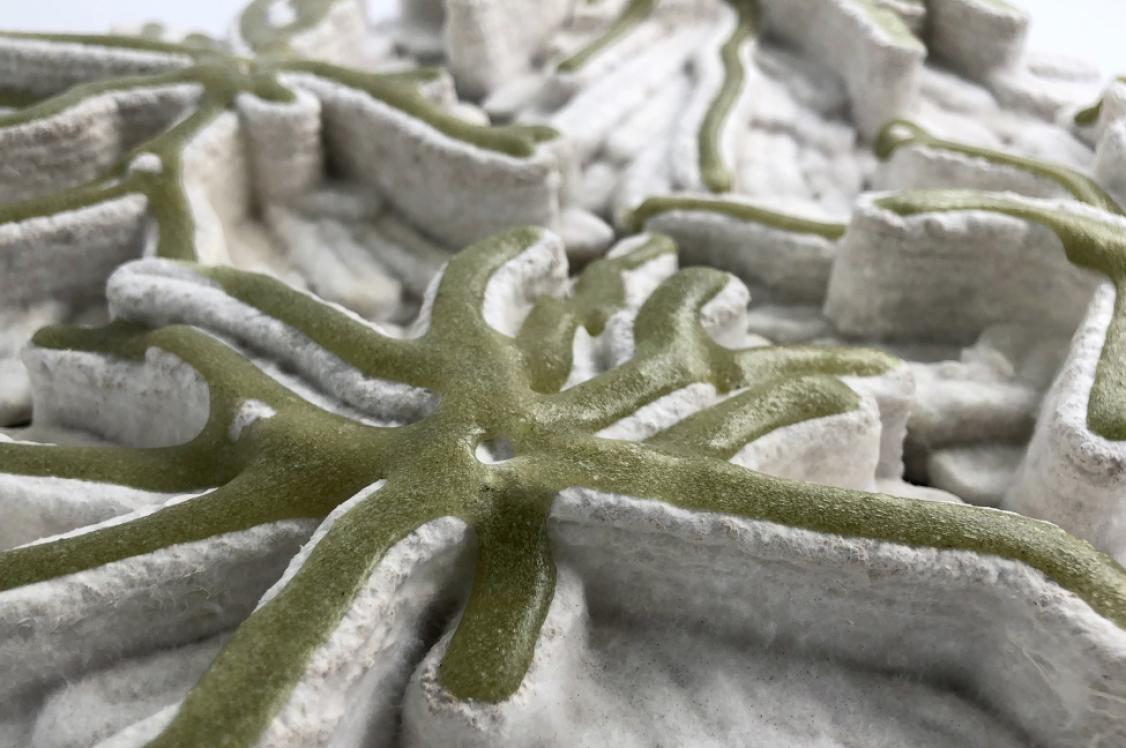
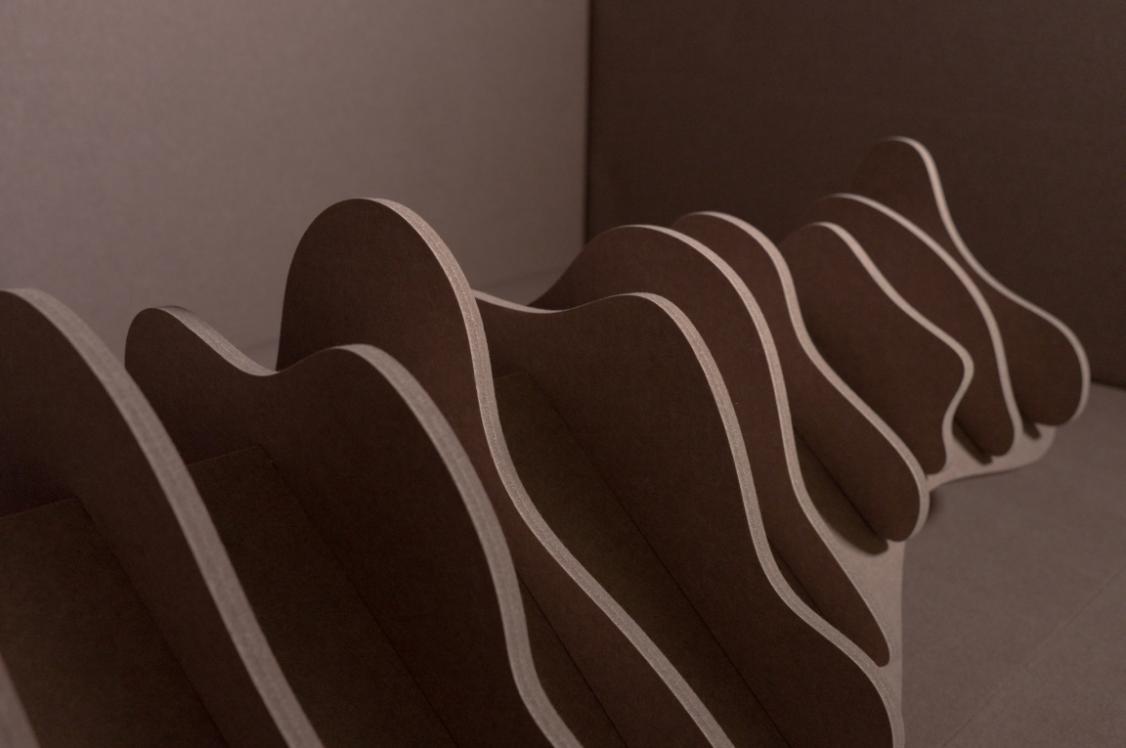
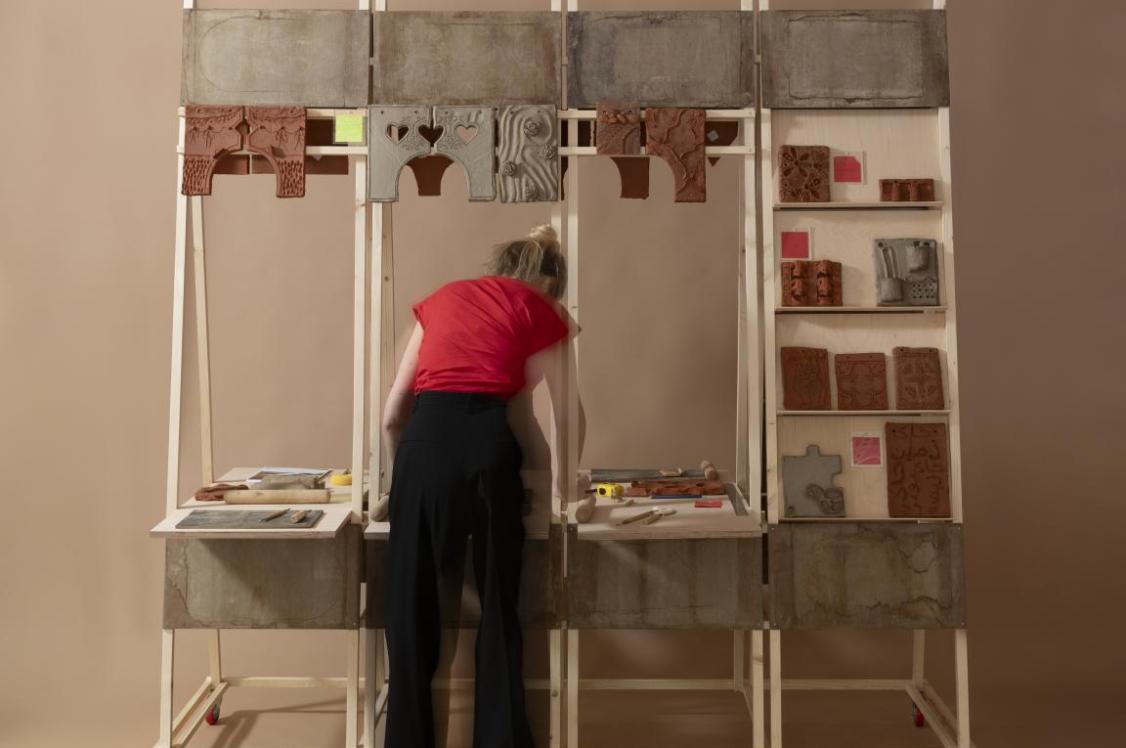
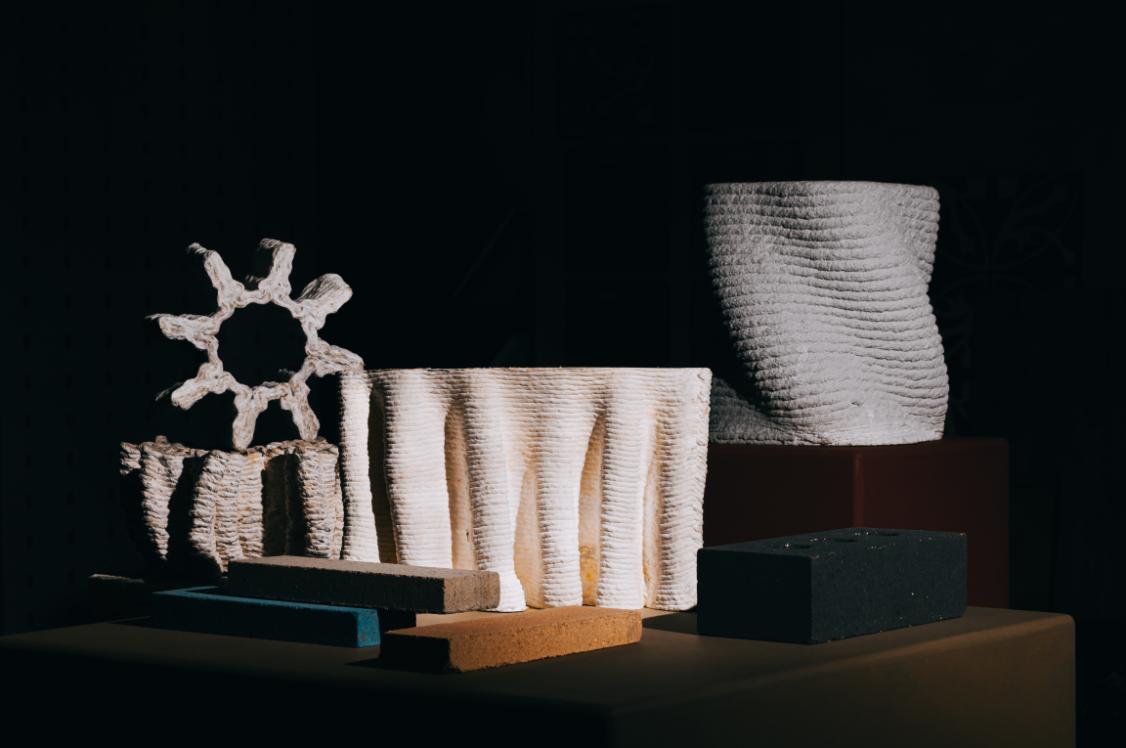
"With Poured Earth, the idea is to use knowledge from ceramics — particularly slip-casting and clay rheology — and bring that into earth construction. Traditional earth-building methods like rammed earth and cob can be slow and labour-intensive. What we’re developing is a fluid, castable earth mix that can be poured in a similar way to concrete, but without cement.
"The key is the use of deflocculants, which are an important tool in controlling clay behaviour in ceramics. They change the behaviour of clay particles so that a very dense, thick earth mix can suddenly become fluid without adding lots of extra water. That’s important because too much water weakens the material, increases shrinkage and extends drying times.
"So the method is really about taking a very traditional material and combining it with knowledge from other industries to take it in new directions for contemporary construction."
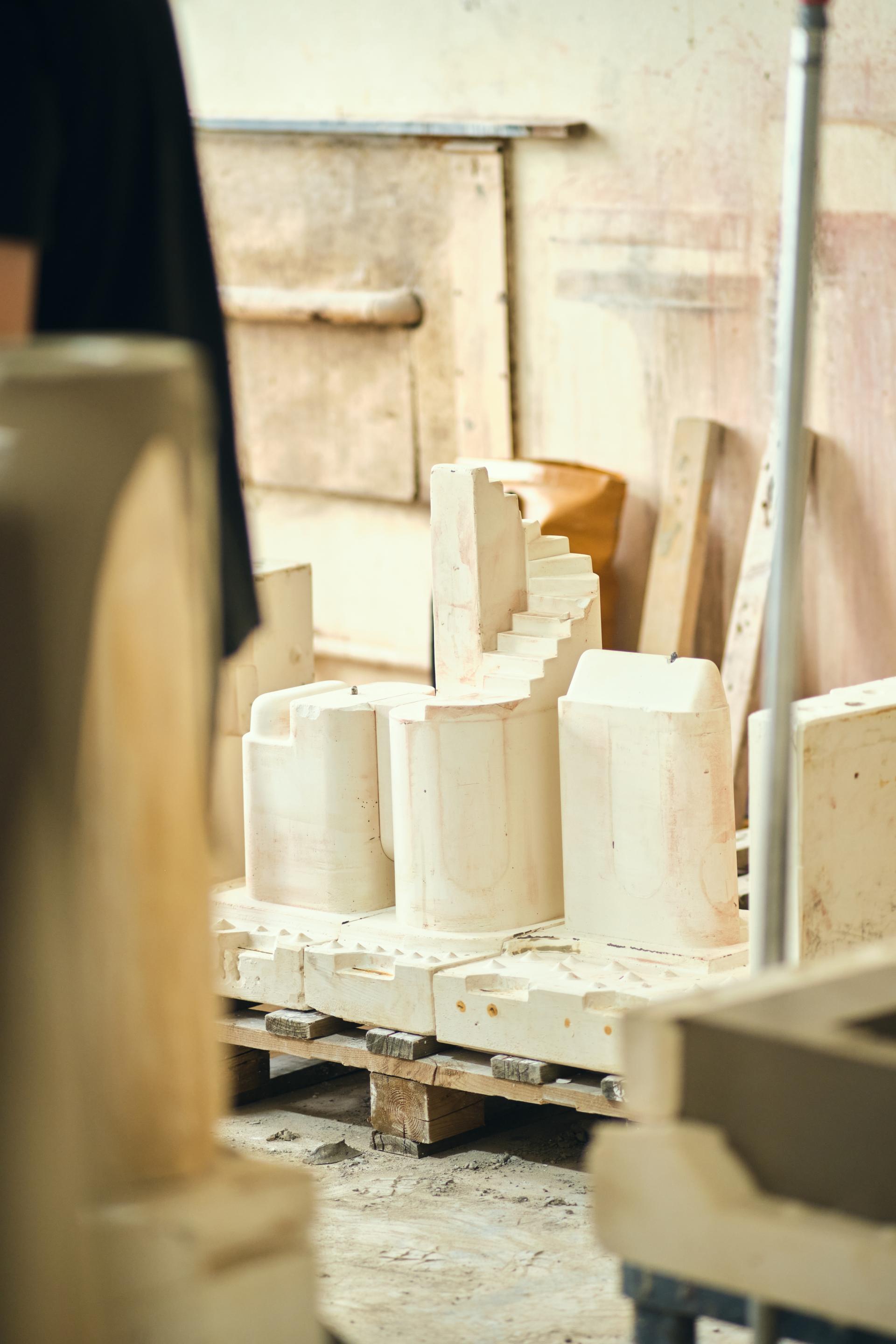
Credit: Danny Allison
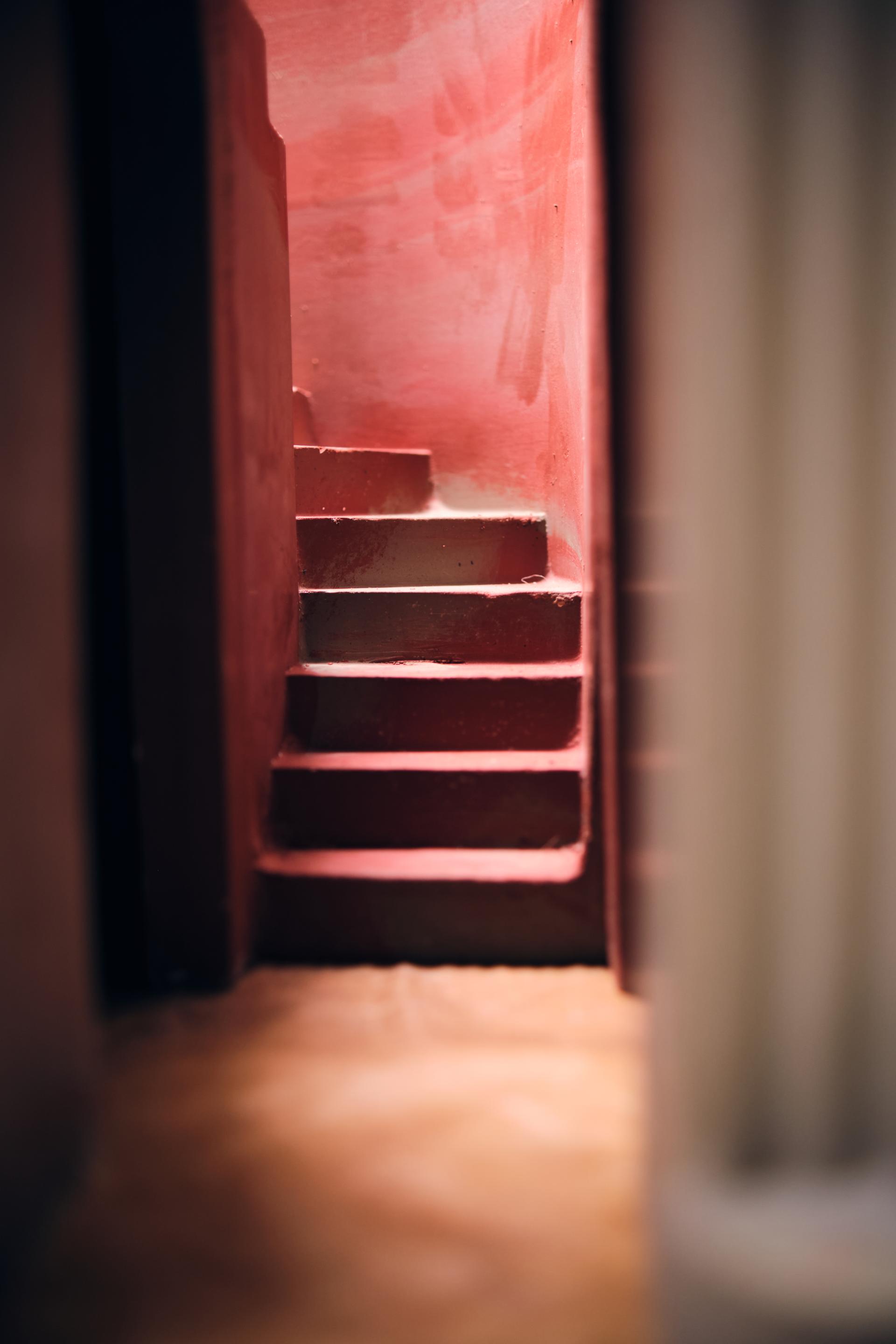
Credit: Danny Allison
Why now?
"Well, the challenge to decarbonise the construction industry is enormous – and ever more pressing. There is a lot of focus on ‘new materials’ but actually earth is one of a handful of proven building materials that are extremely low carbon, abundant, recyclable and which could actually be used right now to radically decarbonise construction.
"But, there are barriers in terms of labour, economics and perception that prevent this from happening. So, this is a good challenge to try and address."
Have you applied your methods to any live projects yet — or do you plan to soon?
"At the moment, the work is still in the research and prototyping stage, but it is moving towards a live project in Blackburn, which will all be revealed later!"
How do you see your methods scaling?
"One of the important things about Poured Earth is that it can borrow from the existing construction infrastructure. The process is broadly similar to casting concrete: materials are mixed, poured into formwork, vibrated, demoulded and dried. That means it doesn’t require a completely unfamiliar construction culture."
What do you hope will change in the built environment to allow low-impact construction to come to the fore?
"Firstly - I think a lot is already changing and there is a huge amount more awareness about the need to change than there was 10 years ago – and there are lots of people doing great work. But, in order for it to shift into the mainstream I think that we also need to demonstrate the positive impact that low-impact construction can have in leading to better qualities of life – for those working + living in these buildings, working on building sites, involved in the supply chain.
"How we can make our cities and neighbourhoods more beautiful, more liveable, how our investments in construction can benefit the local economy, about how well-designed, low carbon construction reduces costs in the long run… At the moment the narrative is often framed around an obligation to change and having a less damaging impact, but at the end of the day this can be quite intangible. I think to help drive the demand for change, we need to look at how a reconfigured, low carbon building industry could really create a more holistic positive impact."
What’s next?
"The project is moving from material testing into architectural prototyping and then next is to build!
"The first stage was about developing the mixes and understanding how they behave — how they flow, how they set, how they dry, and what kinds of forms and surfaces they can produce. The current stage is about asking what this could become at building scale. The Prism exhibition [at the National Festival of Making] presents a speculative housing system based on Poured Earth.
"The next stage will be taking these ideas out into a real world, a real site and properly test and document this material in a real-world construction environment. This is already underway and hopefully we’ll be able to unveil the first poured earth building at next year's festival!
"Alongside that, it's important to keep sharing the research — the mix designs, performance data, failures and successes — so that other people can start thinking about and working with earth in a wider range of ways. I’m part of the architecture department at Newcastle University and this forms part of my research there."
Find out more about the National Festival of Making here. Taking place 4-5 July 2026, it's open to all and free to attend.