














































AI: Novelty or non-negotiable?
In association with:



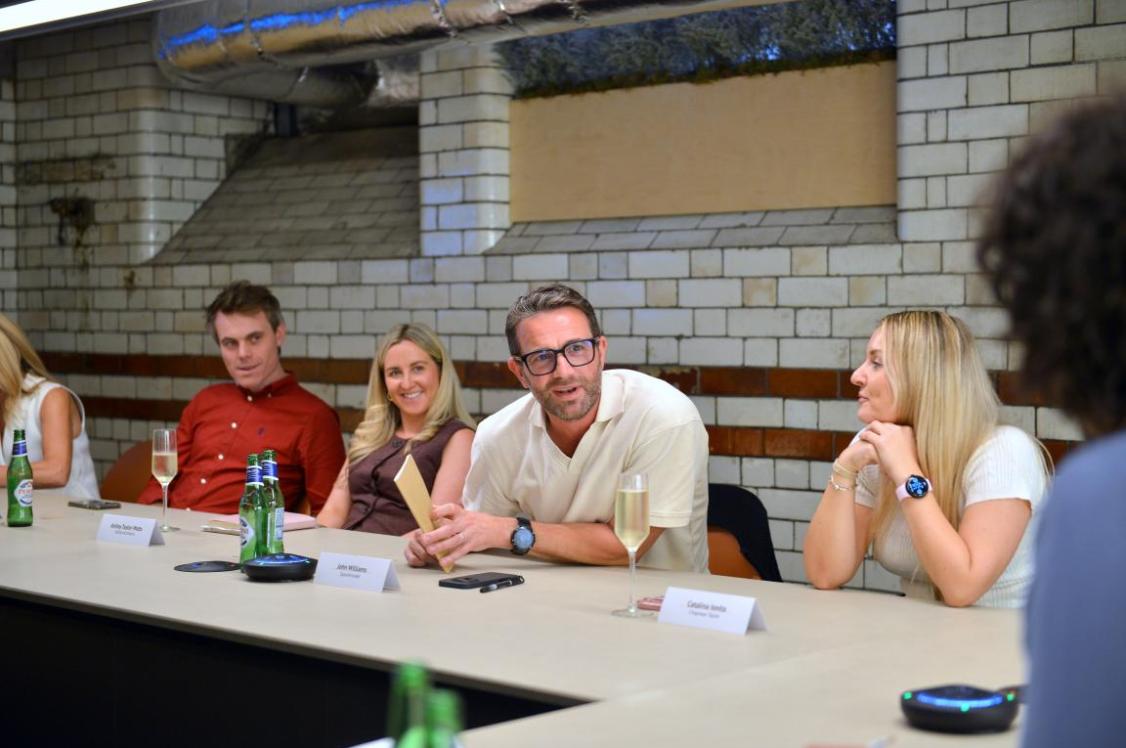
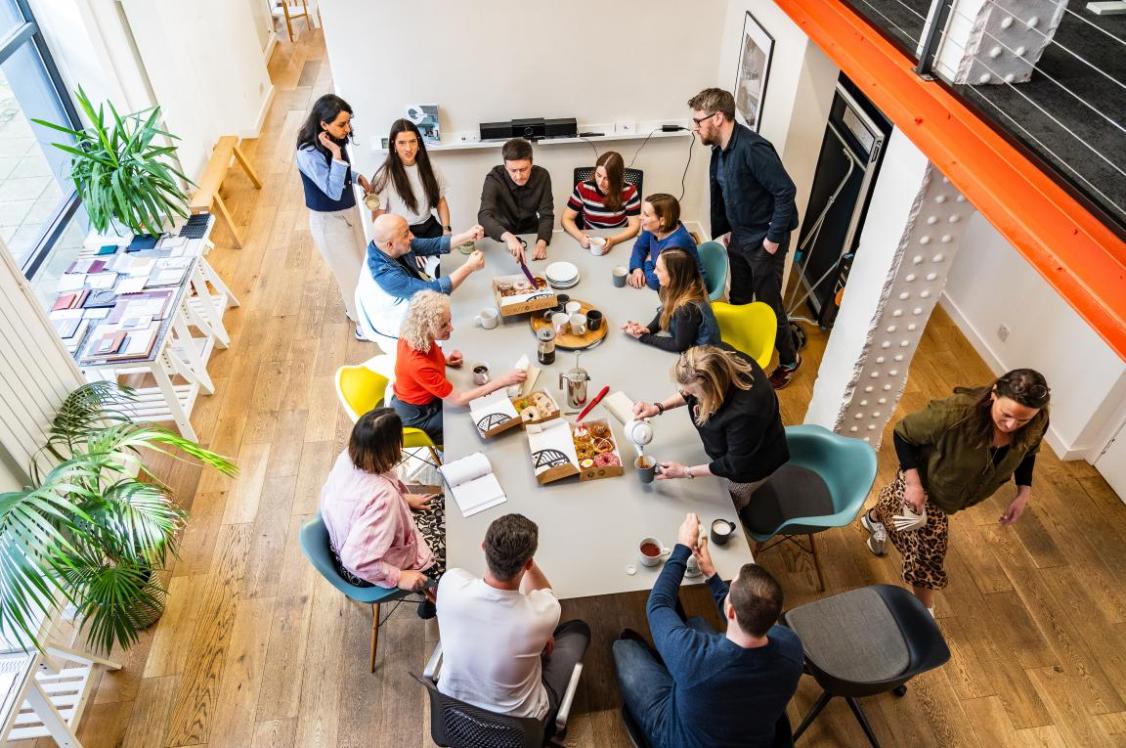
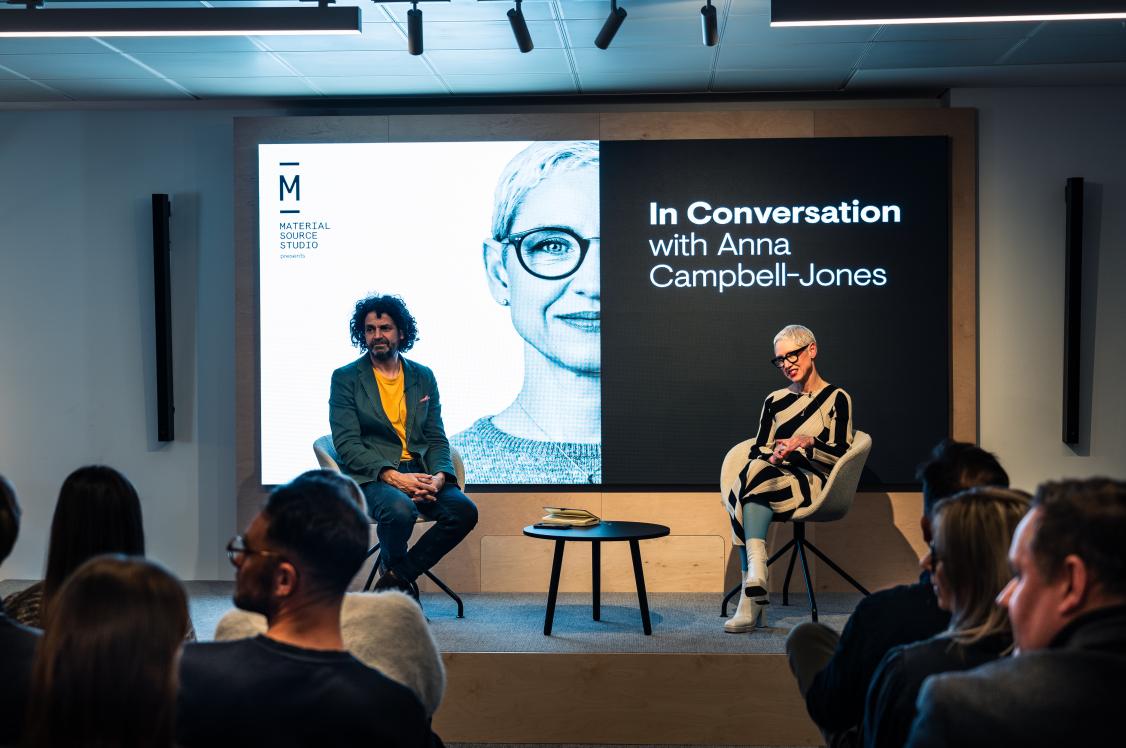
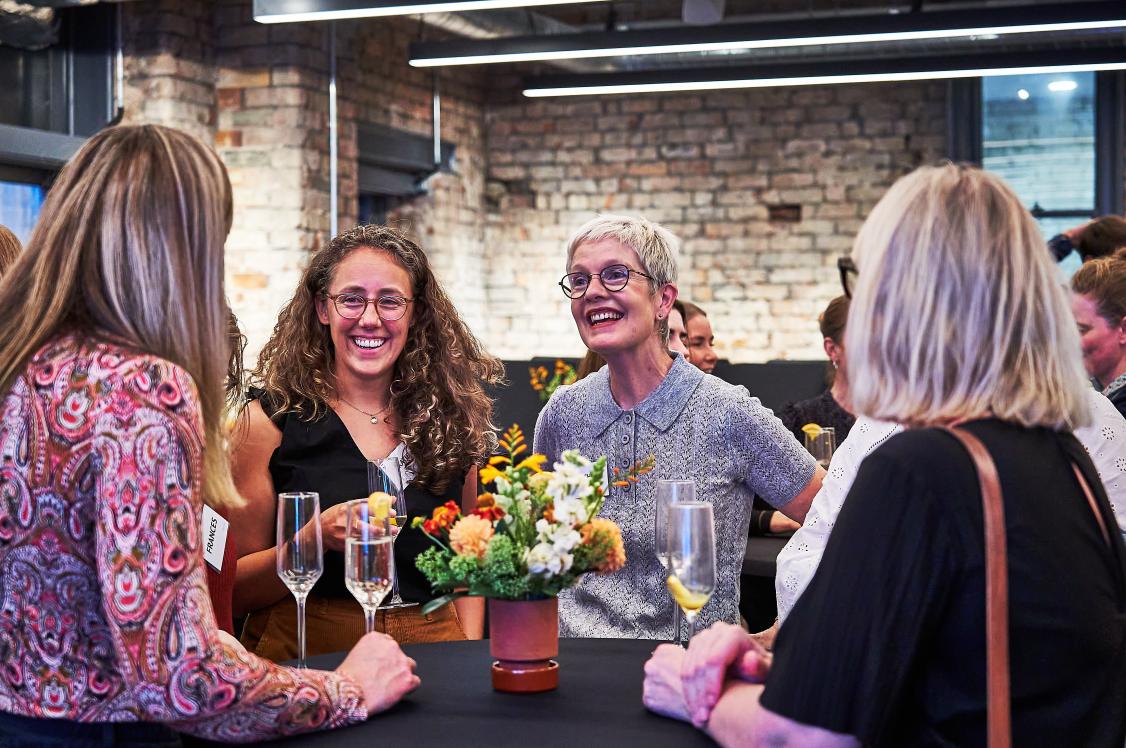
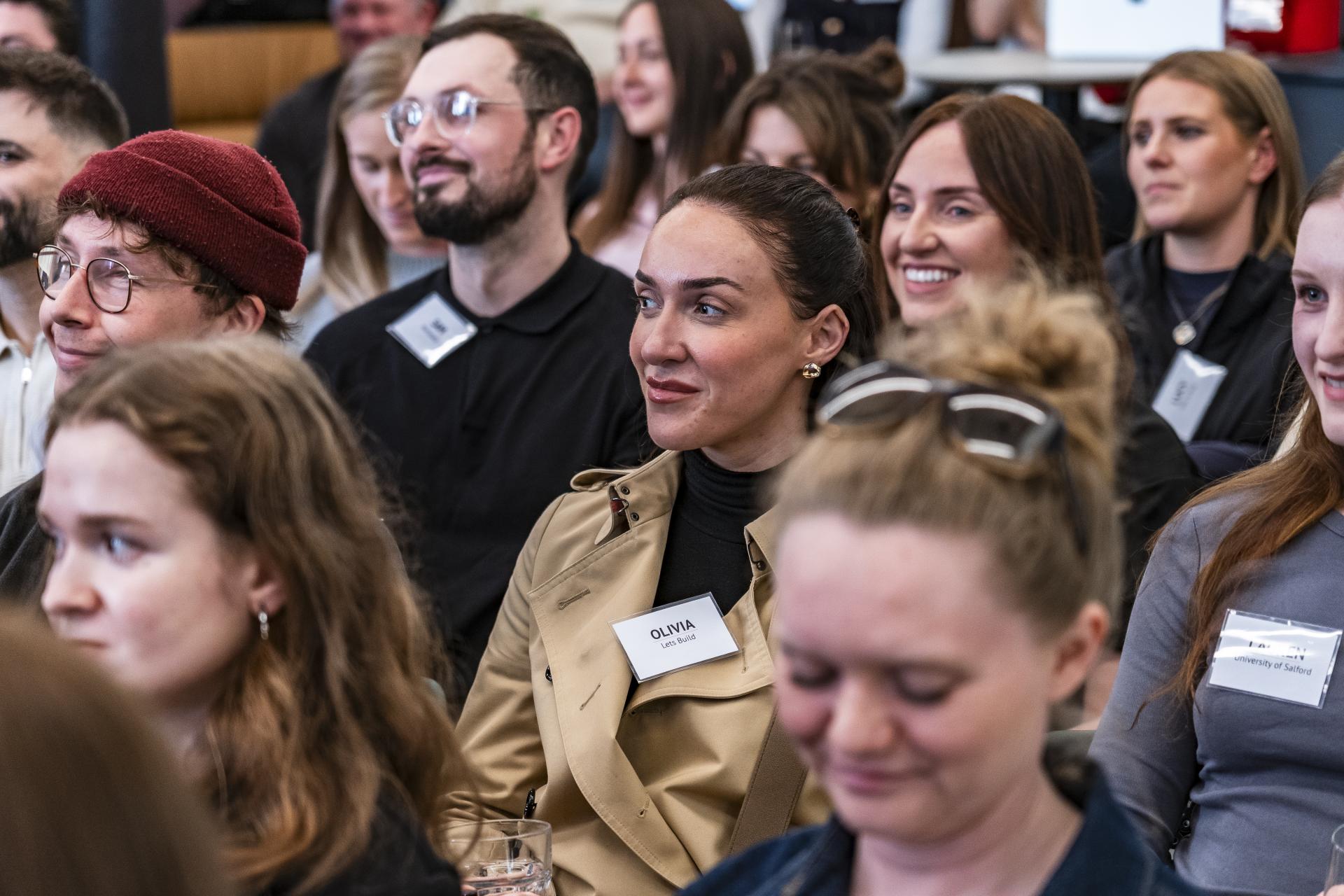
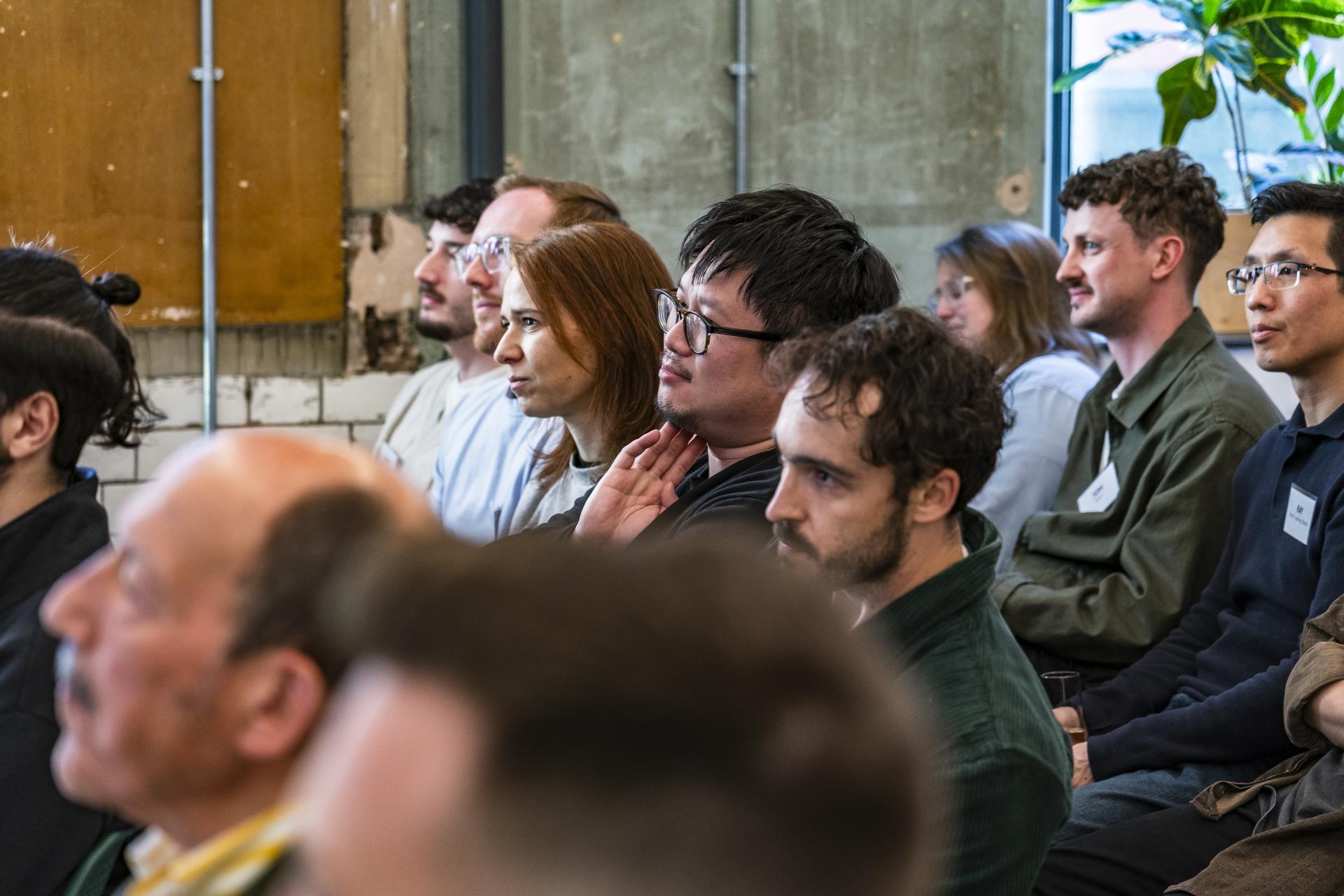
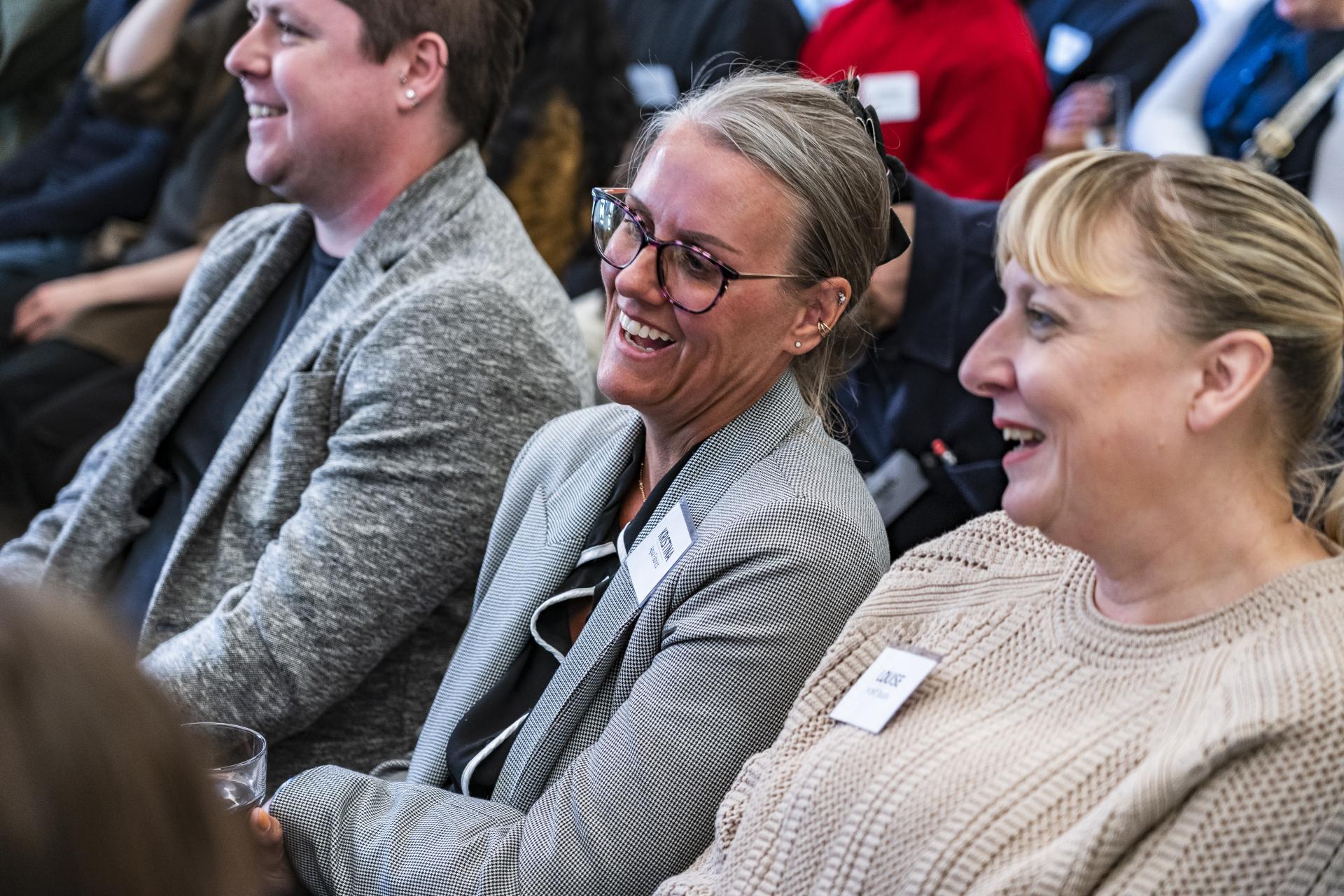
Our latest seminar in Manchester kicked off our focus theme for this quarter: Artificial Intelligence. During the first of our conversations on this hotly debated topic for 2026, forming the focus for our next 6 events, as those of you in the room were privy to, sparks definitely flew. Myths were debunked. And, while questions were answered, many more emerged.
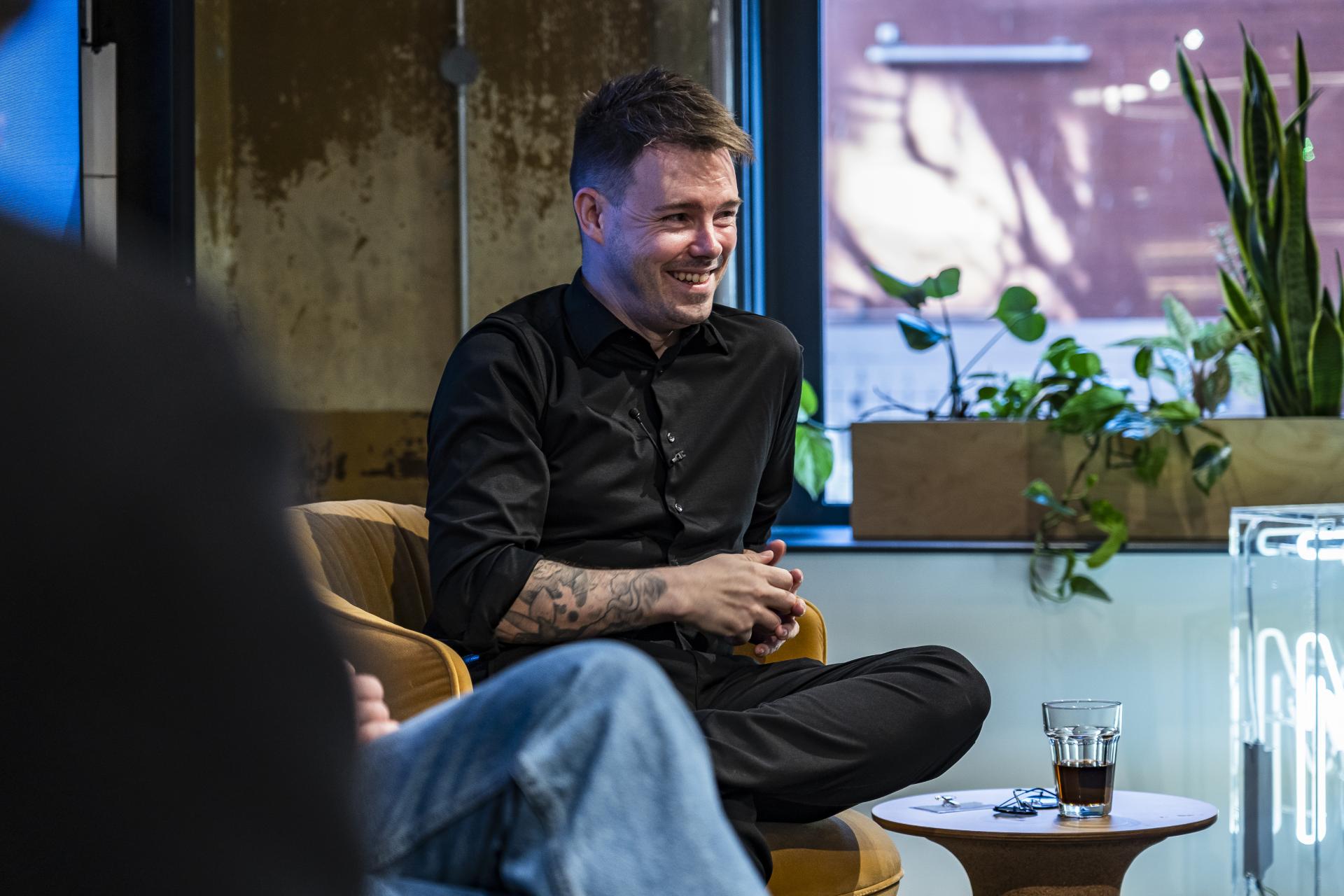
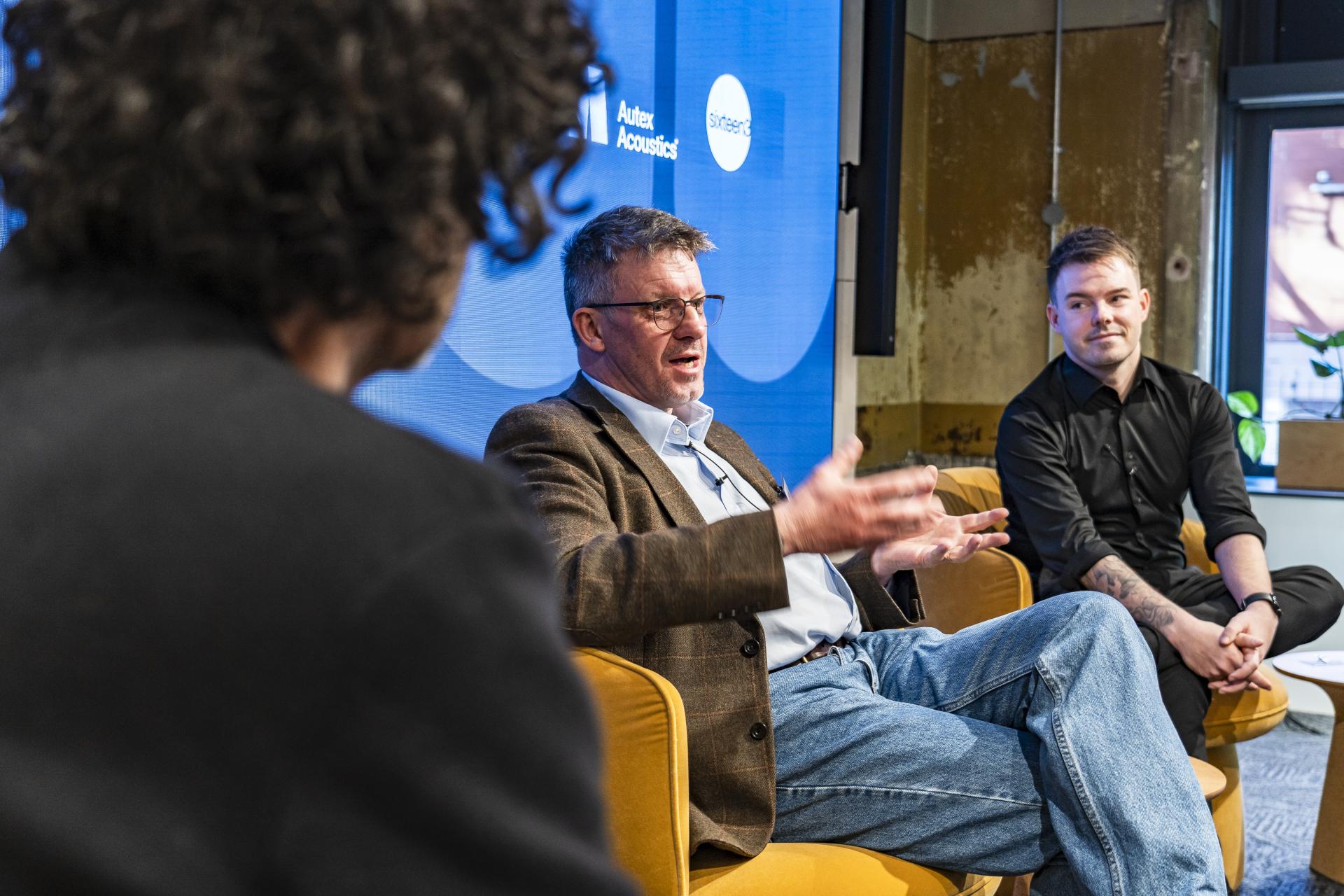
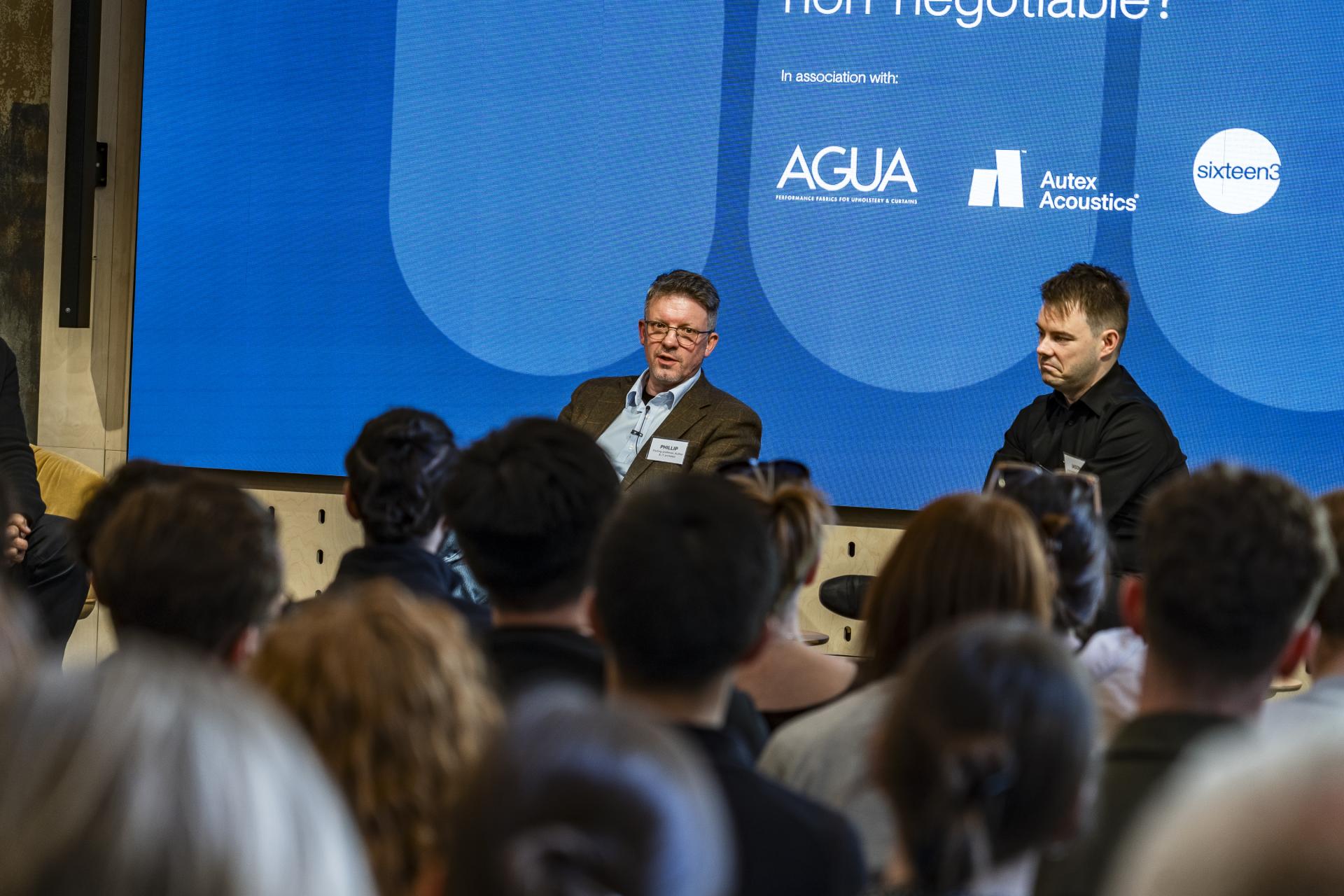
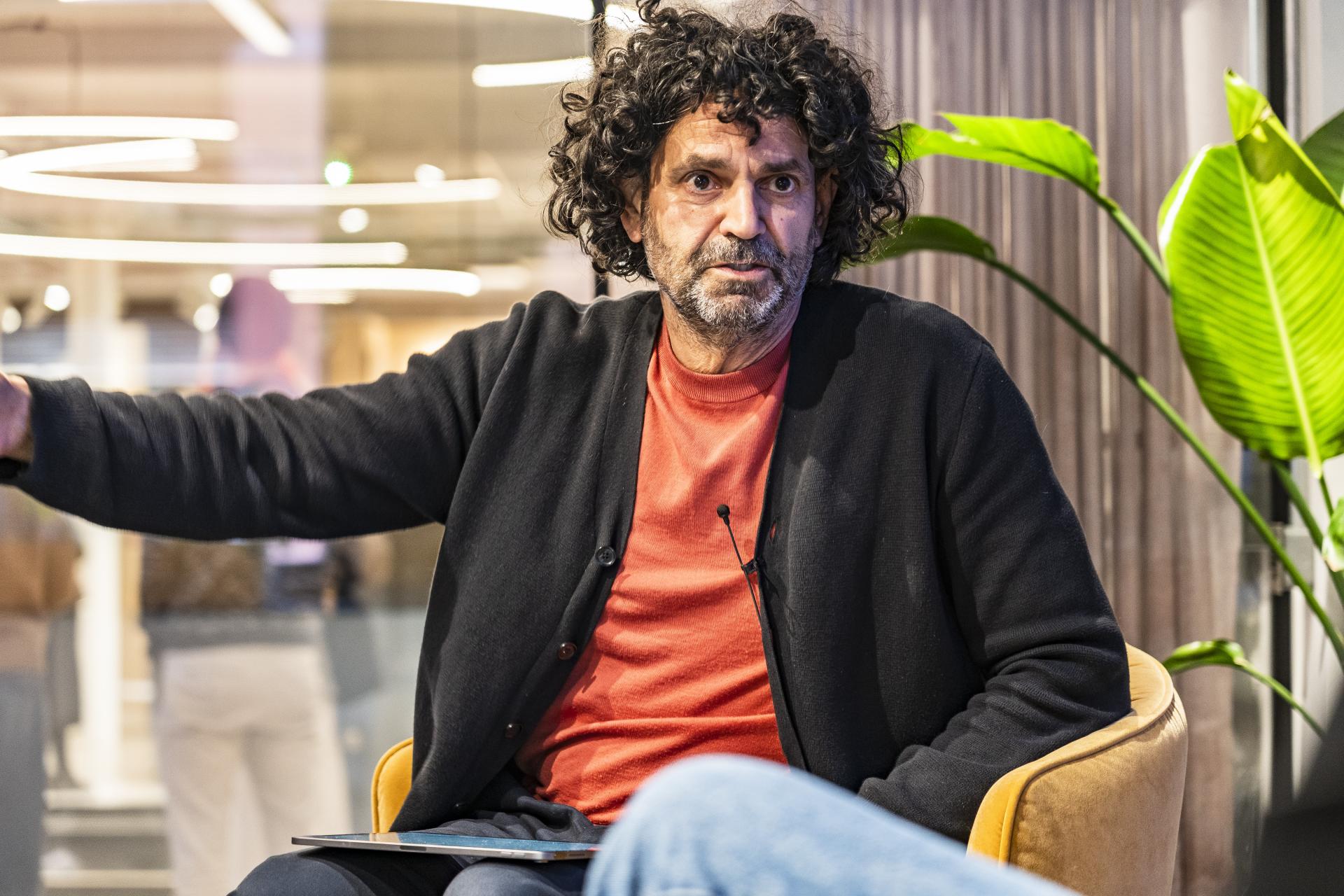
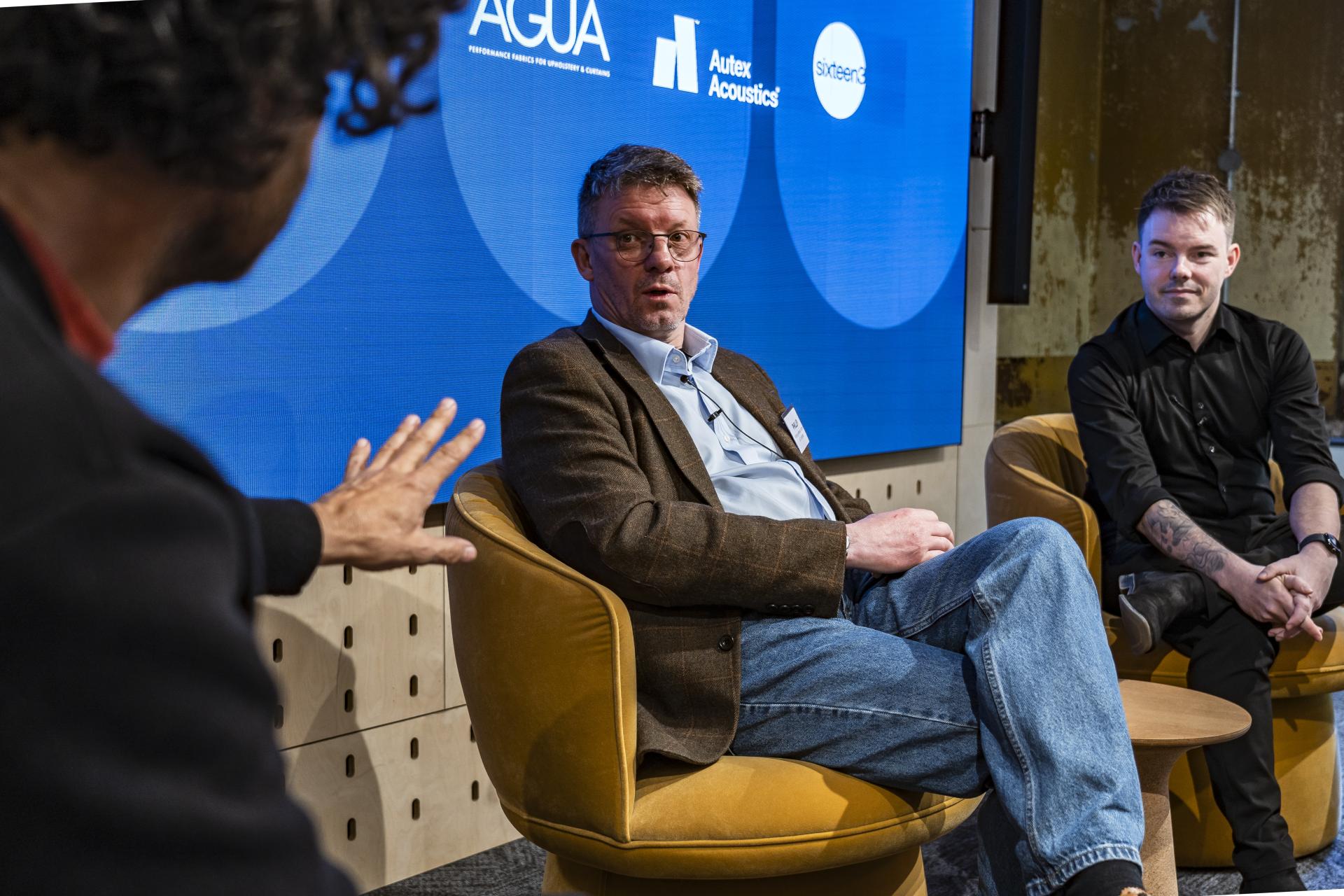
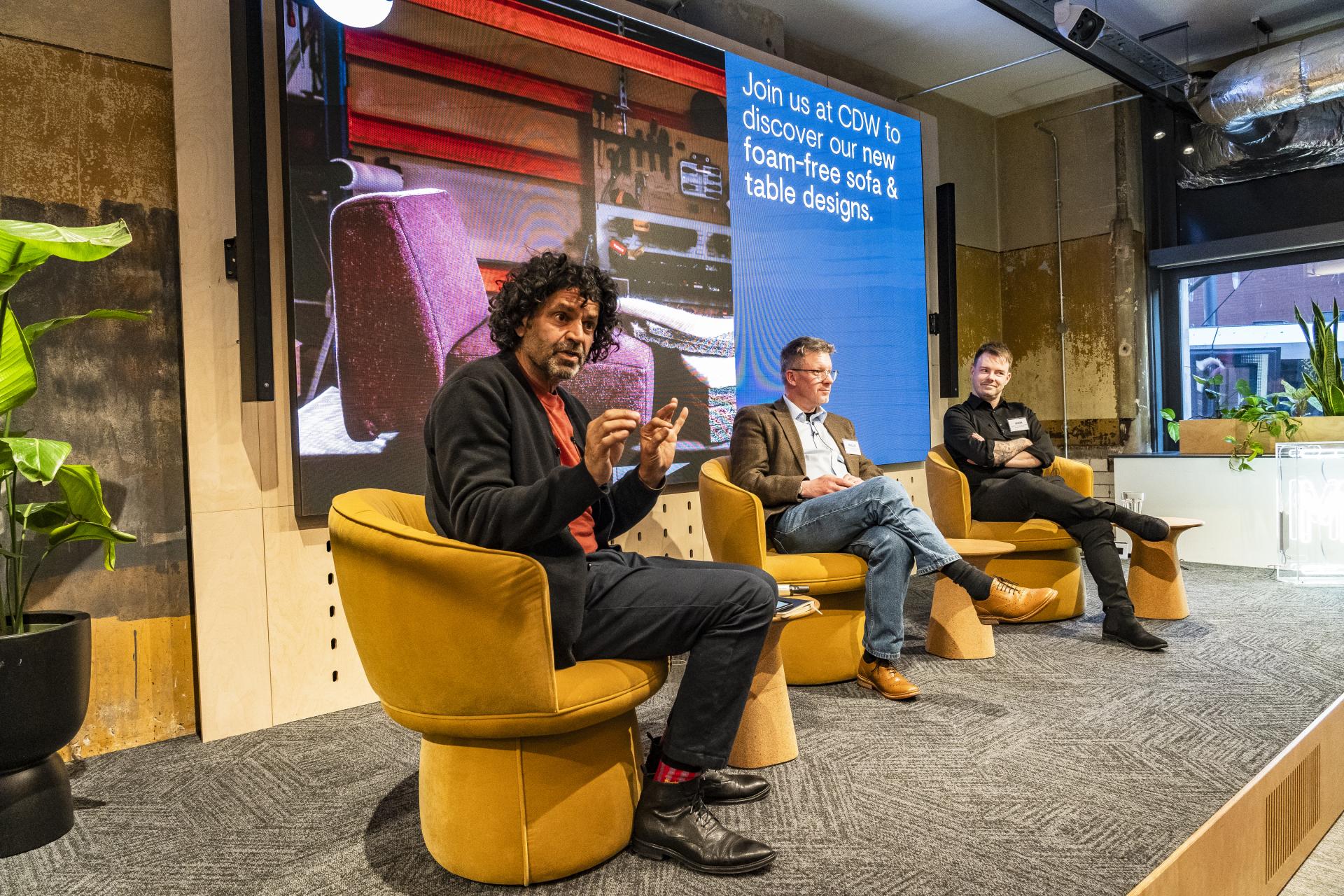
We brought together two experts with a varied wealth of experience, Dr Phil Tetlow - Visiting Professor, Author & IT Architect - formerly at IBM for 24 years, and Jason Taylor - Senior Lecturer in Digital Education & AI Leadership, Manchester School of Architecture. With Host – Material Source Studio Director, David Smalley, asking, "AI: novelty or non-negotiable?", seeking to go beyond the hype to decipher what "AI means to those that are commissioning, designing, and operating workplaces".
Kicking off the discussion, David asked the panellists what they thought the most pressing question may be for our audience? “What’s the burning question they have, do you think?”
Will I be replaced by AI?
“It’s got to be: are architects going to be replaced by AI?”, responded Jason.
Phil agreed, adding, “It’s probably the right question to ask.”
“Should they be worried, then?” David continued.
Jason replied: “Architecture has never stood still. Over the last 50 to 60 years in particular, what Mario Carpo helped frame as the digital turn in architecture has brought repeated paradigm shifts that have changed how the profession works, from computing and modelling through to simulation, fabrication and digital communication.
"AI feels like the next major phase of that shift, but one that is different in scale because it begins to affect not just how we produce design, but how we conceive it. It changes the design thinking process."
As well as in workplace environments, the impact can also be felt in the education sector, Jason added, in terms of “evidencing the way that students learn. How do we benchmark these things?”
Overall, his belief is that, “AI is not necessarily a worry, but it’s a chance for us to be cautious in the way that we utilise the tools that we engage with.”
For Phil, another human emotion comes into play at the mention of AI. “First of all, everybody in the room knows this already, but AI is a big deal. Full stop. End of sentence. New paragraph. A better question is: should I be worried or should I be excited? And I think, in equal measure, both.”
“Why?” asked David.
“Because we are seeing a paradigm shift”, Phil answered, concurring with Jason’s point, but, it’s bigger than that, he suggests. “We’re also seeing a major catalytic effect to a degree that we’ve probably never seen before in humankind.
“There are some statistics you need to get your head around before we even start to talk about AI. You need to realise there are 7 times more people on the planet today than when I was born. I’m just about to turn 60. And the other thing is that there are more people alive today than have ever been alive in the entire history of the human race.
“Now, if you think about that as a scale multiplier: if you get a catalytic shift in capability, if a technology arrives that can catalytically enhance or augment humankind, it’s going to do it in a way like we have never, ever seen before.”
Obtuse improvement, acute negativity
Phil likened AI to the arrival of the printing press or the automobile, “because they’re all equivalent trends”, he commented. “And whenever you ask me about any type of major sea change or advance like that, I always make the following point: what you generally see is obtuse improvement across the board.”
Of course, everything that goes up, must come down. What Phil suggests is the positive/negative opportunity of AI is a seesaw. It’s yin and yang.
A Best Practices Group Contributor of the World Wide Web Consortium (W3C), Phil spoke about how the overhaul of HTML in 2005, which led to the birth of the World Wide Web as we know it today, is akin to what’s happening with AI. “What you saw with the World Wide Web is education standards rise across the globe. You saw massive employment opportunities. In certain parts of the world, you saw a level of poverty decrease. Good thing, you would say.
“If you talk to Tim Berners-Lee about this, he’ll say, ‘Everything about the World Wide Web was positive.’ And I’ll say, ‘From an obtuse standpoint, yes.’
However, Phil warned, “you will also see acute negativity.”
While the World Wide Web has opened up a wealth of positivity for so many, it has also facilitated things that are “really, really dark”. “You will see the same thing with AI”, Phil said.
As an IT architect with 3 decades’ worth of chartership, Phil suggested that the whole point of architecture is that “it’s a profession, and we are custodians of an elite set of practices.”
For that reason, a responsibility lies with architects as professionals, Phil believes, “it is incumbent upon us as a profession to make sure that the obtuseness of AI is bred to do good for the profession and ultimately humankind. But at the same time, it is incumbent upon us as professionals to make sure that when we do see the acute negative effects of AI, we minimise them, or at least control them.”
Jason asked how many people in the audience engage with AI, and the response was surprising, he said. “I would expect more, in all honesty.”
Taking it back to its basics then, Jason explained that AI is not capable of independent thought, “The key thing with AI is that it is effectively a pattern recognition system. It can tell you what a correct answer looks like; it doesn’t necessarily know what a correct answer is, depending on the dataset that you feed it."
Focusing specifically on the education sector, David asked Jason, “You’re teaching people in this world - they’re at the start of their careers. What are they thinking at the moment? Because the message seems to be: if you’re great, you can take advantage of this. If you’re at the lower levels of data-entry-ism and so forth, you might be in trouble?”
It’s an interesting one, Jason said. Not just for students, but also for people who have been in practice for a while and have not kept pace with how digital literacy has evolved. “With the rise of BIM, game engines, digital twins, algorithmic design and now AI, the challenge is often knowing where to begin.”
“Specifically, for BA1 and BA2 students who are brand new into the field: what should they be learning?” asked David.
With the accessibility of AI relatively new to the end user, Jason said strategies are in their relative infancy.
At the University, Jason shared, “We typically promote teaching students traditional architectural workflows. My team teach the whole digital strategy for our school, effectively, and that covers technical drawing, 3D modelling and BIM, visualisation, environmental simulation and computation.
“But at what point does AI stop sitting alongside these skills and start displacing traditional architectural processes? That is something we, as academics and architects, are having to test in real time with students, because the boundary is shifting fast and it is already beginning to redefine what architectural literacy and professional readiness look like.”
Who’s in trouble?
Referencing a documentary by the artist Grayson Perry 'Grayson Perry has seen the future', which had aired the evening previous to the session, Phil shared that one of the comments made was “mediocre intellectuals” - “I think he was targeting academics”, said Phil – “are in trouble, because AI is going to take that out.”
“However”, he added, “and there is a ‘however’ in that. I would guess most people in the room are familiar with the word evolution, because we’re involved in an evolutionary process here. I bet there aren’t many people in the room who’ve heard of or understand the word co-evolution.
“This basically says that if you look at something that’s evolving, what actually happens is at the same time, the environment that thing is evolving in is also evolving.
“So on the point about lower capability or mediocre capability: what is probably going to happen is that the profession will morph in such a way that it can accommodate that type of capability as well. Predicting how you get that counter-morph is the subtlety that is really, really hard to assess. But in the short term, yes, it’s worth being mildly nervous about the immediate effects of AI.”
This short-term view of the immediate effects is not really what we should be interested in, added Phil. “The long-term effects are far more profound and far more interesting, because we don’t know how it will develop. It’s like when penicillin arrived or the atomic bomb, the immediate effect was, in the case of the atomic bomb, catastrophic. But actually, since the dropping of the two bombs in World War II, we’ve had no further nuclear incidents as a direct result of that. We will see similar types of episode with AI”, he believes.
Similarly, he referenced the automobile. “When the automobile arrived, it killed the Pony Express. It killed a whole load of professions and industries. But at the same time, gas stations evolved, motorways were built, and service station sandwich operators started to sprout up. So for every negative, there will be a counter-positive.”
“Because of the depth, breadth, and scale of AI - especially the rate at which it’s evolving - the world within which our children and our children’s children will go to work will not be the same as the world we see today.” - Phil Tetlow
Concern for the future generations was shared by Jason. “I have a 3-year-old daughter at home and I’m genuinely concerned: what am I educating her for, for the future?
"My concern is that human interaction is a core part of human development, and something we risk losing if we automate too much of everyday life. If routine experiences such as speaking to people in shops begin to disappear, then we have to ask what that means for social development, empathy, and the future of humanity more broadly.”
Grappling with the machine
“What’s the key thing then, if a student comes to you and says, ‘What should I be focusing on?’” asked David.
“Digital literacy”, said Jason. “For my students, we still teach analogue drawing; we’re teaching traditional processes. And we treat AI as just another paradigm shift, another tool, effectively.”
The key is to “understand the limitations of that tool in its current form”, he added. AI is currently limited, Jason believes, though AGI - Artificial General Intelligence - described by Google as: a hypothetical type of AI that can understand, learn, and apply knowledge across any intellectual task at a human or superhuman level. Unlike current "narrow" AI, which excels at specific tasks, AGI would possess generalisation, common sense, and autonomous problem-solving capabilities - will change the landscape yet again.
“AI in its current form isn’t as intelligent as the way human brains are today.” - Jason Taylor
On the point about digital literacy, David asked “what should people be focusing on – because it’s not just LLMs (Large Language Models such as ChatGPT) is it?”
Jason said there are “two schools of thought”. There’s the traditional side of skills – such as what the Manchester School of Architecture BA students are taught: technical drawing, building information modelling – “the kind of skills you want your graduates joining you in practice to have”, commented Jason.
But in terms of AI “sitting on top of that”, Jason said, “it’s understanding that AI is a multimodal system. It’s not just an LLM. It’s not just ChatGPT or Claude. It’s image-based visualisation… it’s video-based stuff. We’re now getting to the point where some of our students are using Grasshopper inside Rhino, which is fantastic, I’ve been teaching that for years, but they’re now using AI within Grasshopper. They’re feeding it things like building information, UK planning regs, building regs, RIBA stages of work, and they’re using that to make informed design decisions as part of their design process.”
With this in mind, “What are humans adding to the process?” David asked.
Being human
“AI shouldn’t replace human thought”, Jason replied. “AI is good at looking at data and crunching numbers, and it’s good at knowing if something’s efficient, reducing redundancy. But it can’t necessarily tell us how things feel, or what’s good for the culture of an environment. It can’t really understand the arts, for instance.”
Phil agreed, highlighting that architects, in particular, are well-placed in a technologically advancing world. “Architecture lives as a profession at the overlap of multiple disciplines. What that means is: every single person in this room, if you declare yourself as being an architect, by definition you are polymathic; good at many skills. That’s what AI is good at as well: it’s good at many skills.
“If you want to survive, you need to lean in on that ‘polymathicism’, if there is such a word. Being a specialist is probably a sure-fire way to extinction, because the AIs will replicate it before you, if they’re not doing it already.
“The other thing Jason has mentioned is the one thing we need to focus on more than ever: being human. Because AIs are not human, and there are qualities that we inherently have as biological beings that AI does not have, qualities like empathy, kinship, appreciation, brotherhood, sympathy. All of those things can be emulated by an AI, but they’re not for real. And you can certainly spot them.”
Providing the specific example of supplier-client relationships, Phil commented, “you’ll never get an AI to do that properly. Never, ever. Because people don’t buy off the back of a contract. Real work is won on a golf course. It’s about human contact. The sociological stuff. Waking up in the morning and making a phone call to somebody. That’s where the magic is.”
In this way both AI and humans have their place, Phil believes. And by bringing both elements together, that’s the “sweet spot”. “AI with the very essence of humanity, that’s your sweet spot. In two words, that’s what I call professional practice”, Phil added.
To add, Jason said, “critical thought” is where “we really differentiate between human thinking and AI thinking.”
At this point the danger of deep fakes was brought up in the conversation. AI can now produce video that looks so real, it’s being accepted as authentically legitimate by even the most discerning of social media users.
“A big part of what we will need to teach students in future is how to think much more critically and how to verify the authenticity of what they are seeing. A good example is the deepfake video showing Neil deGrasse Tyson saying the Earth is flat: someone most people would regard as a credible and authoritative source, but the video itself was fabricated. That is exactly why critical thinking and source verification will become such important skills in an AI-shaped world.”
“Think in the gaps. Find the crack, widen it. That’s what we should be doing with AI”, Phil said.
“There’s a lot of stuff that’s obvious about AI”, Phil continued. “If you want to be really, really clever with AI, you’ve got to look at the stuff that’s non-obvious. Don’t ever prompt an AI cold; you’re just wasting your time.
“What I do is: I never ask an AI a question. I always give it the answer and I say, ‘What have I missed?’ And that spirals you off into a whole universe of stuff which is filling in the spaces in my personal inadequacy.
“If you do it properly - predicate it properly - and with mathematics, you can get answers back which are enlightened, controlled, pinpointed, professional.”
Where’s the value?
“Where in the workplace lifecycle will AI create real value?” David asked.
For Jason, the real value of AI lies in helping architects deal with complexity and information at scale. “That could mean handling large datasets, interpreting client information, finding patterns in surveys, or supporting analysis across the workplace lifecycle. Its real contribution is not just reducing repetitive tasks, but strengthening the evidence base for better design decisions.”
“Then we should critically analyse what that AI tells us as a result”, added Phil. “And this is the big point: give it the stuff you don’t want to do, or that takes a lot of time, but then critically analyse it. Be a human. To give you that time to focus on what it is you want to do.”
Phil said this can be considered in two words: “menial and monotonous”.
“AI is good at everything. So it can augment and improve at every point in the traditional work cycle,” continued Phil. “You need to make AI good at the things that you’re not good at. You need to decide where in your work cycle you’ve got weak points, use AI to help you analyse where you’re weak, and then try to get it to augment in areas where you are inefficient.”
In short, Phil suggests, “getting AI to do what you cannot, and to bring out the best in you.”
To do this, Phil encouraged the audience to get AI to “assess what you’re not good at” by, quite literally asking it, “What am I not good at?”



Ascending ordinary
The conversation on AI in the workplace can sometimes feel one-note. AI can rewrite your emails. It can make the minutes at meetings. It can organise your diary. But for Phil, if we look at that bigger picture, it is capable of so much more than that. And as Jason alluded to earlier, magic can be made when humans and AI join forces for more than the mundane.
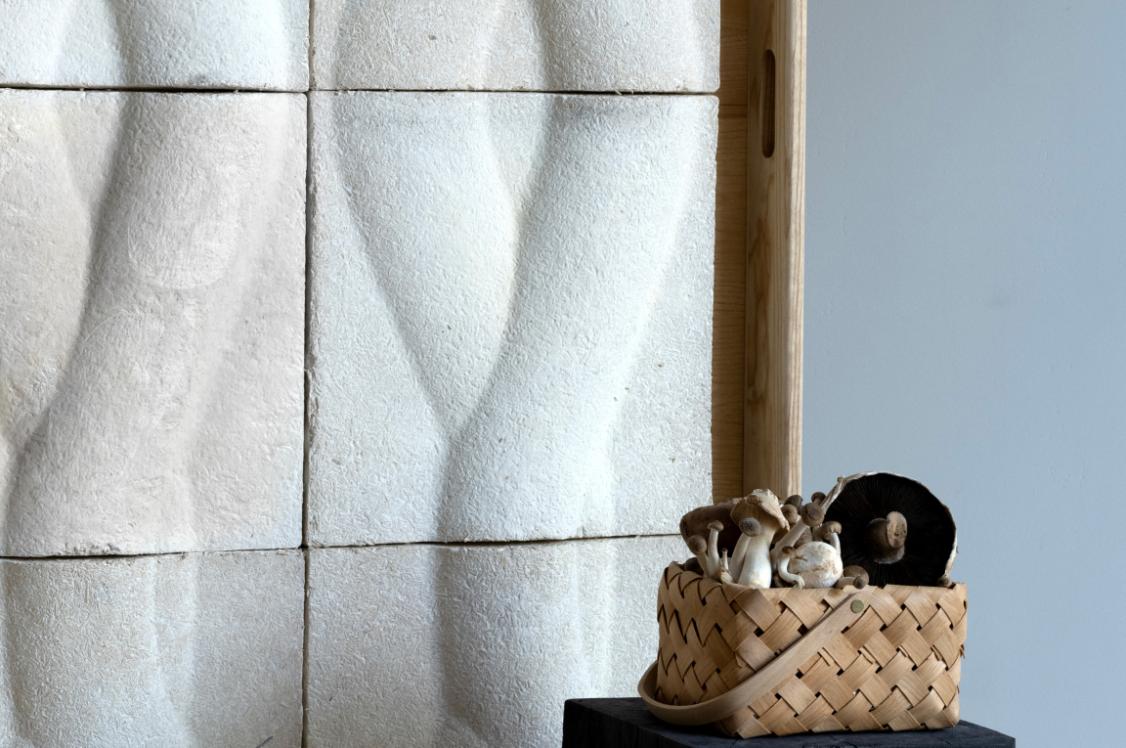
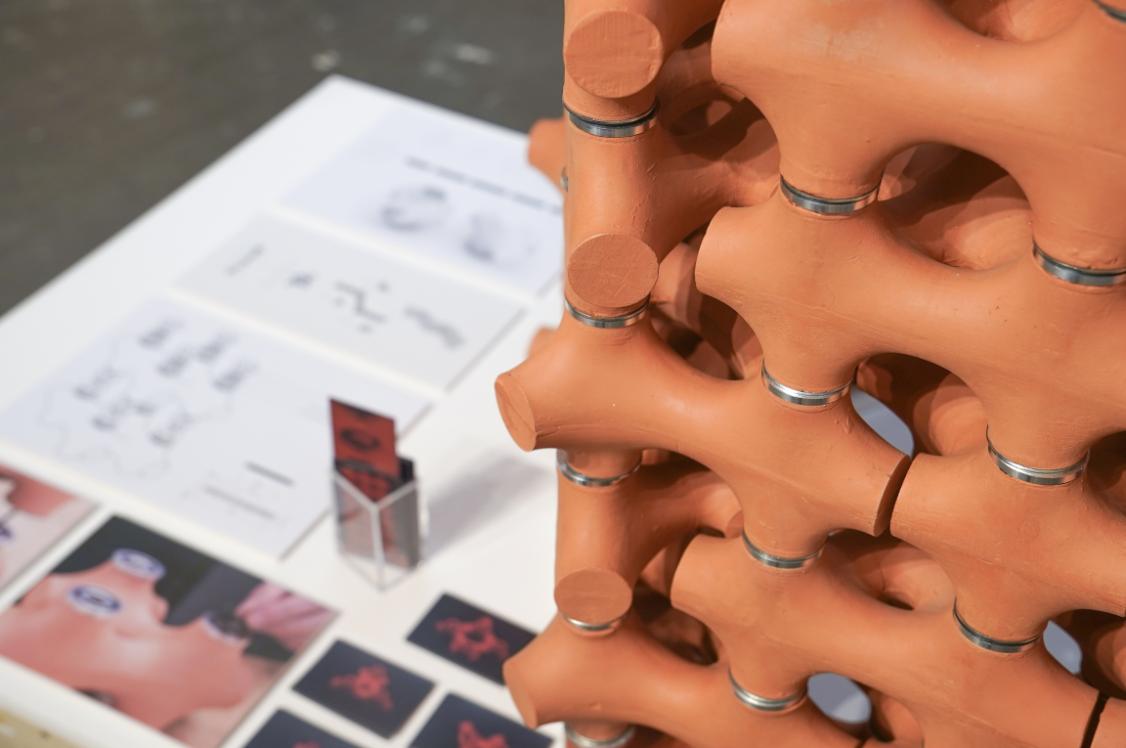
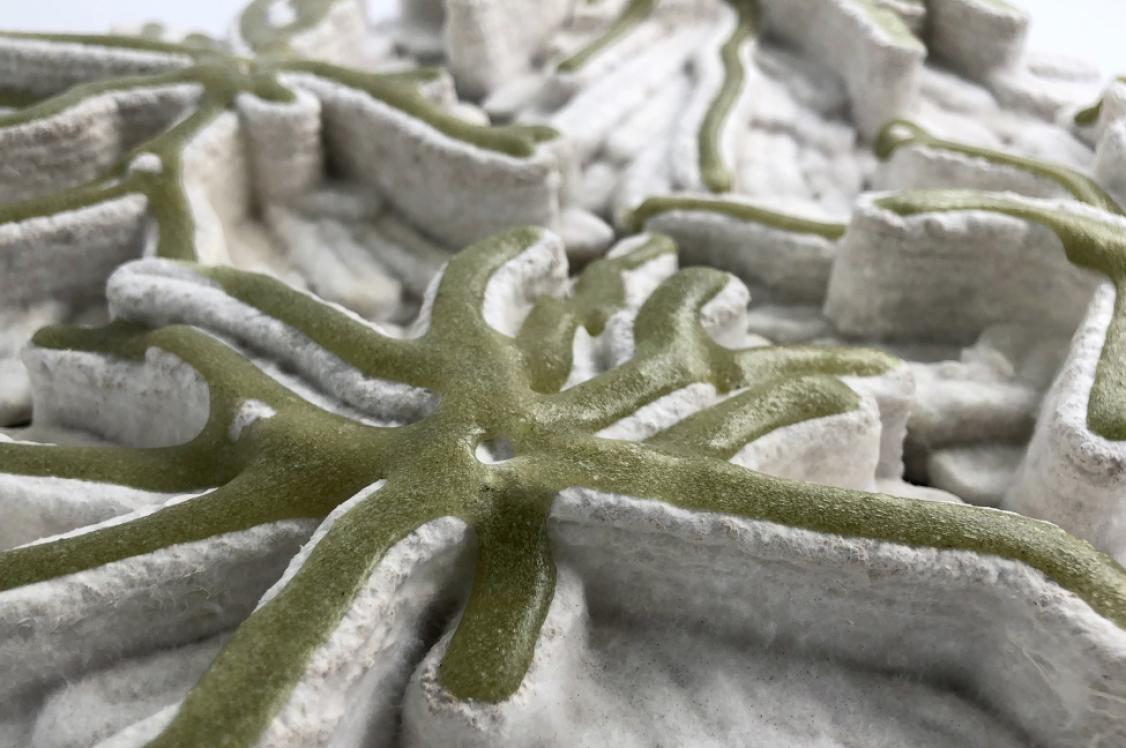
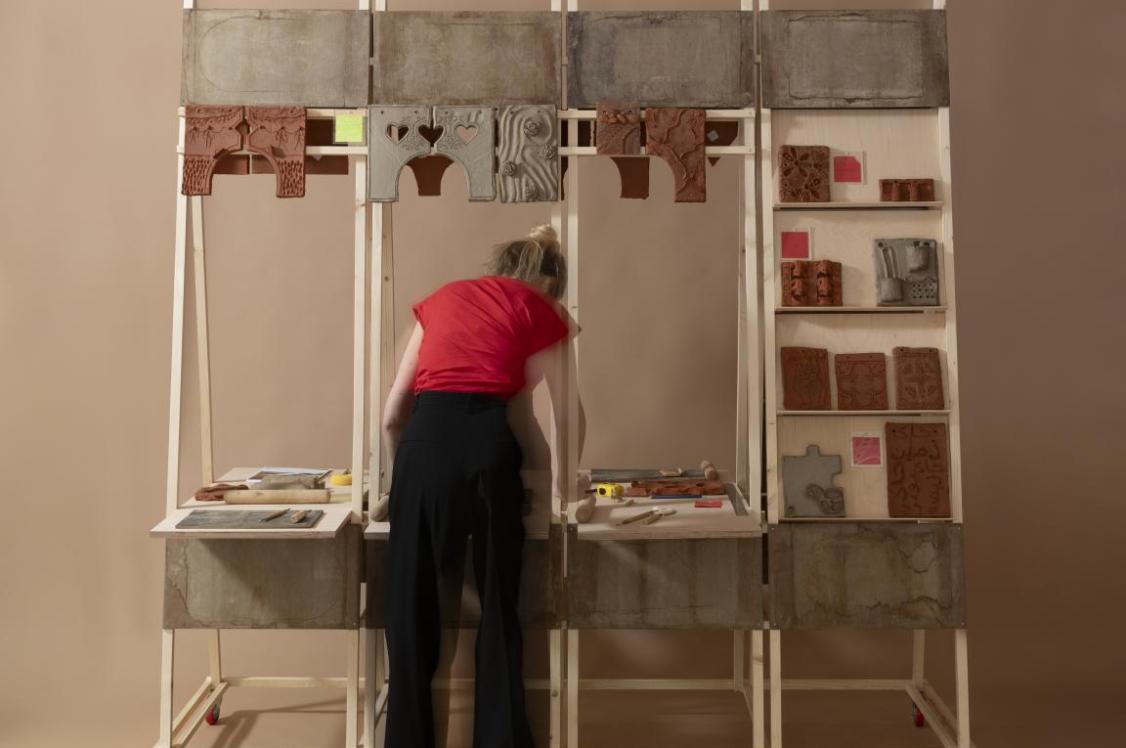
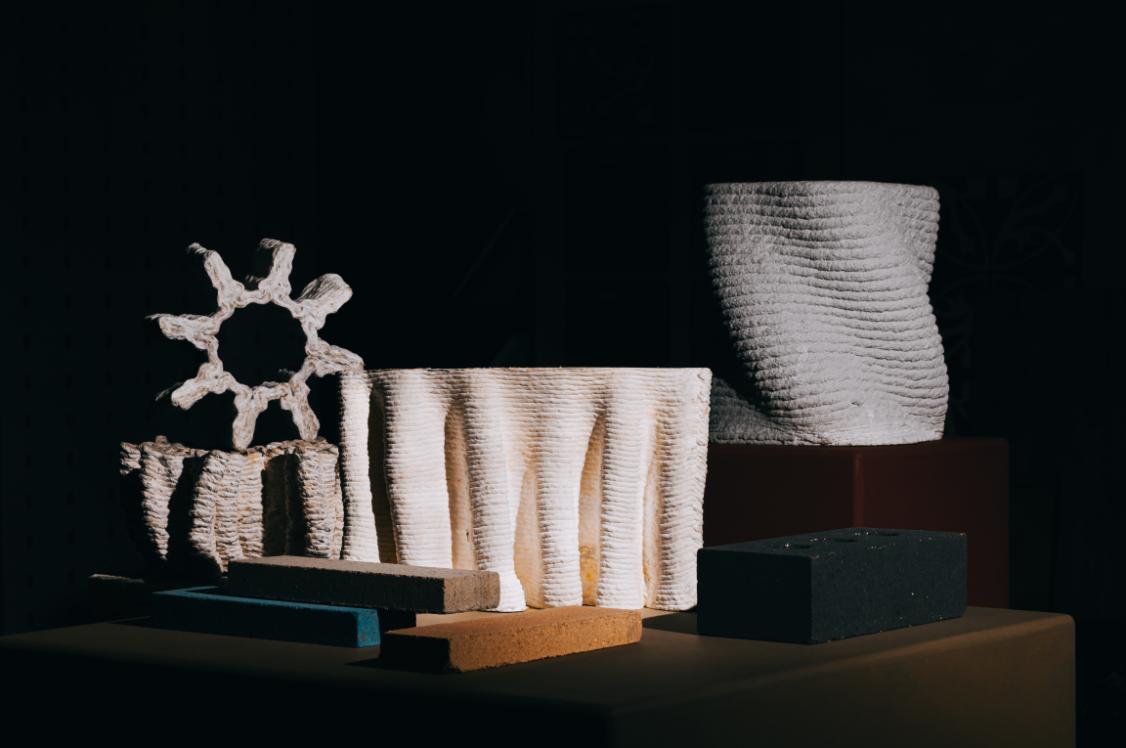
Speaking of Material Source Studio Manchester, where this session was held, Phil likened the wealth of inspiration on offer to “the type of thing that AI is blisteringly good at” – offering inspiration.
“There are some materials out there [in the Studio] I would never have imagined in a million years existed. But if you were to walk into that space out there and go, ‘I’ve got one of these things and I’ve got one of those things - what happens if I bring them together?’ AI is trained on such a breadth and depth of experience and knowledge now, that if it doesn’t come up with something you haven’t thought about, you haven’t asked the question properly.
“You could walk out there with an AI, and it will create miracles before you. That’s a super, super powerful environment, because catalysing inspiration will take you to places you’ve never been before.”
In this way, we must “push AI – not just accept what it spits out”, said Phil. “The mundane type of stuff won’t bother us. Ask it to write a tender. Then ask it what’s missing. Or what the client’s missed. Then ask it to write a second submission that tells the client where they could have been better, and you can reply with something different to every other architect or supplier that’s going to contribute as well.”
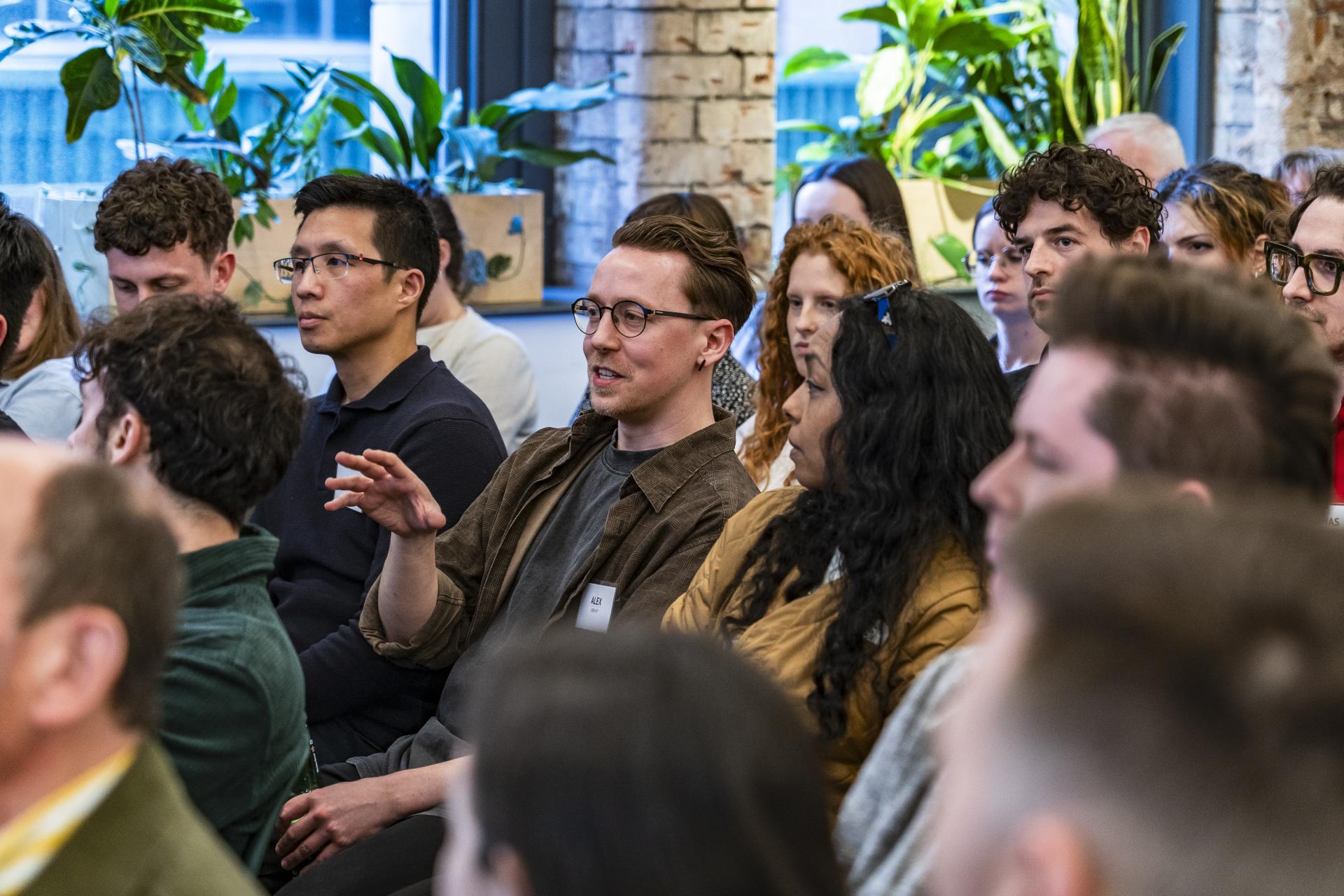
From the audience, Milan Cvetkovic, Sales Director, Agua Fabrics, asked a question to the panel, “My sense is that technology, AI, the internet, is actually enfeebling humanity, because it’s making things easy. So my opinion is that those that retain core human skills, high emotional IQ, the ability to take in lots of data and analyse it, will succeed. They will become highly sought after. Do you agree?
“Yes and no”, responded Phil. “We need to be careful with that. The best way I’ve ever heard it described is something called 'Metaman'.
“If you look at evolution on the planet: first, the first stage of evolution is we went from chemical soup into single-cell organisms. Then there was a mega jump forward where single-cell organisms evolved into multi-cellular organisms, of which we are probably the pinnacle example today.
“There are a lot of theorists saying we’re now at the next major jump in evolution: we’re moving to be a multi-cellular organism, in other words, planet-scale. The planet is thinking on its own.
“We’ve seen examples of that: the Arab Spring, overthrowing regimes. If you look at it at the 'Metaman' level, the cumulative effect of every single human mind with all technologies within reach and every capability, we are about to ascend into a hyper-intelligence like we have never seen before.
“So at the plural level for humanity, this is a big deal. What it means at the singular level is the obtuse/acute. Probably, at the individual level, I would worry about kids today who’ve got their head buried in social media, or who are screaming at ChatGPT to get their homework done. What’s that going to do to them and their lives? In some cases, it’ll be devastating.
“But at the opposite end of the scale: it’s an easy bet that we’re going to cure cancer within 20 years. It’s a matter of which one do you want, ladies and gentlemen?”
“Does AI block the imagination?” asked Vian Hussein, Interior Designer, Fidget.
“Really good question - I think it comes back to how you approach the use of AI”, replied Jason.
“For our students, we say: you can use it for initial elements of design thinking - design ideation. Because it’s not much different than looking at magazines. For those elements where you’re looking for inspiration, design is inspired by design, I think it’s ok. But then the problem is having that student or designer tearing that design apart and understanding it…”
...“This is where the subject of authorship comes in, isn’t it?” suggested David.
Jason raised the issue of dataset ethics and authorship, referencing 'Adobe Firefly' as part of a wider debate in architecture and design. He noted that early concerns focused on copyrighted material being used without permission and on outputs echoing individual designers’ visual languages, but stressed that Adobe has since done significant work to move Firefly towards ethically trained data.
John Blakeman, Founder, JB-ID, asked a question on this point: “With Adobe coming under scrutiny for having scraped information from people - that is happening on pretty much every single API that’s out there now, and there’s no legal action, or very little. Why?”
“There is legal action, but it is very slow to materialise,” responded Jason. “The difficulty is that AI systems and data centres are distributed globally and governed by different legal frameworks, which makes it extremely hard to enforce clear restrictions on AI generation.”
Phil likened the situation to Pandora’s box. “It’s all out of the bag now. We can’t put it back in.”
Malissa Geersing, Senior Project Designer, Mather & Co, has encountered this type of activity within the profession. “Can a creator still call themselves a creative if, technically, it’s AI that’s created the work?” she asked the panel.
Jason mentioned collages, “I’m sure all of you remember back to architecture school: you had to make an architectural collage. You’re chopping up other pieces of work to make something new. Now, if you chop something up enough to constitute a new body of work, the original person does not retain authorship for that - the new person does. That’s the way copyright law defines a new body of work. Same as if you take a photo of a building: is it the architect of the building that owns it or the photographer? Same concept.
“So when it comes to AI, it comes down to: where was that data coming from? What is that AI powered on? Is it an ethically trained dataset? Is it open-source imagery? What stage of the design process - thought process - did that person apply AI? Has it come up with initial ideas and then they worked into it further, or did they apply it at the end stage?”
For the Manchester School of Architecture students, it’s about critical thinking, Jason shared, “We don’t let them just type in a text prompt, generate an image, and submit it, because there’s no critical thinking there. If a student has done a sketch, brings that in, uses an AI to get the structure of what they’ve designed, and then applies stylisation, well, that’s not much different to rendering.”
“It’s not always cut and dry. Some designers can use AI and still be classed as designers, absolutely. It’s just using it ethically.” – Jason Taylor
Phil said, we must not “confuse effect with cause” – “Please don’t confuse the machinery with the need for the machinery in the first place.
“This thing about abstraction and standing back, being multiple boxes away to understand the problem properly, I would like to think that traits like inspiration and artistry are entirely human. They stand apart from the tools that can replicate the capability.
“The individual, the professional who came up with the thought to create the art in the first place is the artist, not the machinery that was used to follow through on that request.
“That’s a very subtle separation of concerns, and that type of abstract consideration is going to become fundamental to professions like architecture in the future.
“John asked about copyright and lawsuits. It upsets me, because the honest answer is: shit happens. Greed gets in the way. And what you’re looking at is a different case of ‘shit happens.’ But as professionals, if you can stand away from it and say, ‘The real problem is not the surface presentation; it’s the root of the surface presentation,’ then you are properly in the zone. It’s nasty when it’s happening, but it’s not the real problem.”

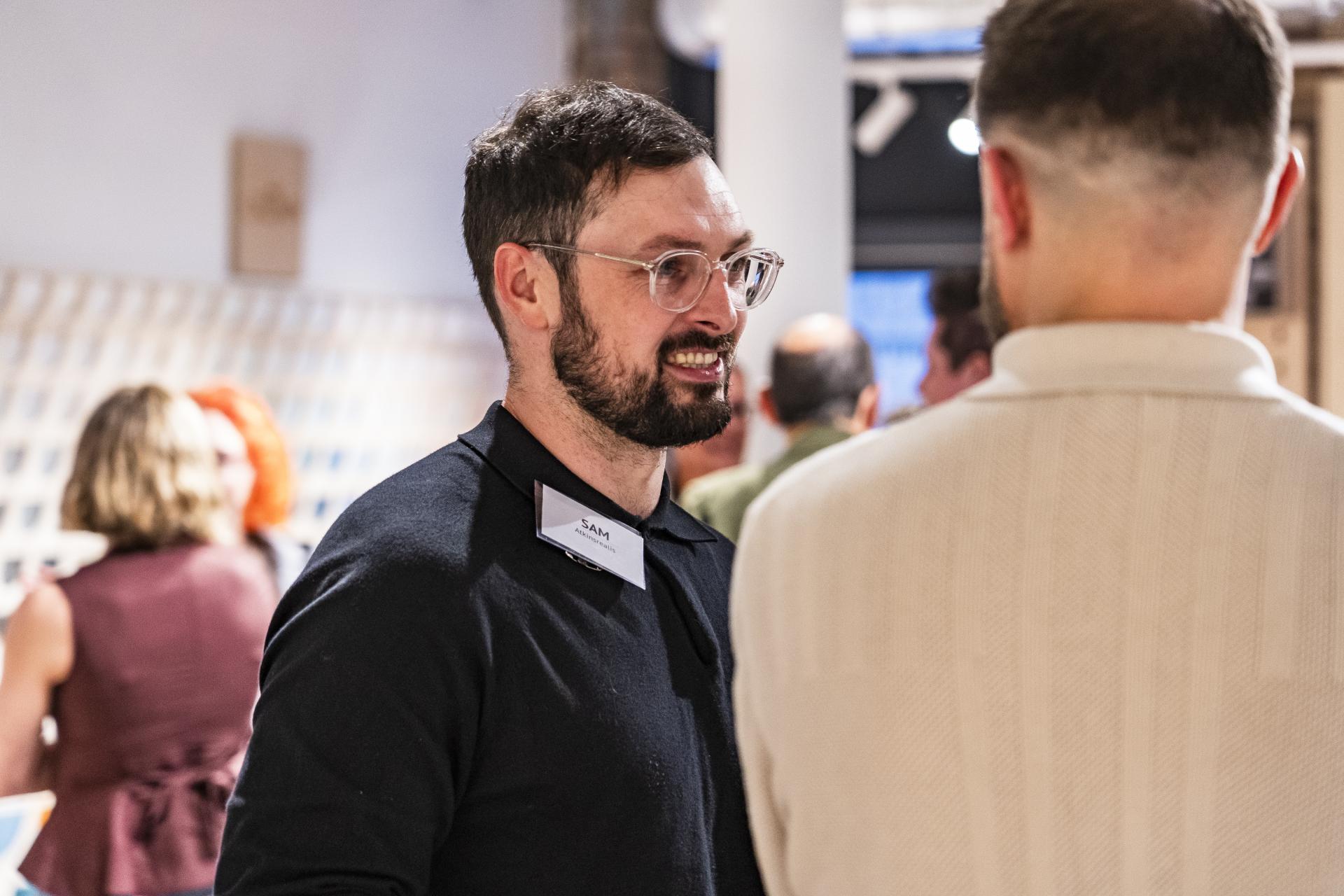

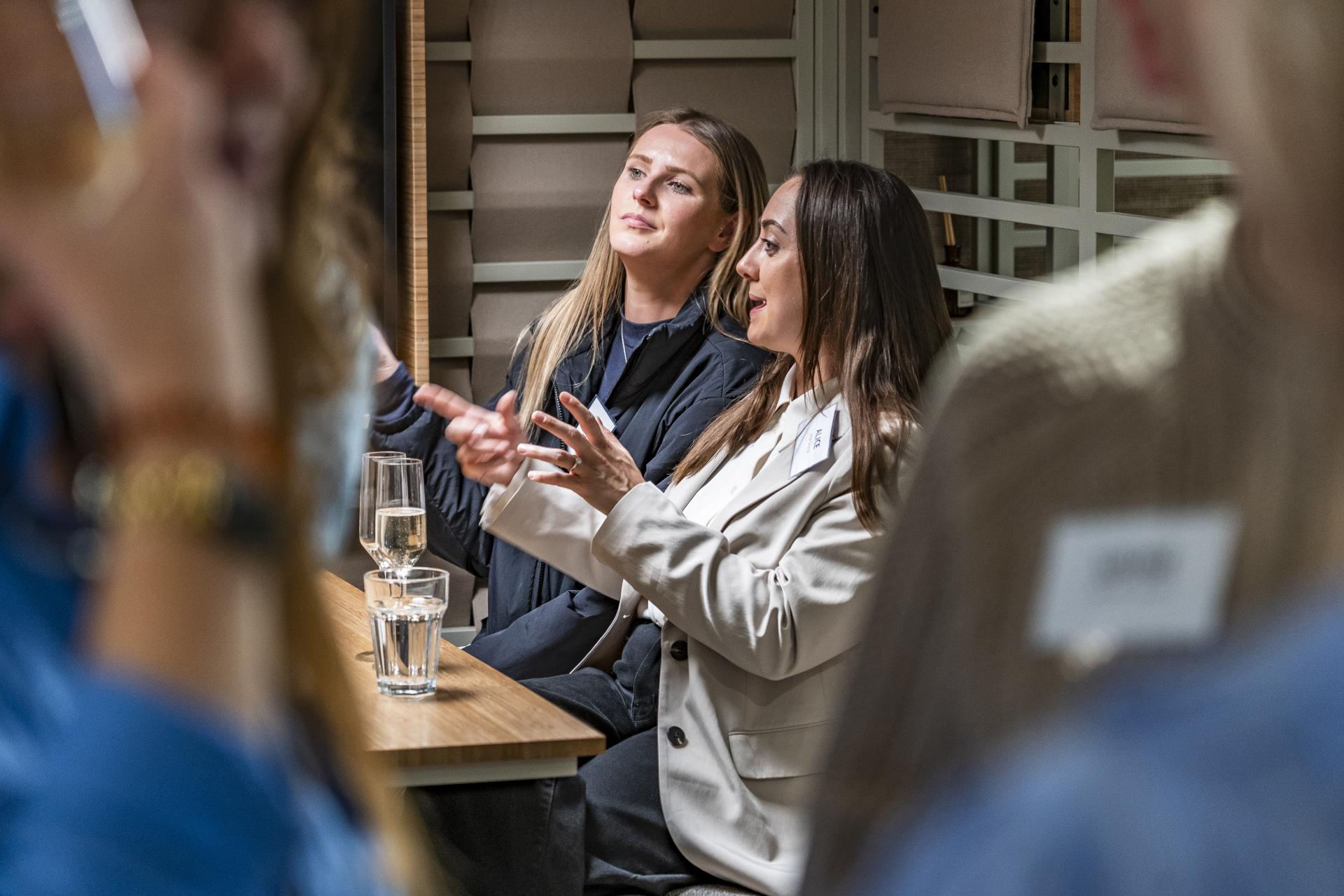
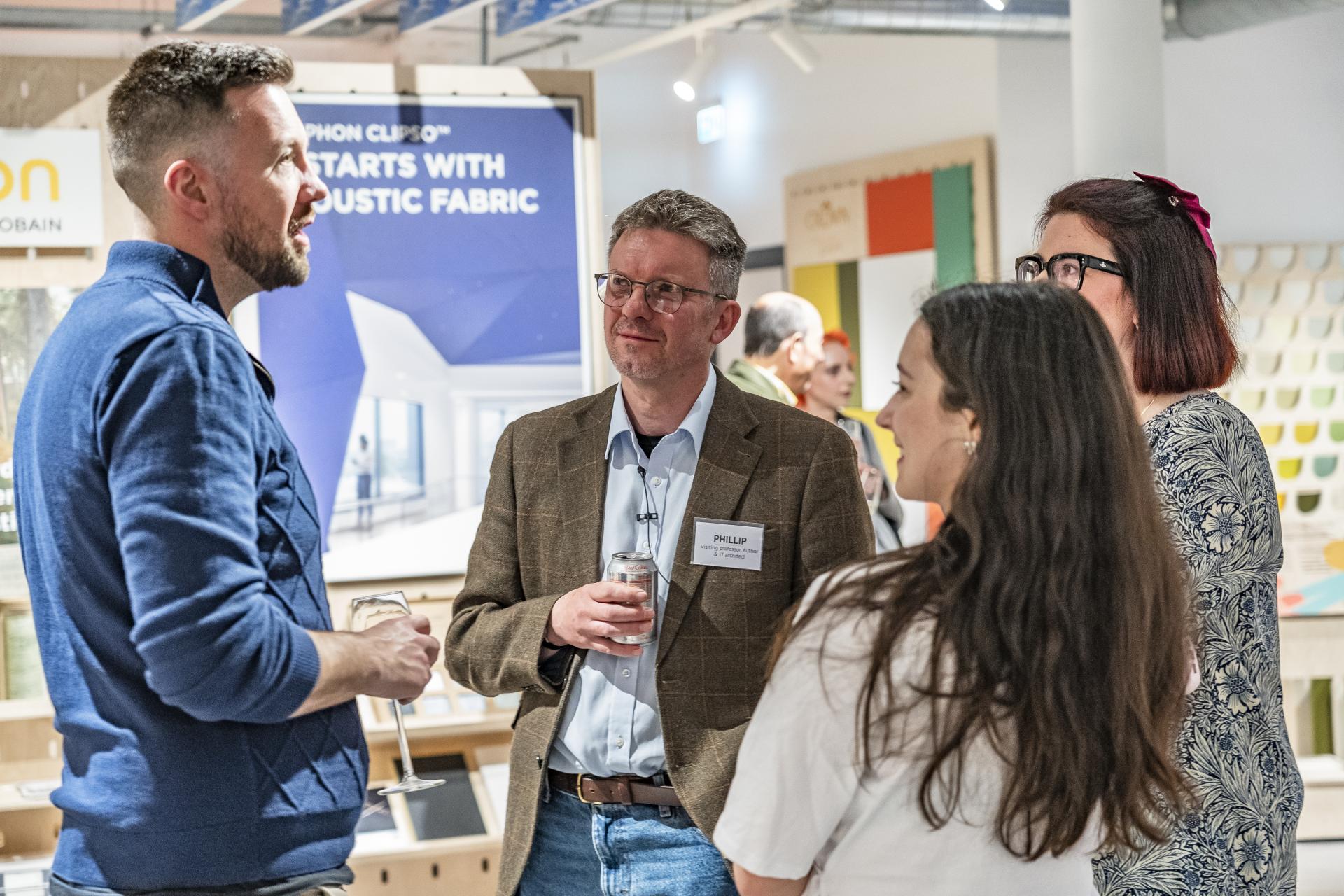
Another’s perspective
“When clients say, ‘I want an AI-enabled workplace,’ what should our audience think?”, David asked.
“Firstly, if that client were to feed that question into an AI, it would get a very efficient response. The AI would probably understand straight away what it thinks the person is asking for, and most likely will get it completely wrong”, said Jason.
“And this is why we train as architects and designers, because it’s our responsibility to translate what that client is asking”, he added.
“If I were that client asking all of you individually, ‘How could you design me an AI-enabled workplace?’, how would you interpret what I’m thinking?
“As I said earlier, AI is multimodal. Are we talking the Internet of Things? Are we talking thermal comfort? Are we talking the way it’s designed, the way it looks? Information. What is an AI-enabled workplace these days?”
…“That’s the key question - it deserves a question back”, continued Phil.
“It comes back to the point that Jason raised. You can interpret that question in multiple ways. But if you go in at the menial level - the monotonous and the mediocre - if what they’re really asking for is, ‘Can you take out all the stuff that we don’t really want to do?’ then yes: you can do that tomorrow.
“But as an architect, I would say: ‘Do you want us to elevate it to the next level? Are you after the capability to allow AI to elevate your excellence?’ That’s a different conversation.”
Alison Tordoff, Fidget, asked, “Do you think AI will ever be able to manage a project from start to finish?”
“The technical answer is that AI is lousy at planning at the moment”, responded Phil. “And most of the stuff that happens in projects isn’t mechanics. It’s human.”
“AI can’t manage things going wrong on site, can it?” prompted David.
“It can’t”, said Phil. “Now, having said that, the flip side of the coin is: the professional process of planning is mechanical. It’s Gantt charts, etc. If you prompt an AI properly now, you can get it to plan for you. But is it responding in the way that we, as professionals, would consider to be professional? That’s another question.”
Phil commented, “like all these things with AI, it’s a yes and a no answer. It’s about the context within which you ask the question, and the way you want the replies back. Multiple skins of the onion.”
“Everybody’s got to up their game - not just architecture, but you name it. Any white-collar job you can think of: the game’s just changed.” - Phil Tetlow
“AI isn’t a fad. This is a tsunami that’s hitting us all, and it will affect every aspect of our lives. This is the real deal,” said Phil.
“I completely agree. Like the rise of the calculator, AI is another tool and another paradigm shift that is here to stay, but what makes this one significant is that it begins to affect not just production, but the design thinking process itself.”
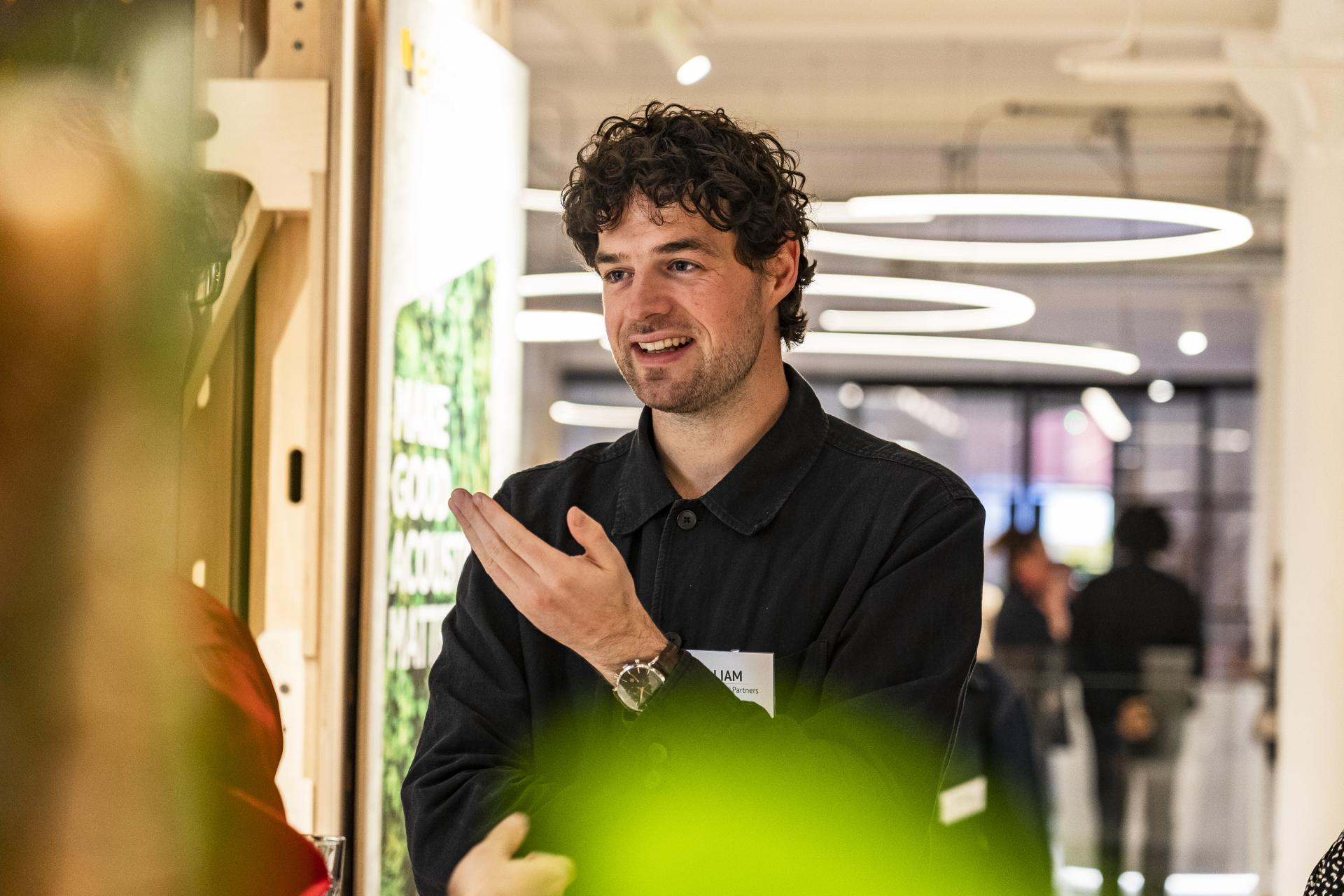
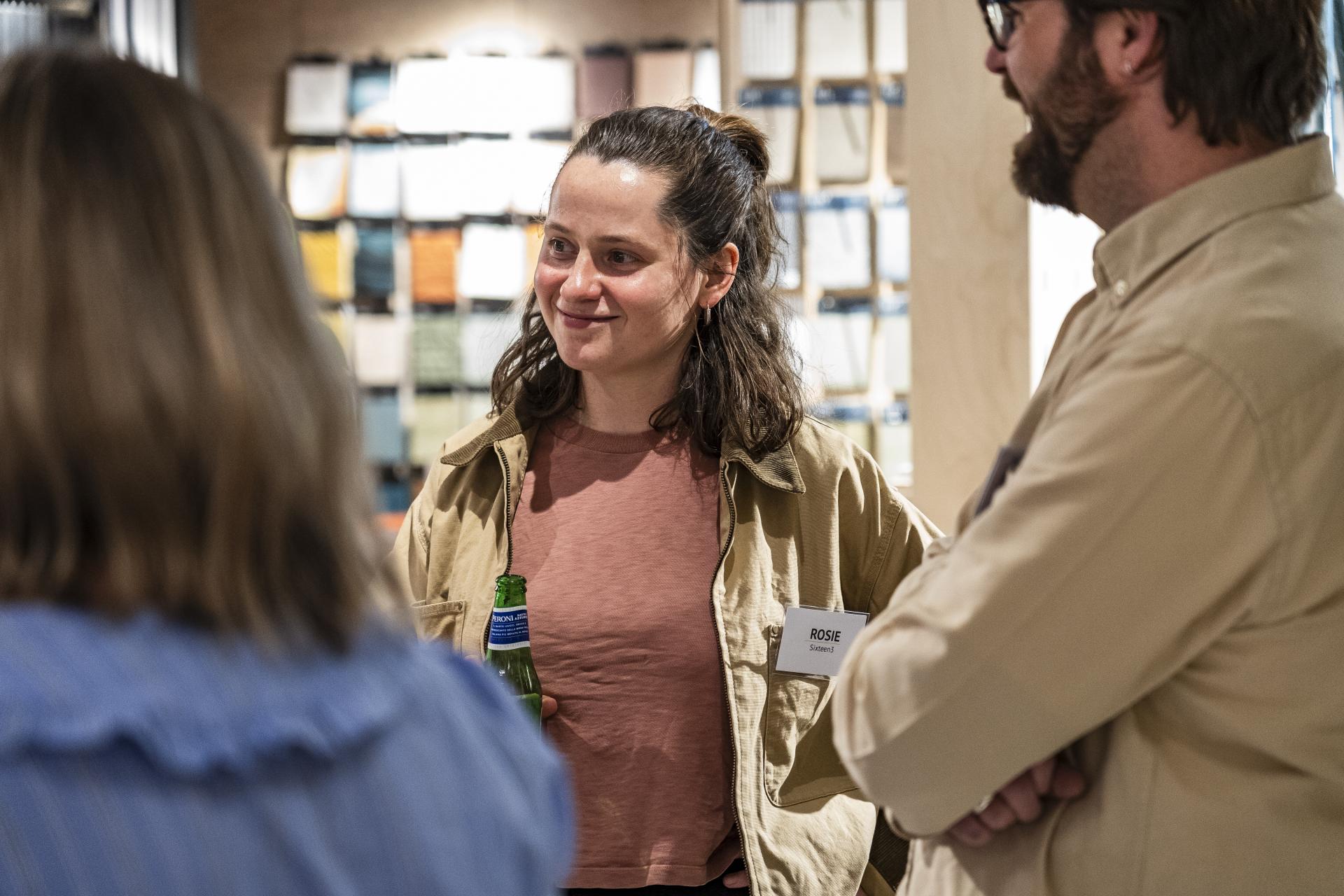
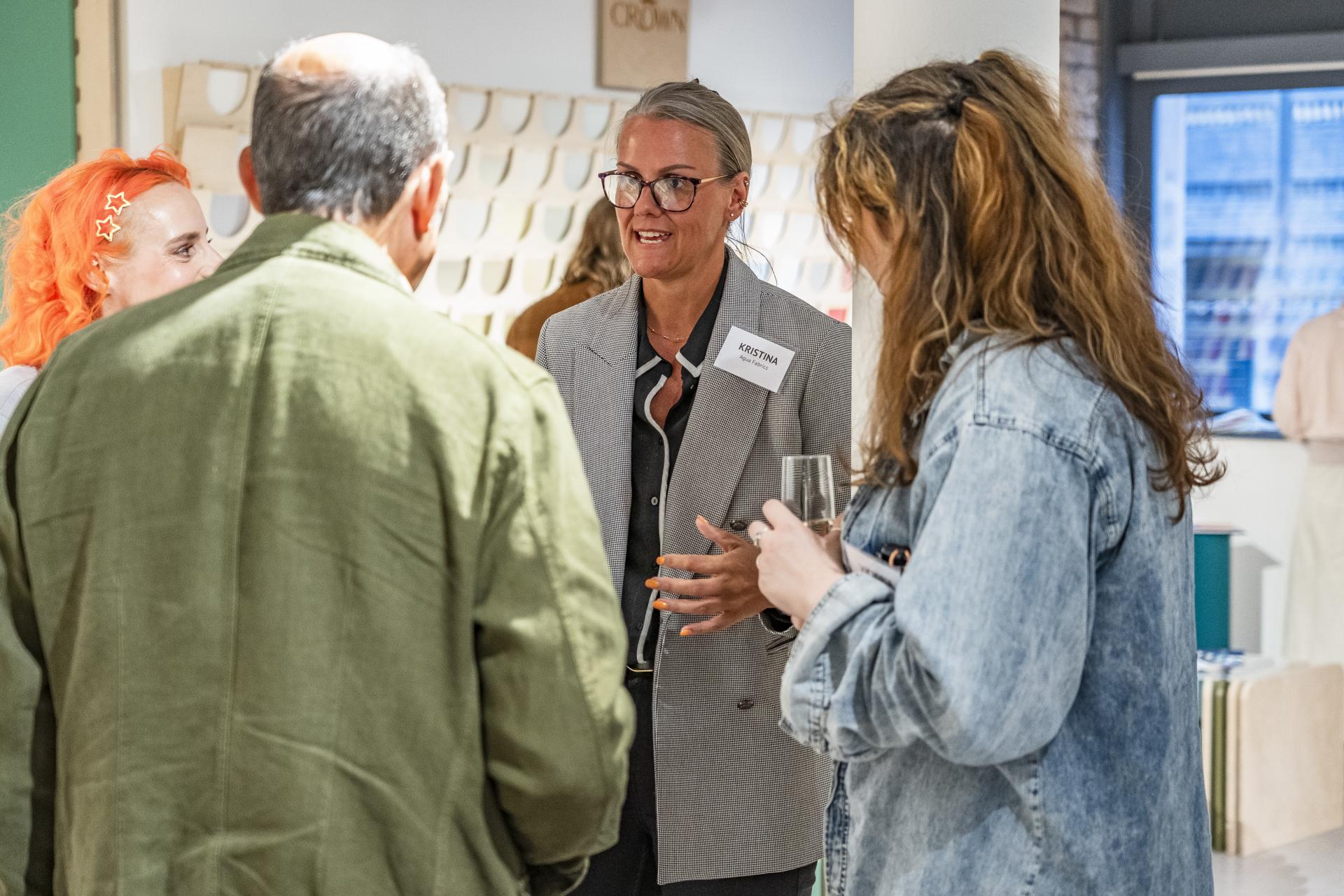
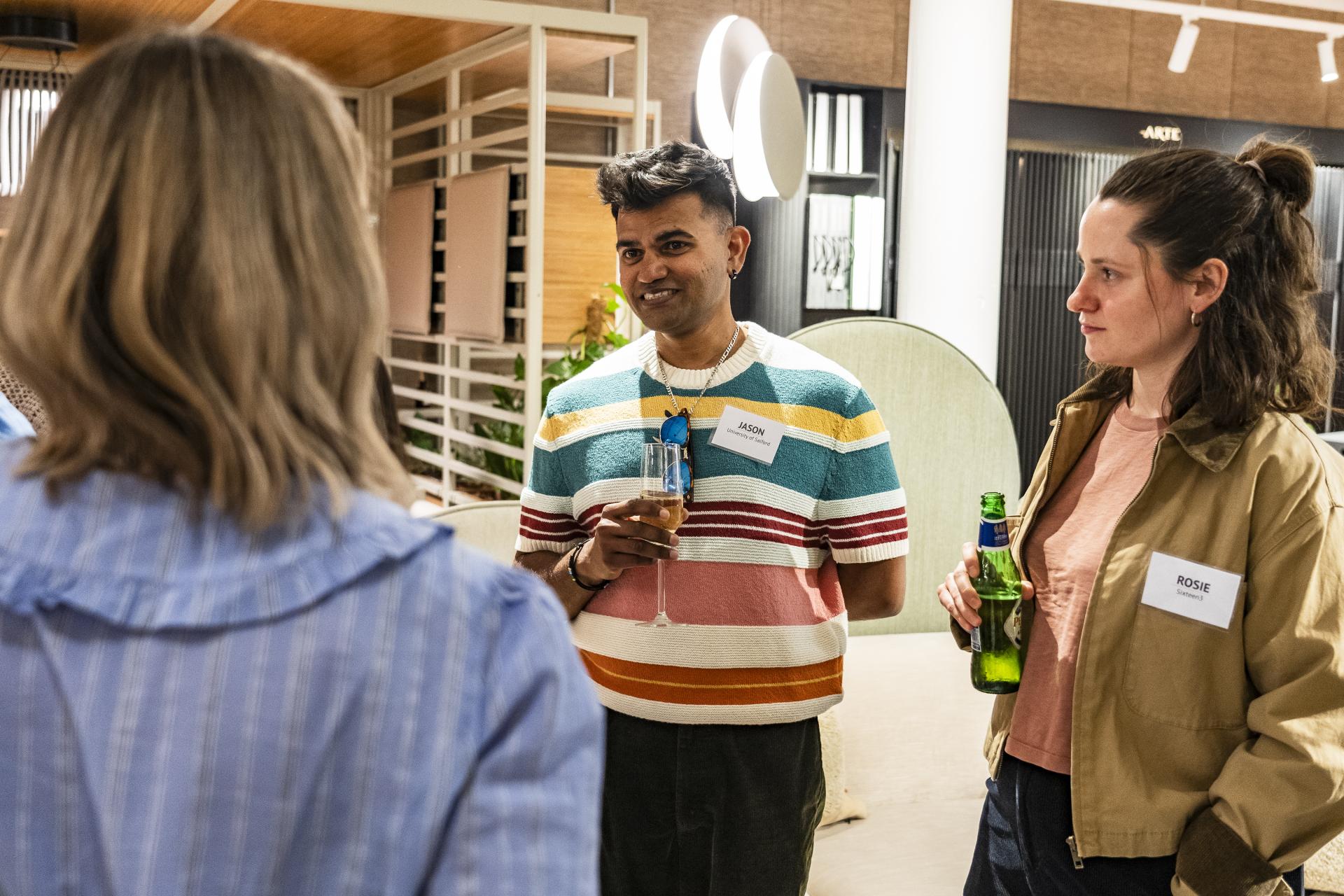

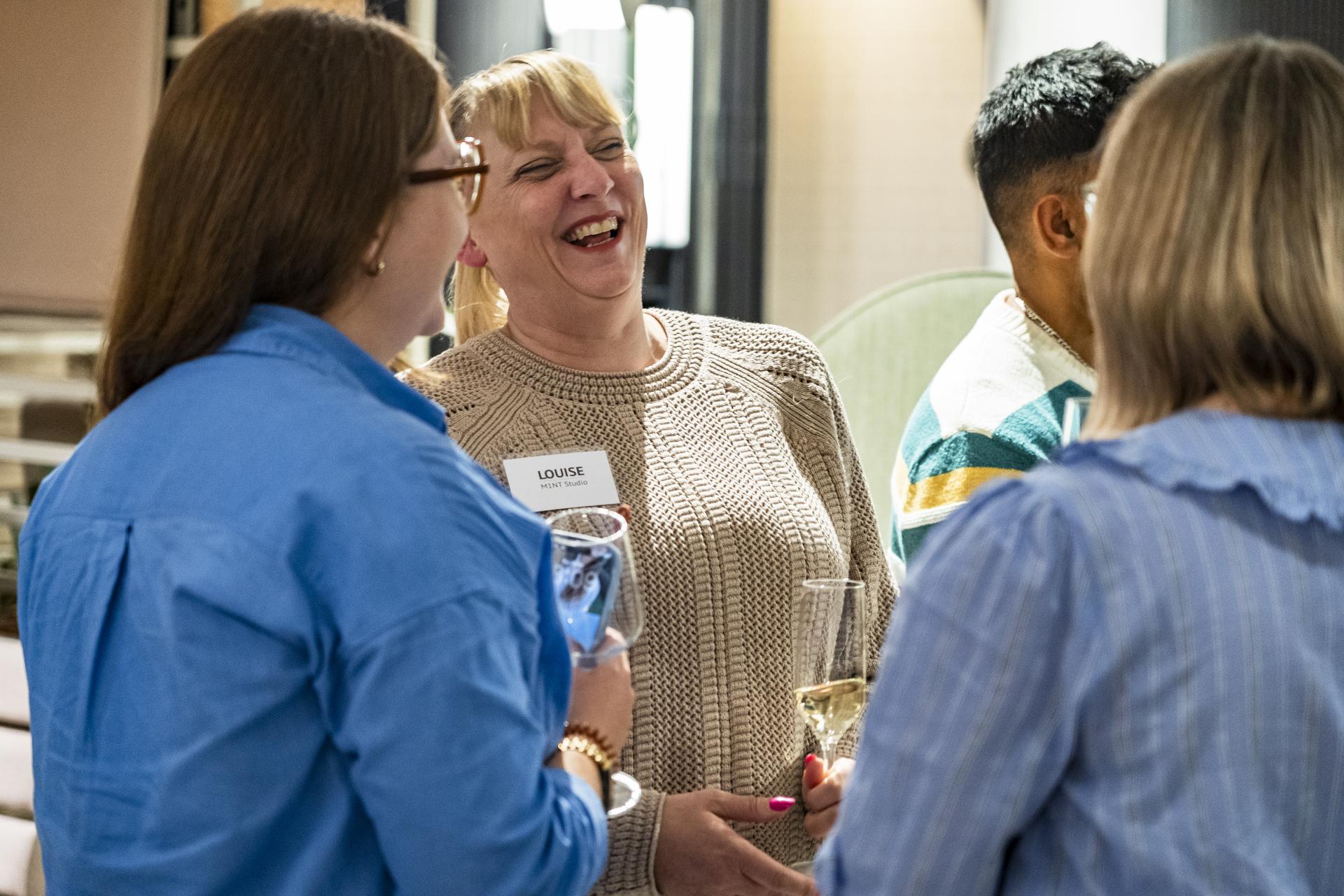
As the session drew to a close, for now, David asked two of our audience members for their top takeaways from the discussion.
For Craig Mitchell, Workplace Design Manager, Government Property Agency, it was “AI needs to be negotiated, and we are the polymathic custodians of our realm”, that he believed were key.
"Don't let it saturate your work; understand new ways to address the upcoming lack of human face-to-face experience; enhance critical thinking; and give AI your redundant tasks but analyse them”, were some of the other points he raised.
For Tom Prendergast, Director & Architect, Bosca Design, the focus going forward should be to understand “how AI will impact on the next generation.”
Though time had beaten us and the conversation was brought to a pause, AI will continue to be a focus for our upcoming roundtable session in Manchester – stay tuned for the key talking points from that next week. And at our seminar in London on 7 May. Get your ticket here.
In the meantime, a huge thanks to our guests for joining us and asking enlightening questions, to our brilliant panel for their insight shared, and to our supporters for this event: Agua Fabrics, Autex Acoustics, sixteen3 – all Partners at Material Source Studio Manchester.
Something to add? Let us know on LinkedIn.
Top takeaways at a glance
- Don't worry but be awake to the scale of change.
- AI is not novelty, but it is reshaping architectural practice. Those who intelligently engage will have a clear advantage.
- As routine production becomes more automated, human value shifts upwards towards judgement.
- The real question is one of control: design cognition, judgement, and authorship remain central. Whether intelligence is human, artificial, or hybrid, the future belongs to those who can 'direct' it rather than simply 'react' to it.