






















































Supporting designers in specifying healthy materials has long been a passion of ours. And so, when we meet likeminded practices and individuals with a similar desire, utilising Material Source Studio for their product and material research, we’re keen to champion their work to maximise our combined efforts.
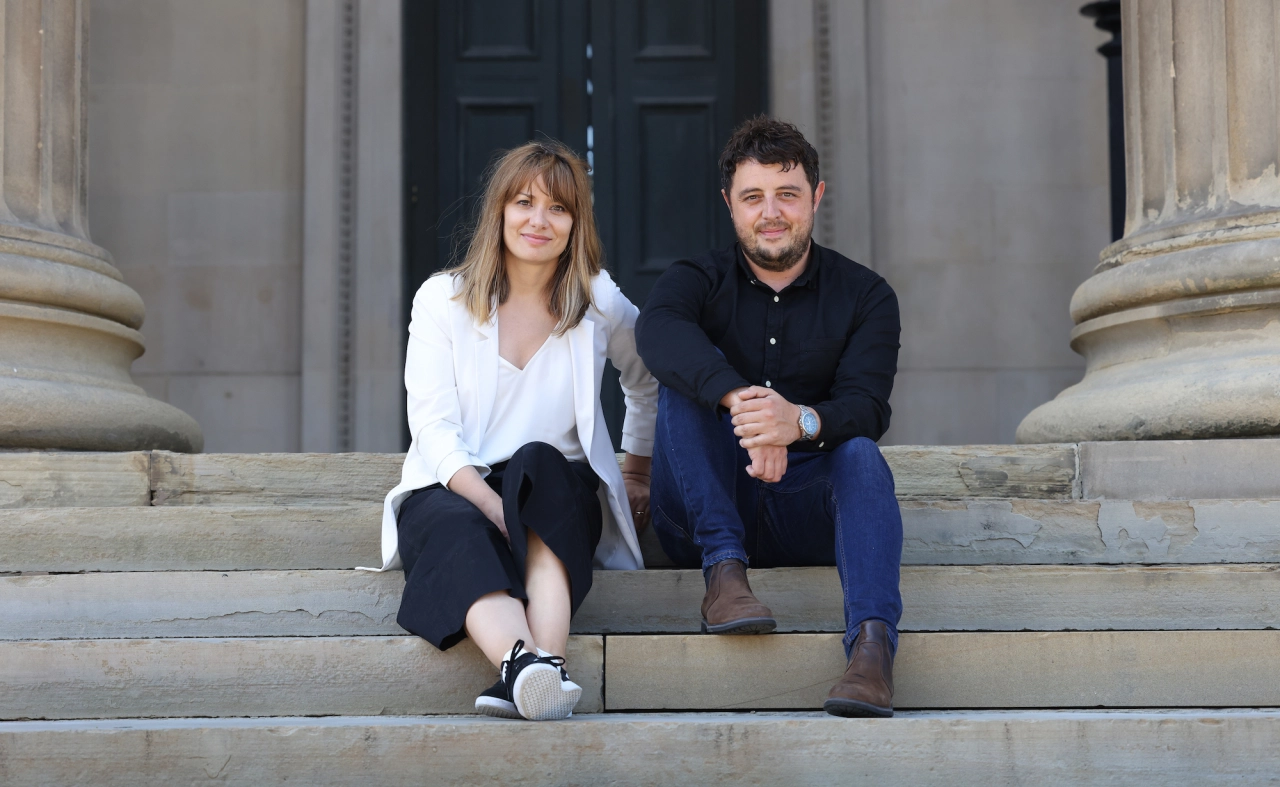
Colleagues Alejandro Mar Morales and Pauline Gellatly at Cundall are two of these passionate people. They have each dedicated their careers so far to unpacking the sustainability benefits of innovative materials for the built environment, all in a bid to secure more circular specification on commercial projects. Most recently, the pair have developed a workstream based on healthy materials to embed better material choices into everyday design practice.
Alejandro was recently awarded a BCO NextGen Award 2026 in the category of Rising Star London & South East for this, and the work he continues to put into communicating healthy materiality. “I’ve always believed that sustainability is ultimately about people. About challenging the way we do things, bringing different voices around the table, asking the difficult questions and, hopefully, leaving things a little better than we found them.”
Curious to find out more about this new workstream, we sat down with Alejandro and Pauline to chat further. In the piece to follow, we discuss moving intention to action, overcoming hurdles, and the importance of cross-industry collaboration.
You’ve developed a new workstream based on healthy materials - tell us more
“The workstream is for anyone involved in making or influencing material decisions: architects, interior designers, developers, contractors, procurement teams and sustainability leads. We developed the workstream because material choices influence multiple project priorities, including embodied carbon, circularity, health, durability, cost, aesthetics and certification. It is particularly relevant for fit-out, refurbishment, and interior-led projects, where finishes can have a significant impact but are often selected under time pressure. Our aim is to embed better material choices into everyday design practice, helping project teams balance carbon, health circularity and commercial considerations from the outset.”
What's your aim?
“Our aim is to make healthy, low-carbon and circular material selection part of everyday design practice, rather than something that is assessed too late in the process. We want to help project teams move from good intentions to confident specification by bringing robust product evidence into early design conversations.
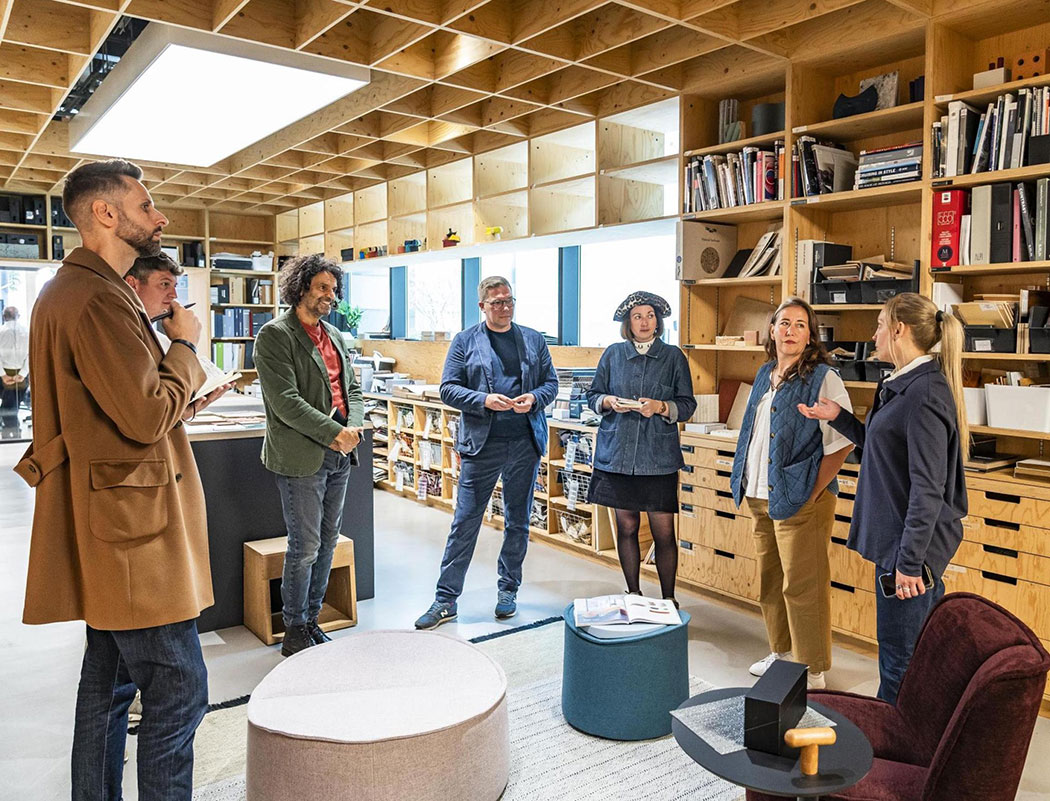
“The service stream combines our materials database, supplier engagement, material reviews and physical material libraries, including those in Edinburgh and London, so teams can assess both technical performance and design suitability. Ultimately, we want to support better decisions that reduce embodied carbon, improve indoor environmental quality, enable reuse and recovery, and make genuinely sustainable materials easier to specify and retain through procurement.”
You recently published a whitepaper on unblocking healthy, low carbon & circular materials in construction - what are the main challenges the sector is currently facing in your view?
“From our roundtable and project experience, the main issue is not a lack of ambition; it is the difficulty of turning ambition into confident, repeatable specification. We identified four key barriers: perceived financial burden, limited education and knowledge across the industry, lack of industry consensus on material data, and limited track record or supply-chain confidence for newer products.
“Cost is often the first concern, but the assumption that healthier or lower-carbon materials are more expensive is not always true. The bigger issue is that risk, limited transparency and short-term capital cost thinking can make healthier and more sustainable products appear less competitive.
"Cost is often the first concern, but the assumption that healthier or lower-carbon materials are more expensive is not always true."
“Designers are increasingly expected to assess EPDs, VOC testing, ingredient disclosures, recycled content, take-back schemes and certification requirements. Without a consistent framework, comparing products remains difficult. That makes comparison difficult, increases the risk of greenwashing and places a lot of responsibility on individual project teams.”
What are some of the solutions you’re suggesting will help alleviate these blockers?
“A lot of the solutions are practical and collaborative. For architects and designers, we suggest starting with small, achievable goals on early projects, such as prioritising VOC-tested finishes, mineral paints, reused furniture or products with verified environmental declarations. We also recommend specifying the key environmental or health properties a product must meet, not just the product name, so the intent is harder to value engineer out.
“For contractors, test days and hands-on trials can reduce uncertainty around installation and help subcontractors build confidence. Manufacturers also have a key role in providing clearer disassembly, end-of-life, warranty and performance information.
“More broadly, the industry needs common minimum product data requirements and a trusted, shared way to compare materials. Until that exists, specialist support and curated platforms have an important role in translating complex product information into design decisions.”
Do you think the construction sector is becoming more open to the use of regenerative materials? If so, what's changed?
“Yes, we do think the sector is becoming more open, although progress is still uneven. What has changed is that carbon, circularity and health are now being discussed together more often.
“Clients are asking for spaces that support wellbeing and sustainability, while frameworks such as WELL, BREEAM and LEED have helped raise awareness around product transparency, low-emission materials and verified data. There is also much more interest in reuse, reclaimed products, biobased materials, take-back schemes and material passports, particularly on refurbishment projects where retaining and extending the life of existing assets is becoming part of the design story.
“The mindset is shifting from seeing regenerative materials as niche alternatives..."
“The mindset is shifting from seeing regenerative materials as niche alternatives to seeing them as practical tools for reducing impact, supporting healthier interiors and creating spaces with a stronger narrative.”
How do we tackle wider systemic issues such as VAT on the retrofit of buildings vs none on new build? Do you see that changing any time soon?
“This is one of the clearest examples of policy working against circular economy principles. Current UK taxation frameworks can make retrofit, repair and reuse less financially attractive than new build, even when retaining and upgrading an existing building would have a better carbon outcome. That creates the wrong signal for clients and project teams.
“We think this needs to be addressed through fiscal reform that properly values whole-life carbon, reuse and the social value of keeping buildings and materials in use. Removing or reducing VAT on retrofit and reuse would be a major accelerator, alongside stronger incentives for designing for disassembly and materials recovery.
“We do not think the industry should wait for policy change to act, but policy would help scale good practice much faster. Whether it changes soon is difficult to predict, but the pressure for tax and planning systems to align with net zero is only increasing.”
For architects and designers, what’s the ‘lowest hanging fruit’ when it comes to specifying sustainably?
“The quickest win is often retention. Before specifying new materials, ask what can be kept, refurbished, repaired or reused. The lowest hanging fruit is to ask better questions earlier. Before specifying something new, teams should ask what can be retained, reused, reupholstered, reclaimed or repaired. That can deliver immediate carbon and waste benefits while strengthening the story of a scheme.
“For new products, start with high-impact and high-volume interior finishes such as flooring, paint, ceiling tiles, joinery, wall finishes and furniture. These are familiar categories where better alternatives are increasingly available.
"Small, repeatable decisions across everyday materials can quickly add up across a project portfolio.”
“Designers can prioritise clear evidence: EPDs, low VOC emissions testing, ingredient transparency, recycled or biobased content, take-back schemes, durability and third-party certifications. The key is to set these expectations in the brief and specification from the beginning. Small, repeatable decisions across everyday materials can quickly add up across a project portfolio.”
What are your go-to resources for material research?
“We use a combination of verified technical evidence, supplier engagement and curated industry resources. Our starting point is product data such as EPDs, VOC emissions testing, Health Product Declarations, DECLARE labels, Cradle to Cradle certification, recycled content information, take-back schemes, warranty data and disassembly guidance. We then bring this into our own centralised materials database so we can compare products across embodied carbon, circularity and health in one place.
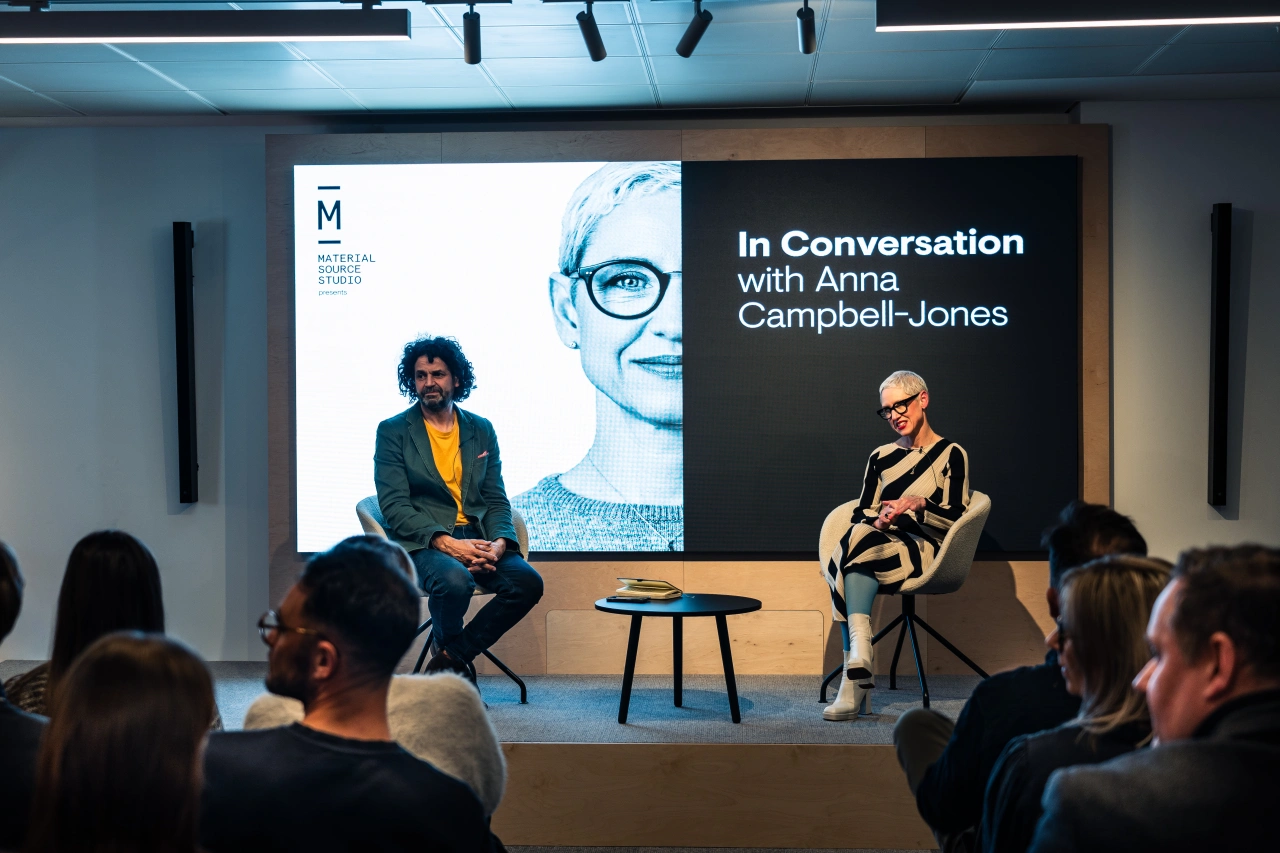
“Material Source Studio has been a real inspiration for us because it shows how material knowledge can be curated in a way that is accessible, tactile and useful for designers."
"Alongside digital research, our physical material libraries in Edinburgh and London help teams understand the look, feel and practical design suitability of better-performing products. We also regularly refer to resources such as Healthy Materials Lab (a design research lab at Parsons School of Design), and Six Classes (Green Sciences Policy Institute) for wider material health thinking.”
How will you keep the workstream updated?
“We see the workstream as a live resource, not a static database. It will be updated through project reviews, supplier conversations, new certifications, product testing, industry learning and feedback from clients, architects and contractors. As more manufacturers publish EPDs, VOC data, ingredient disclosures, circularity information and end-of-life guidance, we can strengthen the evidence base behind our recommendations.
“Project delivery is also important: we want to understand what works not only in theory, but through procurement, installation, maintenance and future recovery. Partnerships with organisations such as Material Source Studio are valuable because they help connect technical assessment with wider material awareness, inspiration and industry engagement.”
For anyone wanting to know more, where should they go?
“The best route is to get in touch with us at Cundall. Pauline Gellatly leads the Material Health service stream and is based in Scotland, and Alejandro Mar Morales is based in London and leads the workstream through whole life carbon, circular economy and material health expertise.
“We are keen to collaborate with designers, clients, contractors, suppliers and platforms to share knowledge, support project teams and contribute to wider industry conversations. The more we can connect material inspiration with robust evidence and practical project delivery, the faster healthier, lower-carbon and circular materials can become standard practice.”