


Gavin Hughes, design director, EMEA at HLW, on emotive spaces, storytelling & projects across the pond.
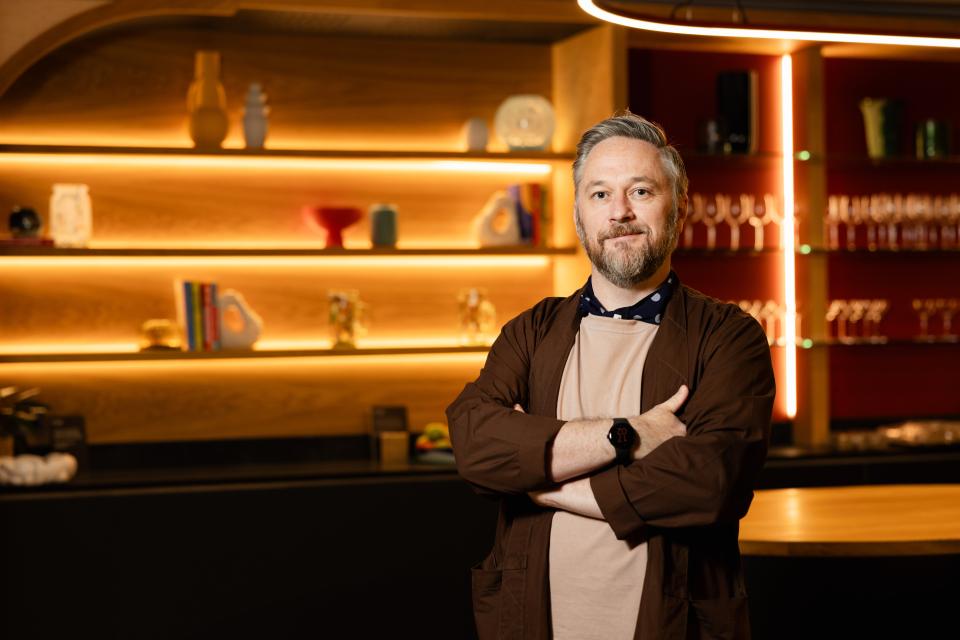
Credit: Lewis Cannon
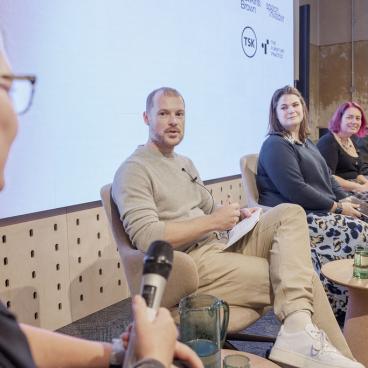
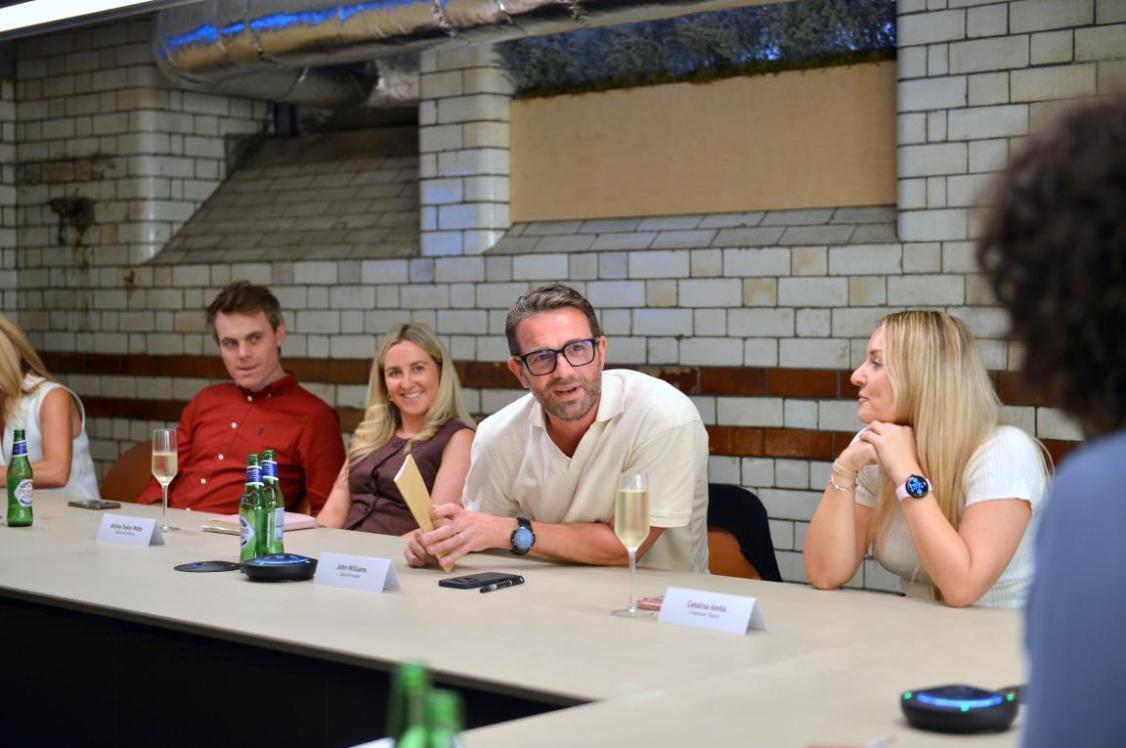
When Gavin Hughes joined us for a roundtable, what particularly struck us was his experience-fuelled articulation on the relationship between emotion and space.
Having been through the ‘school of DEGW’ – the hugely influential international workplace design and strategic consultancy firm – and now working as design director - EMEA - at HLW – another international powerhouse of a practice, Gavin views the built environment through a very human lens.
“The most efficient design in the world will fail if no one emotionally engages with it,” Gavin tells us when we meet for this interview. And to ensure emotional engagement is considered in every project, “Curiosity and empathy are fundamental to being a human-focused designer,” he says.
In the piece to follow, we chat to Gavin about the people, practices and projects that have shaped him as the designer he is today, working on projects from London to Hollywood, New Jersey to New York. Over to Gavin…
You’re design director - EMEA - at HLW - what does your day-to-day look like?
“I rarely have a consistent day-to-day, however I do try to build in elements of routine. For example, I try to dedicate some time at the start of each day to do some thinking and research, e.g., understand what’s happening out there, what’s new, what’s interesting and worth further investigation. This isn’t always achievable - particularly when big pushes are happening on a project or pitch - but it’s a good intention to start the day with.
“My role is primarily about supporting but also challenging and pushing our designers and clients to create spaces and experiences that are considered, and relevant to them. I aim to make design accessible and understandable to all - regardless of your design experience - without losing its ability to excite and inspire. This includes everything from ideation, project reviews, pitching ideas, directing project photography, creative training sessions, mentoring, and check-ins over a coffee.”
You worked at DEGW - one of the first practices to place an emphasis on how organisations use space - how did your time there influence the way you work today?
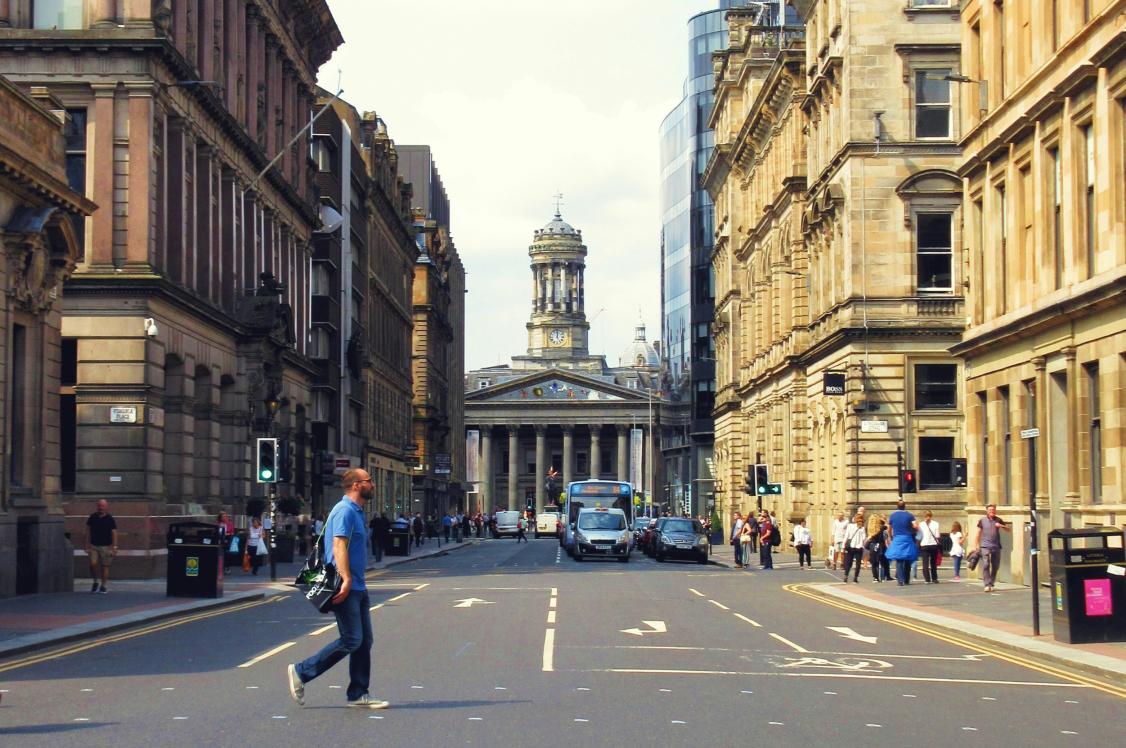
“Going through the ‘school of DEGW’ has had a huge influence on how I work. Hindsight’s a wonderful thing, isn’t it? I joined them 22 years ago in the Glasgow office before transferring to London almost 20 years ago. As a twenty-something year old burning to show creativity, I remember not fully buying into some of the theory (i.e., not understanding it) and just wanting to design for the sake of design. Working alongside some great people from very different backgrounds changed that.
“The beauty of DEGW was bringing together such a diverse group of people; architects, designers, urbanists, sociologists, data analysts – you name it! It was described as ‘from the chair to the city’ and encompassed all aspects of life. There was a natural culture of curiosity and independent thought, something that can’t be manufactured, and it came from top down with Frank Duffy, John Worthington & others leading by example. I like to think I inherited those traits from leaders and peers alike.
“Something I explored at DEGW and beyond, was understanding that yes, efficiencies and effective data-driven design is important, but design solutions need to be human and elicit an emotional response. Jackson Pollock may have once said, ‘If people would just look at the paintings, I don't think they would have any trouble enjoying them. It's like looking at a bed of flowers, you don't tear your hair out over what it means.’ The most efficient design in the world will fail if no one emotionally engages with it. For further reading on why beauty matters in all aspects of design, I recommend Alan Moore’s ‘Why Beauty is key to everything’.”
Can we chat through some of your current projects in the US, and beyond?
“One of the great things about HLW is that it is a global organisation that offers a local solution. Despite our scale, we’re a genuinely connected organisation. We’re not a vast firm where each studio operates in isolation. People across studios know one another, collaborate regularly, and often work on projects across borders. We have global town halls each month, where each office takes turns to host, and I chair a Global Design Leadership Group that meets monthly to share ideas, projects, and innovations across our network.
“We know who to pull in for project-specific needs; be that workplace strategy, sustainability, environmental graphics and signage, or lighting. A couple of recent experiences for me include working with our California offices on projects in Denver, Colorado, and Hollywood for some big picture thinking. It’s been great collaborating with those teams and pushing the possibilities together.
“We also offer a global mentorship programme where people are connected based on needs and experience, for example I’ve recently mentored colleagues in our NJ, NY & LA studios. A positive side effect of this is that more people know each other across studios.”
Do the same challenges exist in other regions as they do in the UK?
“As you’d expect, there are similarities as well as uniqueness to each region - that’s why it’s always important to have local knowledge. Similarly, when the London studio is working across EMEA we always have a local partner who has deep knowledge and experience in the region.
“On top of technical and regulatory needs, local culture and customs are just as important to understand. Design needs to be considered and relevant to a client and the region they are in – again, that idea of a global offer with a local solution that tells a clients’ story.”
Do you have a favourite project you’ve worked on, and why?
“Everyone sets out to make every project the best it can possibly be, but sometimes external factors result in compromise (poor management and planning, financial issues, late changes, the occasional global pandemic etc.) Regardless, all projects have their moments, and I like to think that I learn something from each of them and bring that experience to the next one.
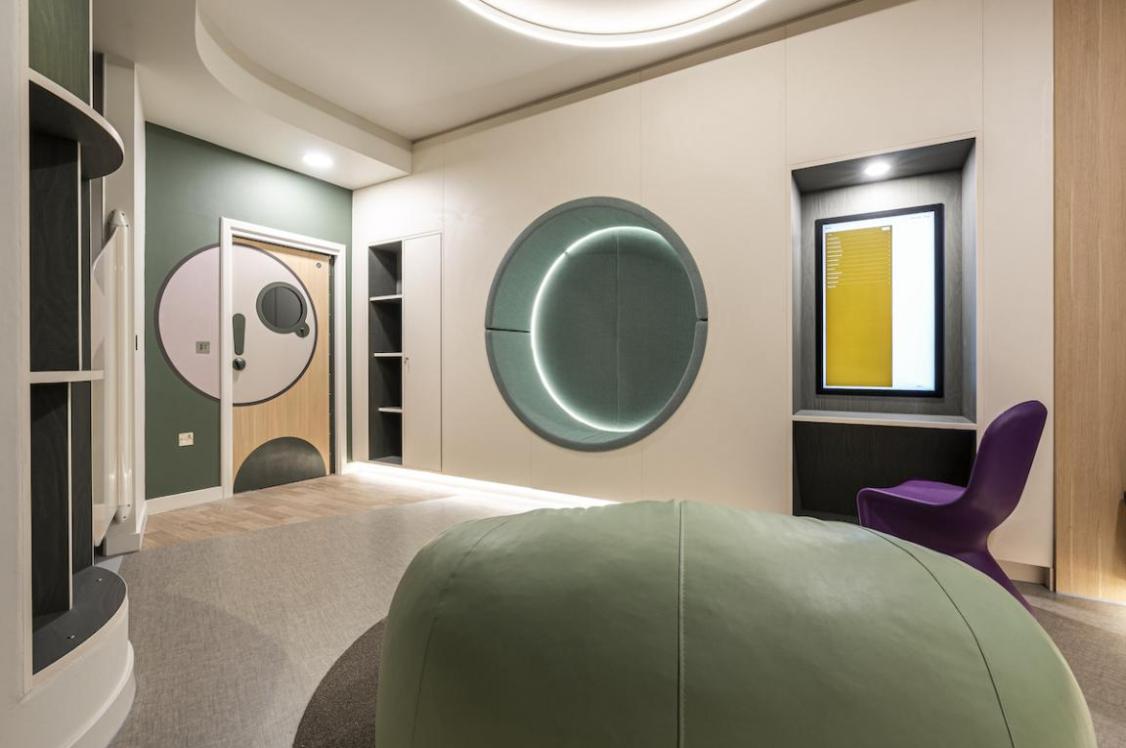
“A project that I’ll always hold close to my heart was a tiny project for a primary school in London; I designed it in my 20s, so I would inevitably change things now if I had the chance even though the principles are still (mostly) sound. The main reason it lingers is the unfiltered response I witnessed when the head teacher and the pupils entered the finished space for the first time; genuine excitement and appreciation for how design can impact your daily life positively.”
Who or what inspires you?
“I keep discovering more the longer I do design yet also seem to have less free time. What I often say to our designers is to ‘be a sponge’, to just constantly observe, question and understand both good and poor design decisions in everyday life – beyond interiors and architecture. It’s important to escape our echo-chambers, particularly in a modern world that is constantly trying to reinforce your views, hopes, aspirations, biases, and fears. Curiosity and empathy are fundamental to being a human-focused designer.
“In no particular order, some recent and constant sources of inspiration include: Kate Canales’ recent Ted talk on signage, Jessica Brillhart (specialising in exploring the technology and language of the mediums of virtual reality, augmented reality, and intelligent systems), Anton Spice (writer, lecturer and artist-researcher working across music, arts, design and environmental sectors), Manoush Zomorodi (journalist, podcast host and author), Carsten Nicolai (artist), Lucy Easthope (expert and adviser on emergency planning and disaster recovery), Thomas Demand (artist), James Turrell (artist), Charlie Porter (journalist), Claire Dederer (writer, author), Joy Guidry (musician), Kathleen Jamie (poet, writer), Fujiko Nakaya (artist), Jenn Nkiru (director), NTS Radio and THIS.”
What’s next?
“Lunch.”