

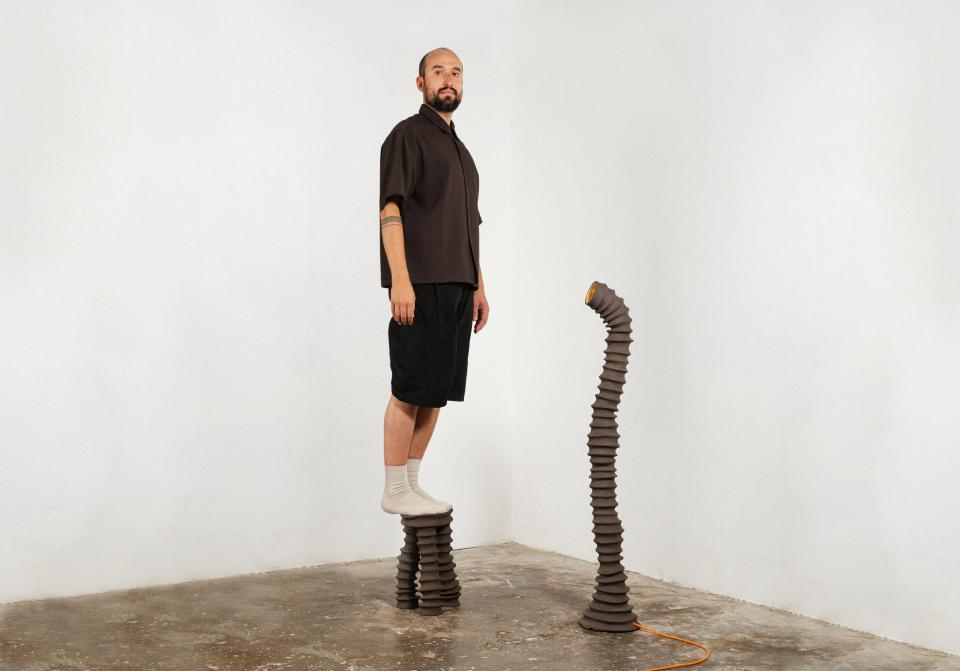
Cãtãlin Filip: Crafting lighting and sculptural objects from clay.
©Antony Jorge Stride
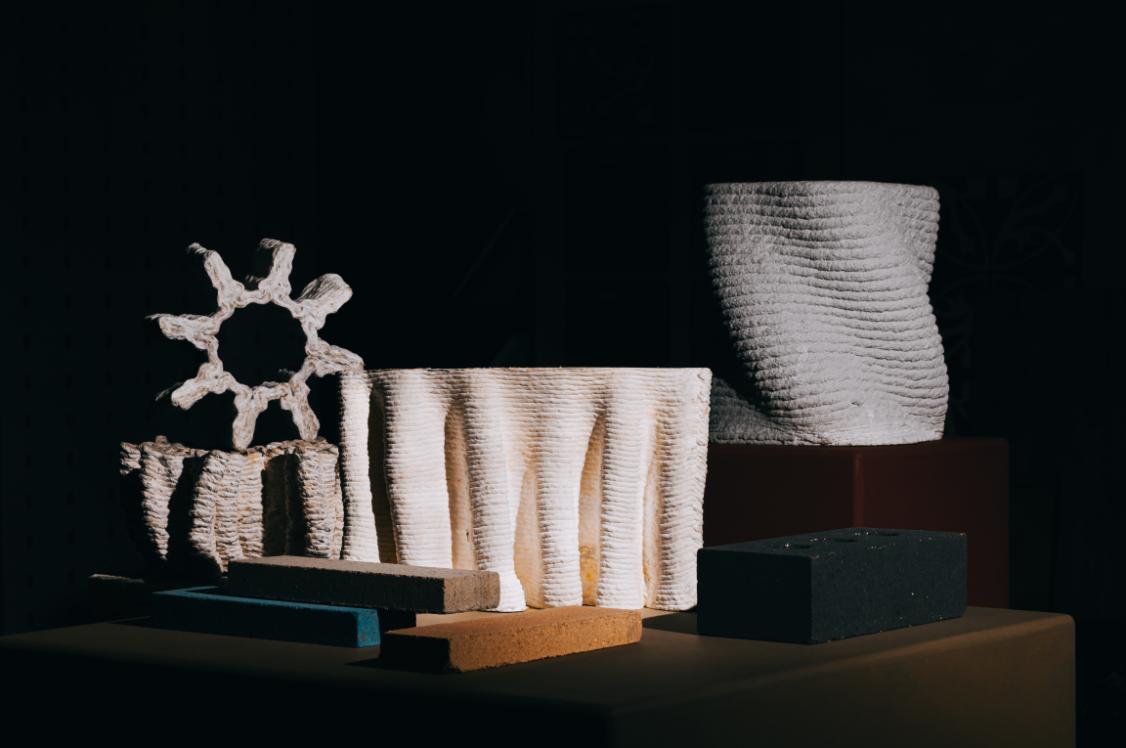
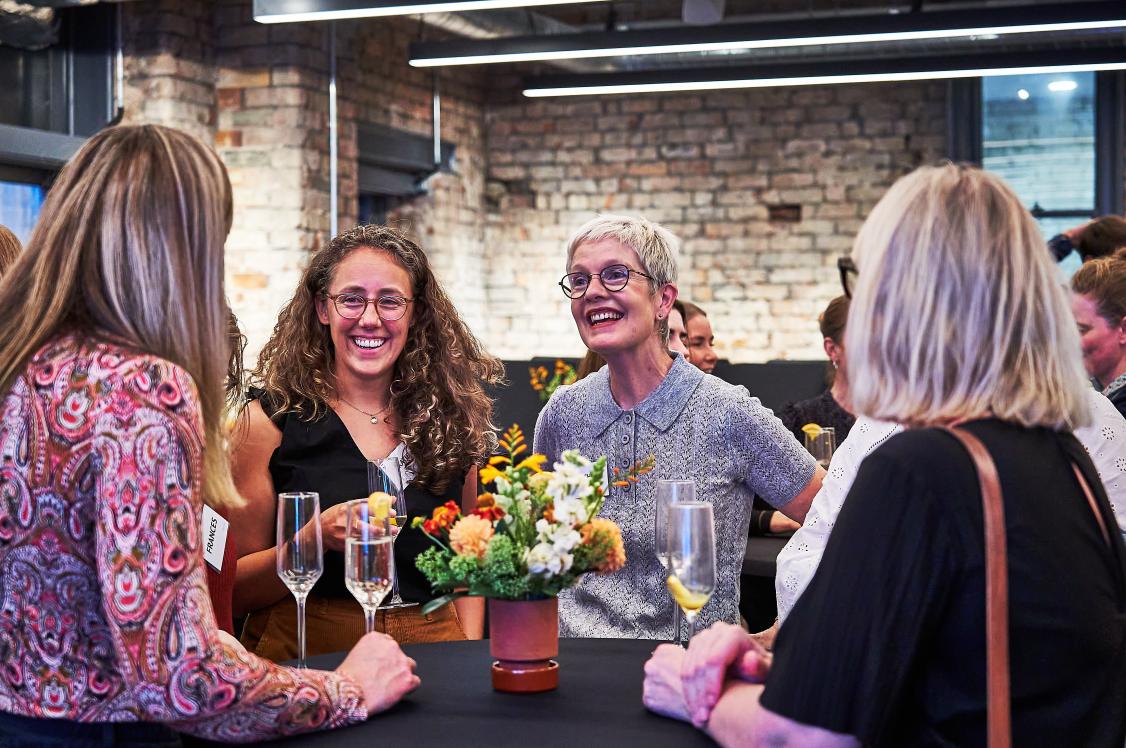
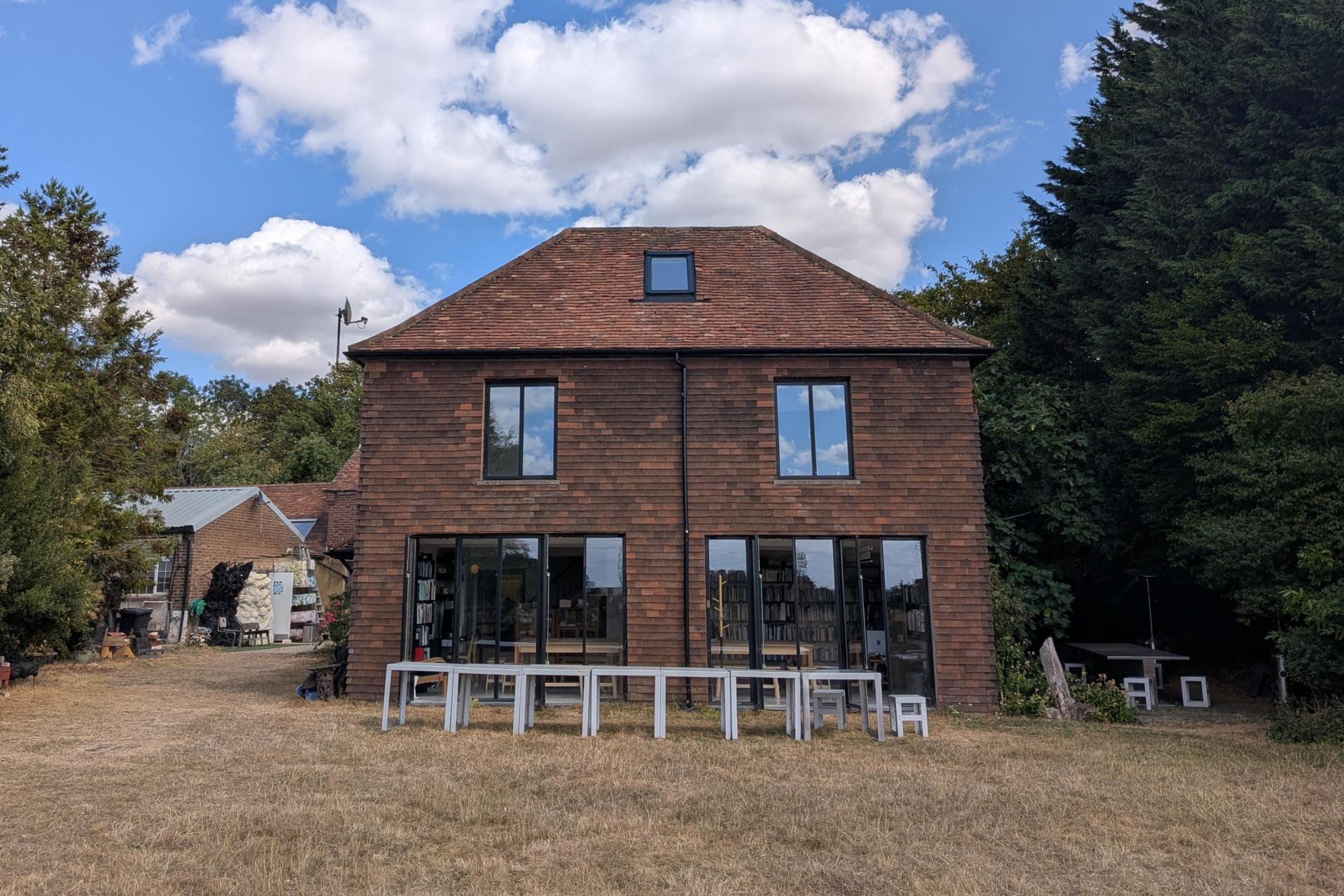
Over the summer, two of our London-based Material and Product Advisors, Abbie & Katie, attended an open day at Grymsdyke Farm, Buckinghamshire. Formerly an agricultural site, the farm was repurposed in 2004 as a space for designers, architects and researchers to make, experiment and develop new ideas. In August, designer Cãtãlin Filip undertook a month-long residency at the farm, supported by the British Ceramics Biennial. The residency provided access to the farm’s workshop facilities, as well as the time and space to develop new work.
Cãtãlin is a UK-based Romanian artist producing lighting and sculptural objects from clay. Previously an architectural designer, his background is evident in his approach to design, combining ‘artistic expression with functional purpose’. We caught up with Cãtãlin to hear more about the residency, his process and his developing work.
©Antony Jorge Stride
Can you tell us about your background and training?
"I trained as an architect at the Ion Mincu University of Architecture and Urbanism in Bucharest, Romania. After graduating, I moved to the UK and started working with Steyn Studio, a small architectural practice based in London. Being part of a small studio meant I was closely involved in the design process, from developing initial concepts and ideas through to their resolution. I worked on a number of projects there, several of which went on to receive awards.
"My route into ceramics was much less formal. I’m self-taught as a ceramicist and have developed my way of working through experimentation and trial and error rather than through formal ceramic training. That has allowed me to develop my own processes and techniques based on what I want the material to do."
Does your architectural training influence/inform your design practice?
"Yes, mainly through the way I approach concepts and ideas. My architectural training was very much about developing a strong idea or narrative for a project and then finding ways to translate that into a physical form. That way of thinking has carried through into my work with ceramics.
"Materiality and texture were also important aspects of my architectural experience, and these continue to be a big part of my work. With clay, the material itself often becomes the starting point. These processes can produce forms and textures that have a strong relationship to things found in nature. I’m interested in the way landscapes, rocks, hills and trees are shaped and transformed by external forces and the elements over time. There is something interesting in creating forms that have a similar sense of movement or erosion while still revealing traces of the making process."
Why clay?
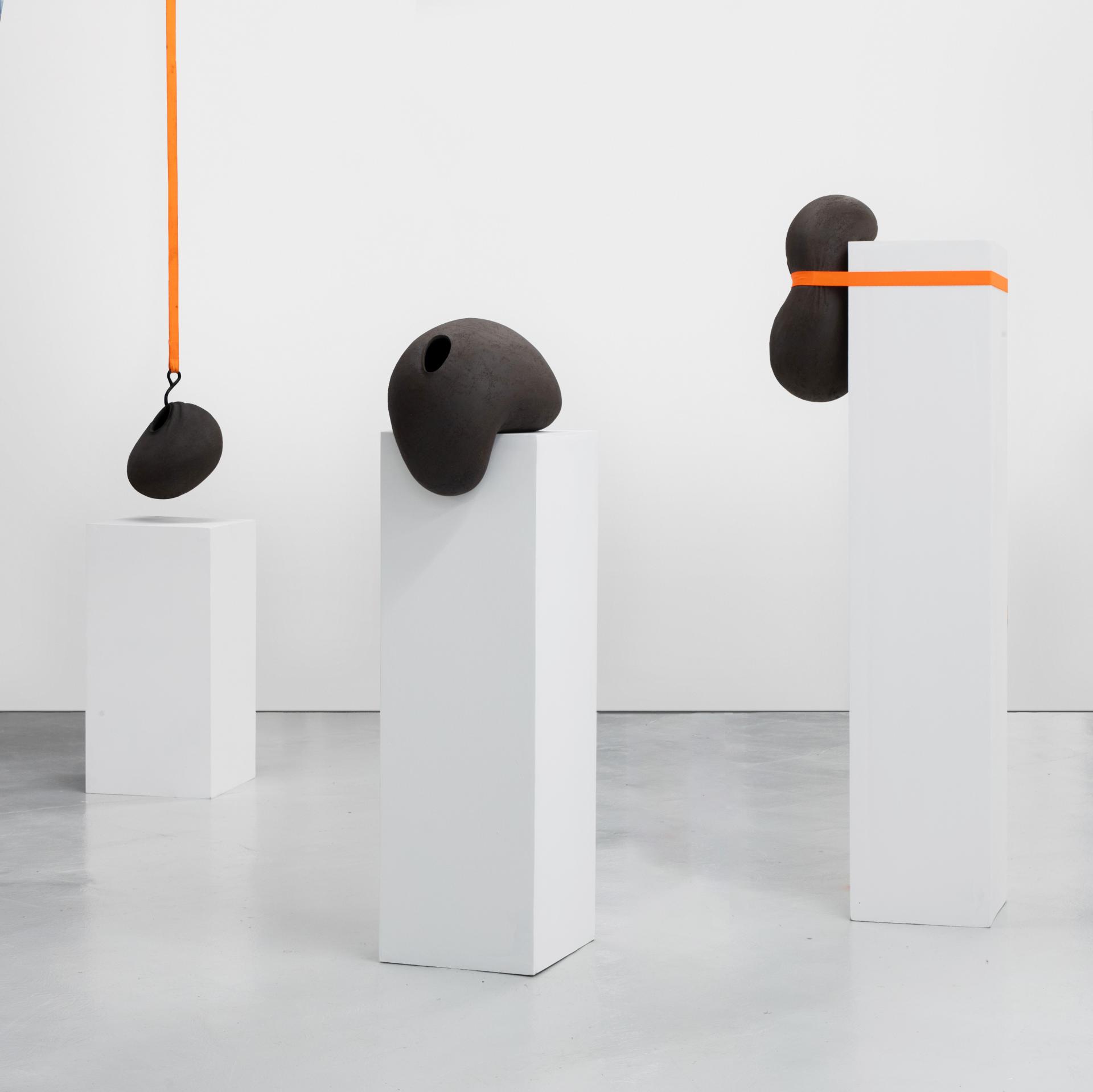
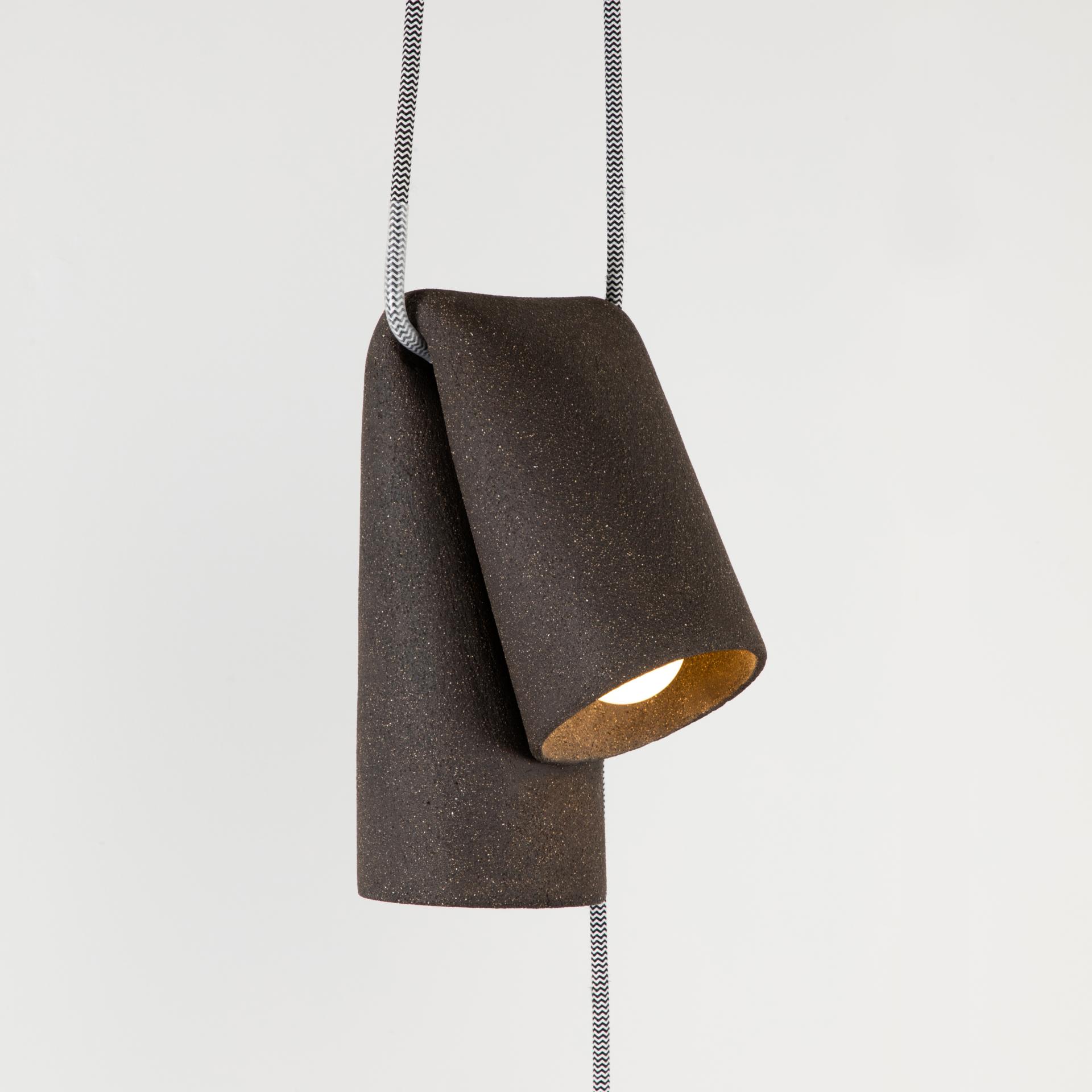
"I initially designed the Melo Lamp series and it felt natural to make some of the prototypes in clay. As I started working with it, I realised that it could actually be the material I was looking for.
"What interested me was how responsive clay is, particularly in its raw state. I started experimenting with what happened when I subjected it to different forces such as gravity, pulling, stretching and strapping. The material would distort and respond in ways that I found interesting, often producing forms that I wouldn’t have arrived at through a purely designed process.
"Because I hadn’t had any formal ceramic training, I approached the material through trial and error. I think that gave me a certain freedom to experiment without being too concerned with established techniques or ways of working. I could develop my own processes around the forms I wanted to achieve and see how far I could push the material.
"That experimentation is still central to my practice. I’m interested in finding a balance between controlling the clay and allowing its own behaviour to influence the final form."
©Antony Jorge Stride
How did the residency and environment at Grymsdyke Farm influence your work?
"The residency at Grymsdyke Farm gave me the space and time to expand the way I was working. I spent a month there over the summer in August (2026) and having that dedicated period in the studio allowed me to experiment much more freely.
"The facilities were a big part of that. There is a lot of equipment available, including large kilns, so I instinctively started working on a larger scale and experimenting more with glazed surfaces. Working at a larger scale also made me think differently about the behaviour of the clay and how some of the processes I had been developing could be pushed further.
"The environment was equally relevant to the work. A lot of my practice is influenced by natural processes and the way materials and landscapes are shaped by forces such as gravity, wind, water and erosion. Being surrounded by that landscape while working made those ideas particularly present.
"The residency came through the Fresh Award I received in 2025, with the residency supported by the British Ceramics Biennial. It was a great opportunity to step away from my usual studio environment and spend a concentrated period developing new ideas.
"I’ve only just finished the residency, so I’m still processing some of what came out of it. A number of the experiments I started there are already feeding directly into the new work I’m continuing to develop in the studio."
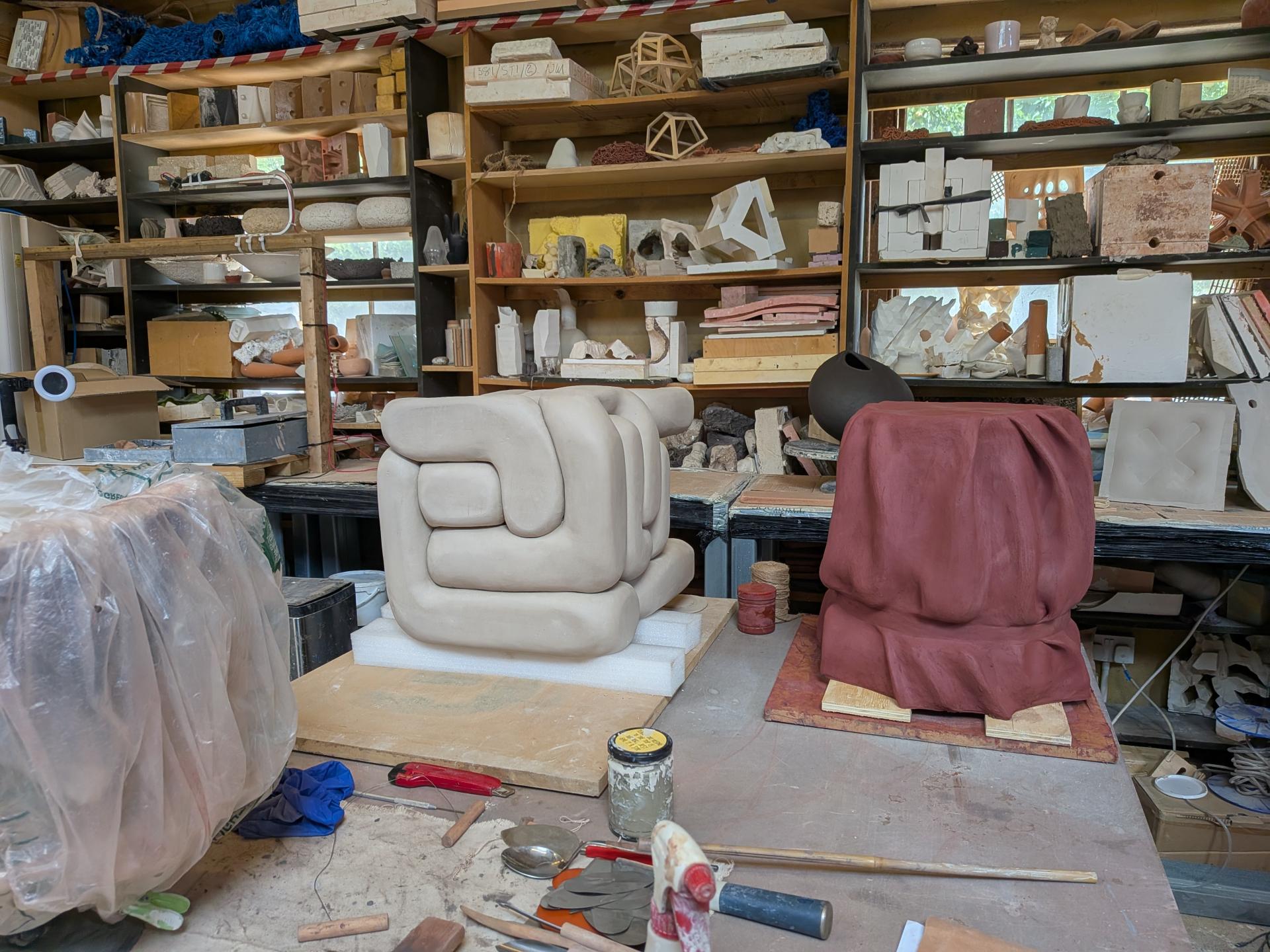
When we visited your studio at Grymsdyke Farm you were working on sculptural furniture pieces, are you continuing this body of work?
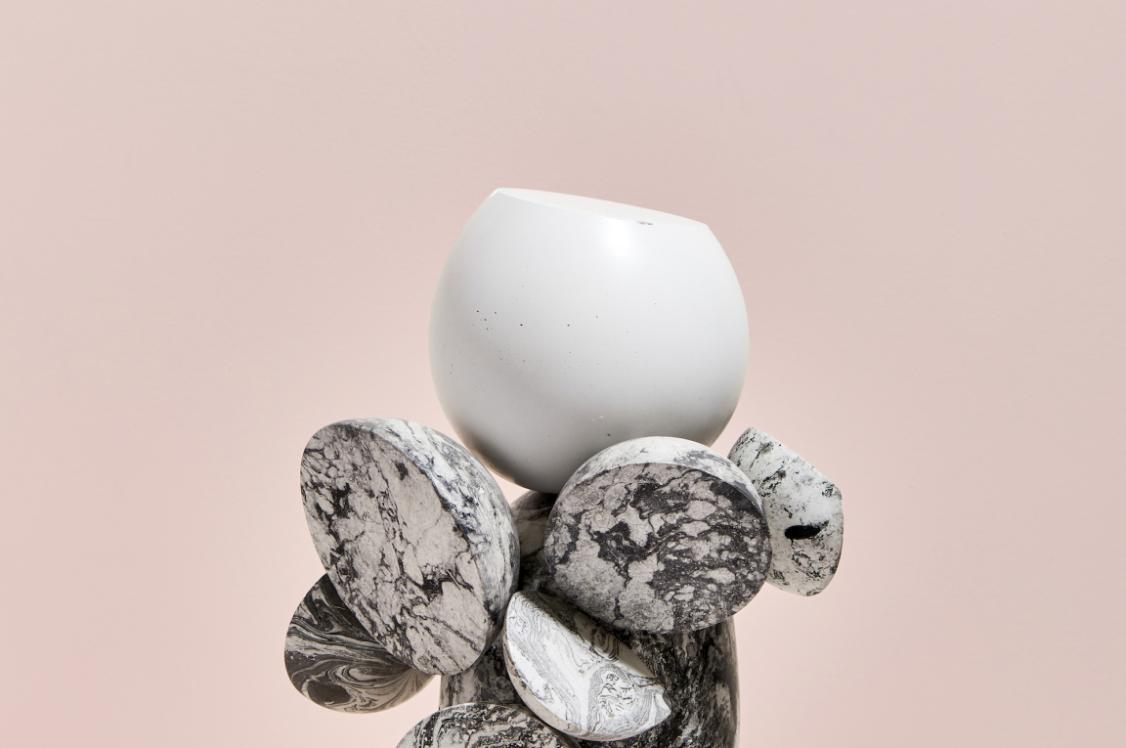
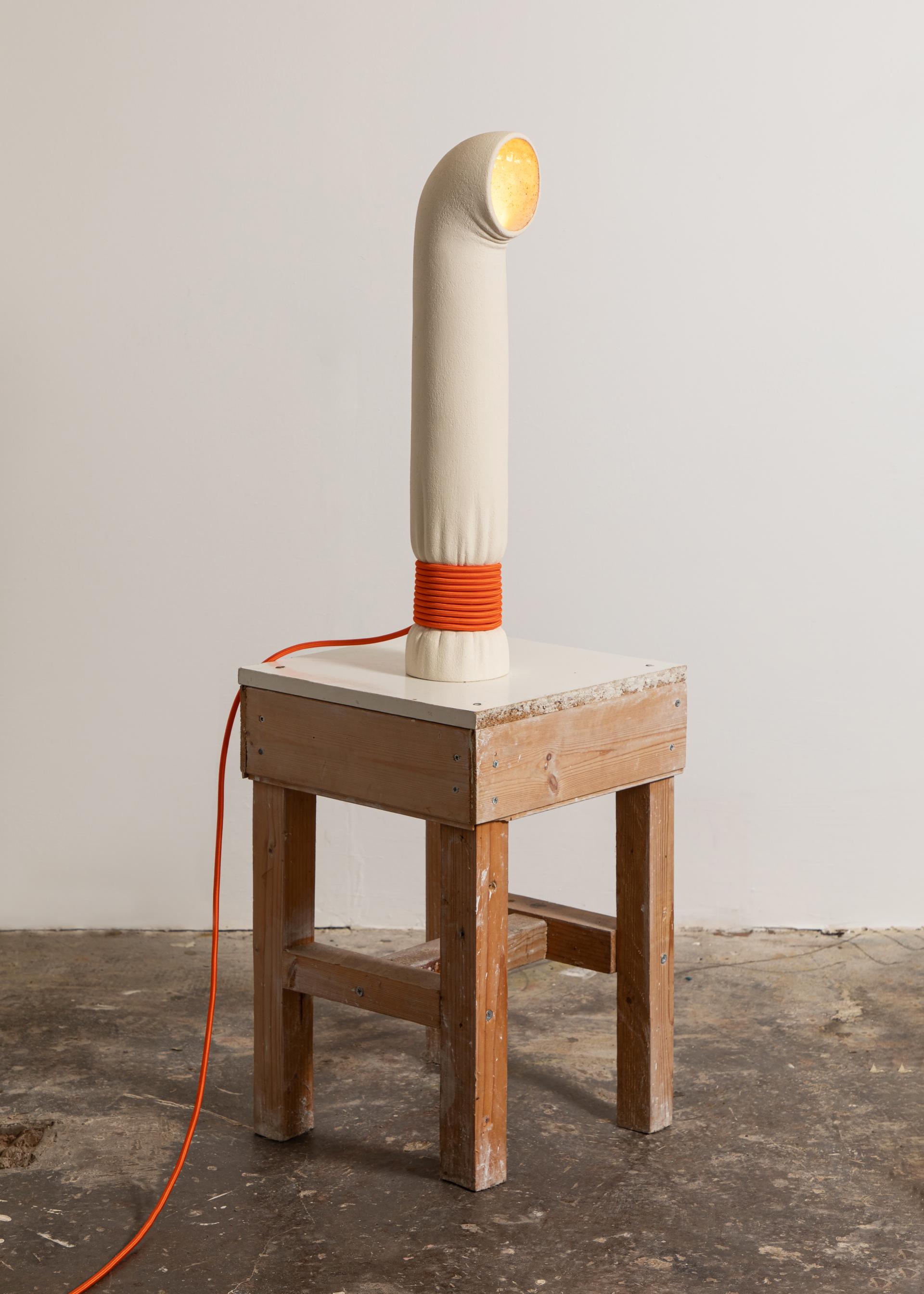
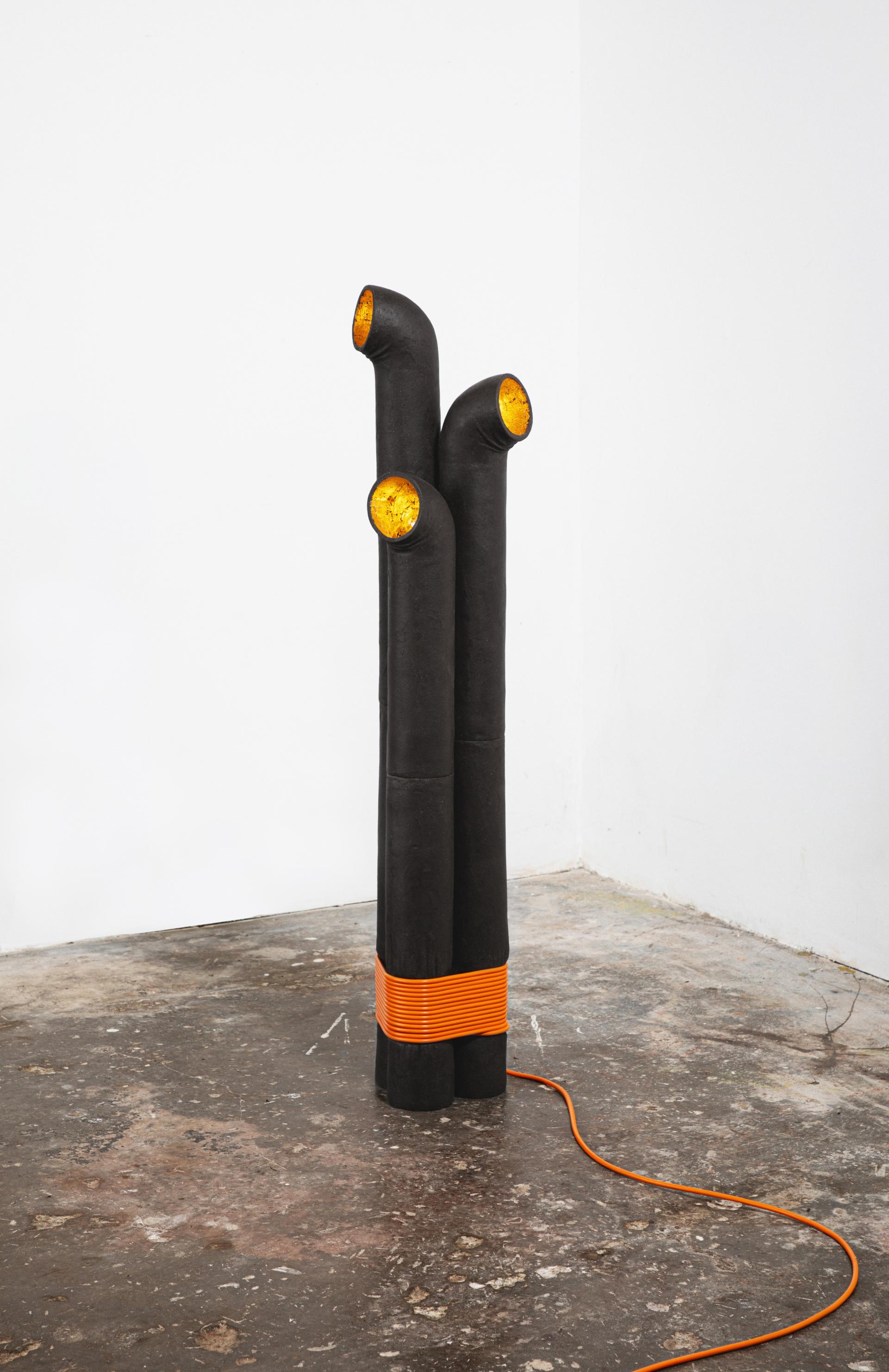
"Yes. With my architectural background, I think I’ll always be drawn to bringing some element of function into form.
"I’m very interested in the sculptural aspect of the furniture pieces, but I think having a functional element adds another dimension to the work. It changes the relationship you have with the object because it can be used and lived with, rather than simply being something to look at.
"I’m interested in that space between sculpture and design, and in how a piece can work on both levels. The function doesn’t necessarily need to dictate the form. I’m more interested in finding a balance where the sculptural quality remains important while the object still has a functional purpose."
©Antony Jorge Stride
©Antony Jorge Stride
What’s coming up next?
"I’ve taken this year to focus on developing several new collections and spending more time in the studio. I’ve only recently finished the residency at Grymsdyke Farm, so some of the work I’m developing now is a direct continuation of ideas and experiments that started there.
"I’m working across a few different collections, including sculptural objects, lighting and furniture, and I’m particularly interested in pushing some of the larger forms and surface experiments that came out of the residency. There are also further exhibitions planned for the following year, including the British Ceramics Biennial in 2027, where I’ll be presenting this new body of work.
"The opportunity to show at the British Ceramics Biennial is a particularly relevant continuation of the Fresh Award I received in 2025 and the Grymsdyke Farm residency that followed. The residency has opened up some new directions in my work which I’m looking forward to developing further over the coming months."